Brussels
Today we said goodbye to the Transcend Connect and our short but very enjoyable Dutch and Belgian river adventure. After several days of waking up in a new town without having to pack a suitcase, it felt slightly strange to actually leave the boat and take all our belongings with us.
Our transfer took us into Brussels, where we had a few precious hours to see some of the city before heading to the airport for our
flight to Barcelona. It wasn't nearly enough time, of course. Brussels is one of those cities where you could happily
spend several days wandering around, discovering grand squares, medieval streets, museums, chocolate shops and cafés. We had considerably less time than that, so we adopted our now well-practised sightseeing technique: Walk quickly, look at everything and hope nobody checks the itinerary.
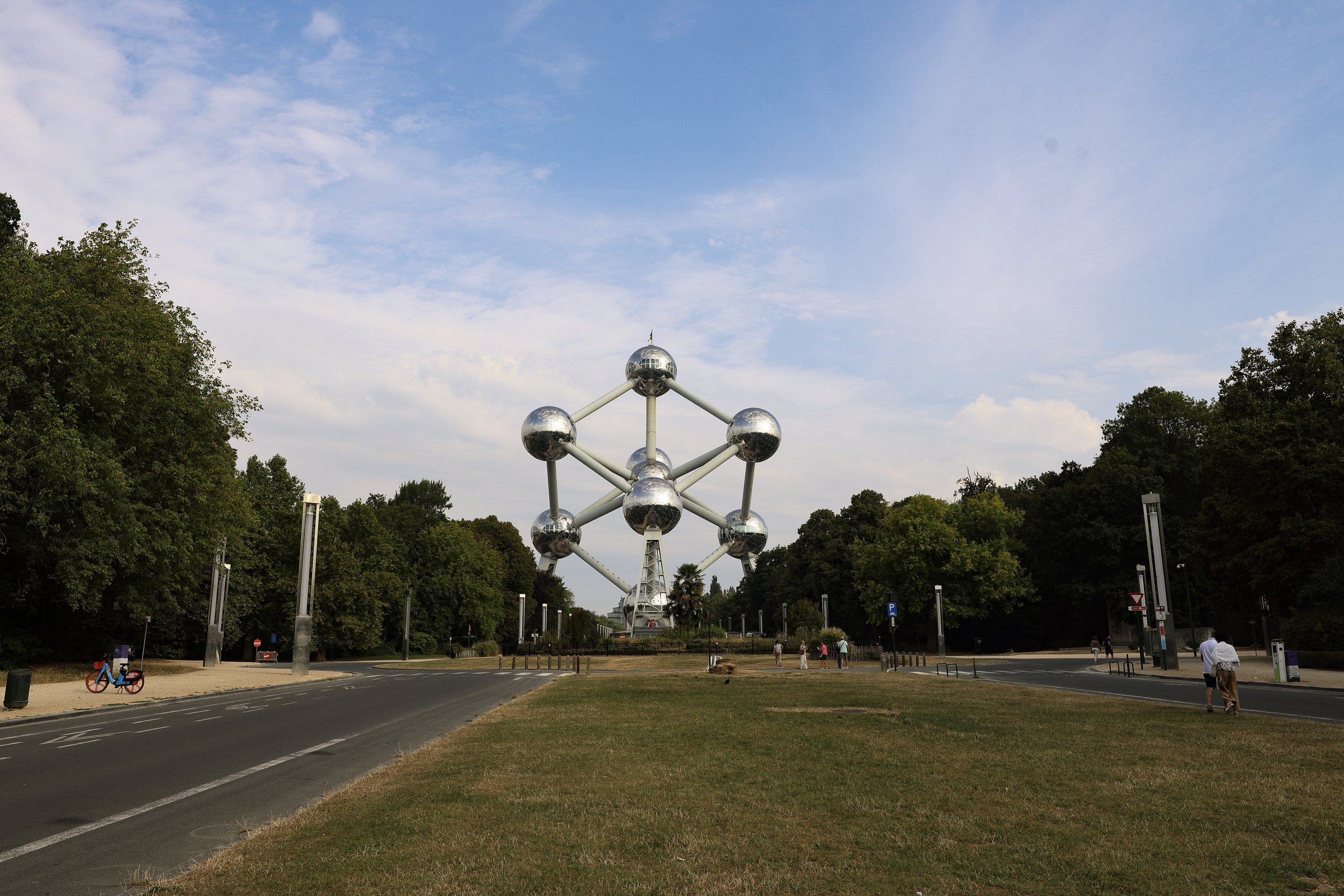
Our first stop was the Atomium, one of Brussels' most recognisable landmarks. Built for the 1958 Brussels World's Fair, the enormous structure represents an iron crystal magnified around 165 billion times. Its nine stainless-steel-clad spheres are connected by tubes and were originally intended to be a temporary exhibition structure.
Fortunately, someone decided it was far too good to pull down. Today the Atomium has become a symbol of Brussels and Belgium, and even from a distance it looks wonderfully futuristic. After several days surrounded by medieval buildings, Gothic churches and historic town squares, the sight of this enormous collection of silver spheres was a reminder that Belgium has no problem mixing the very old with the very modern.
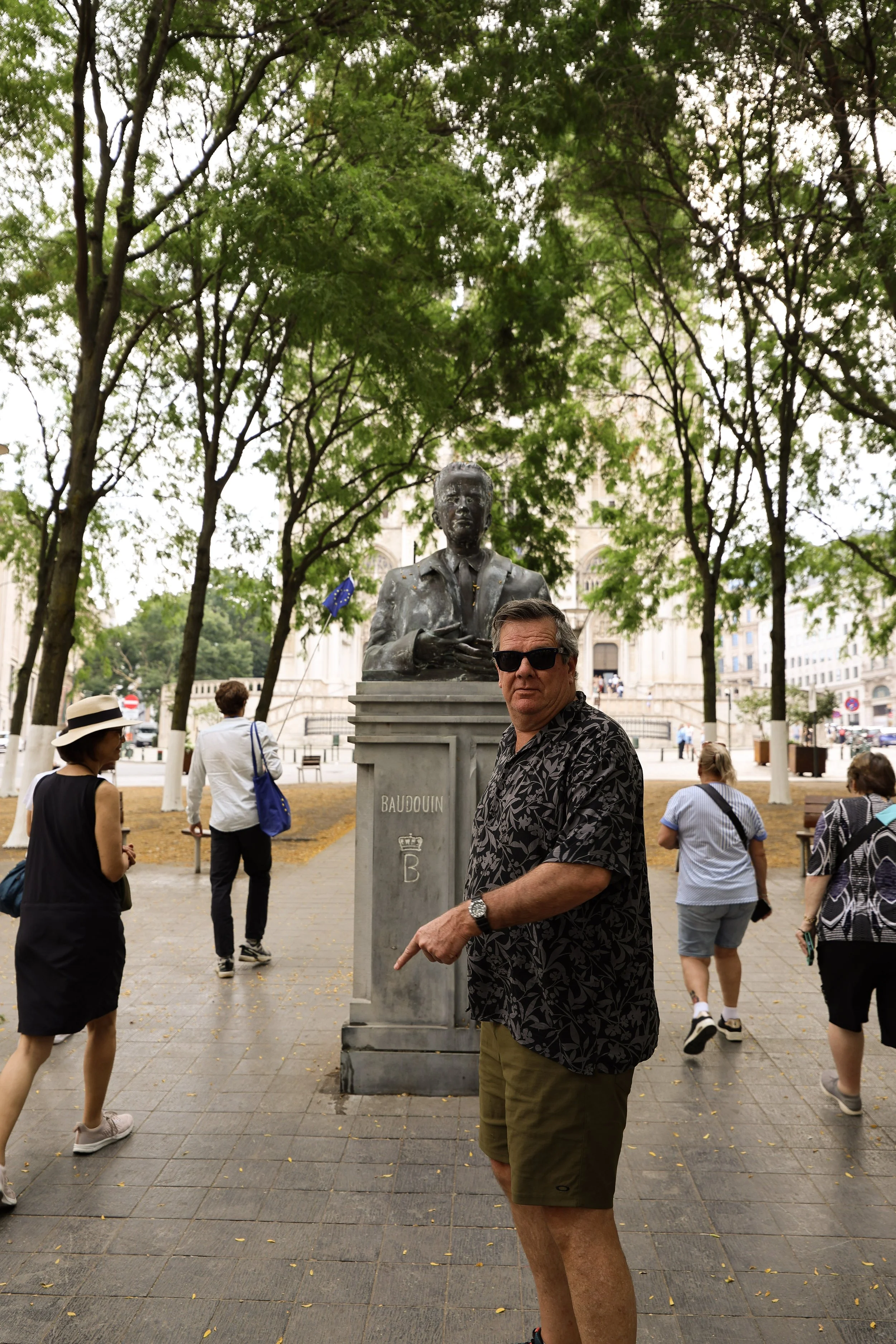
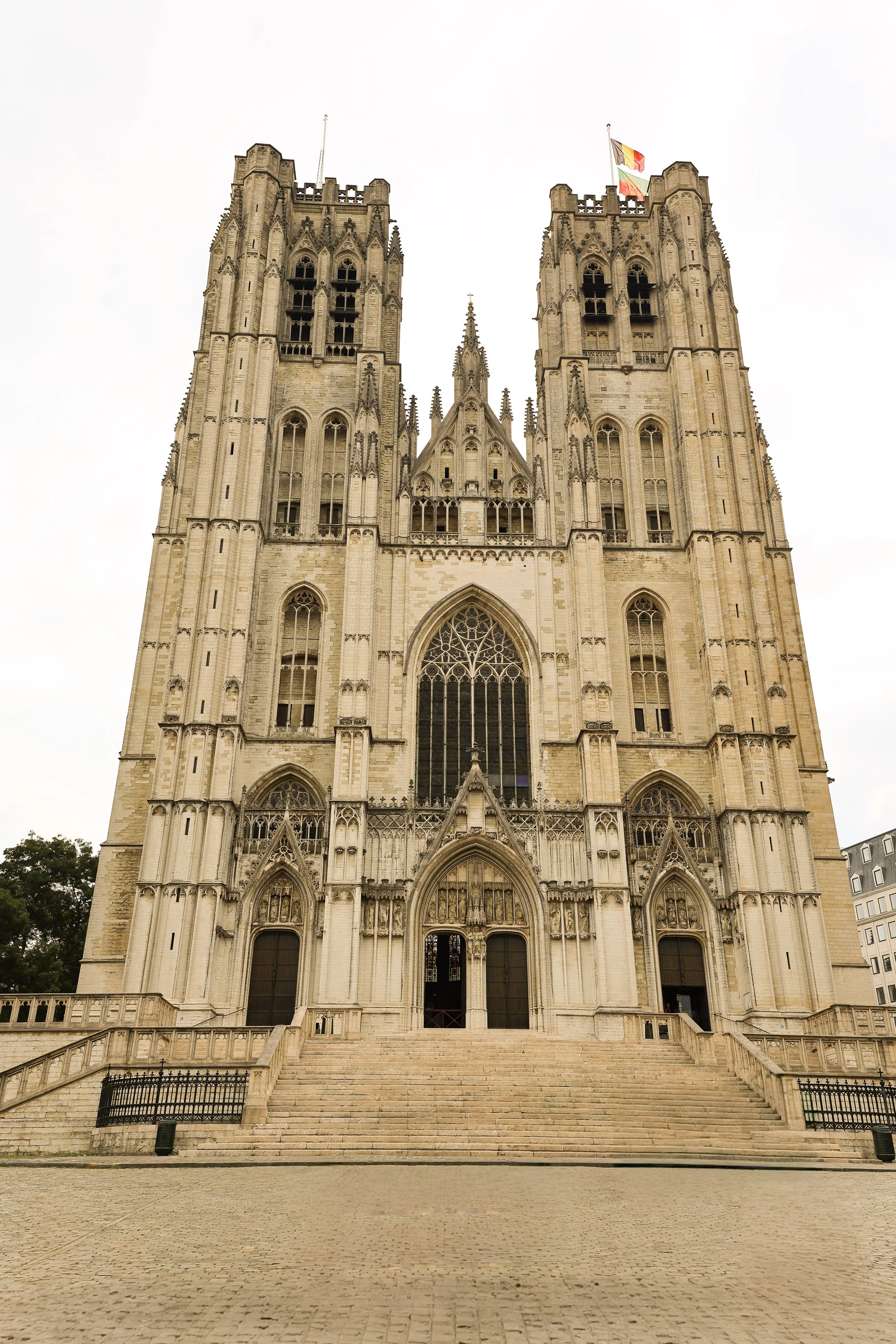
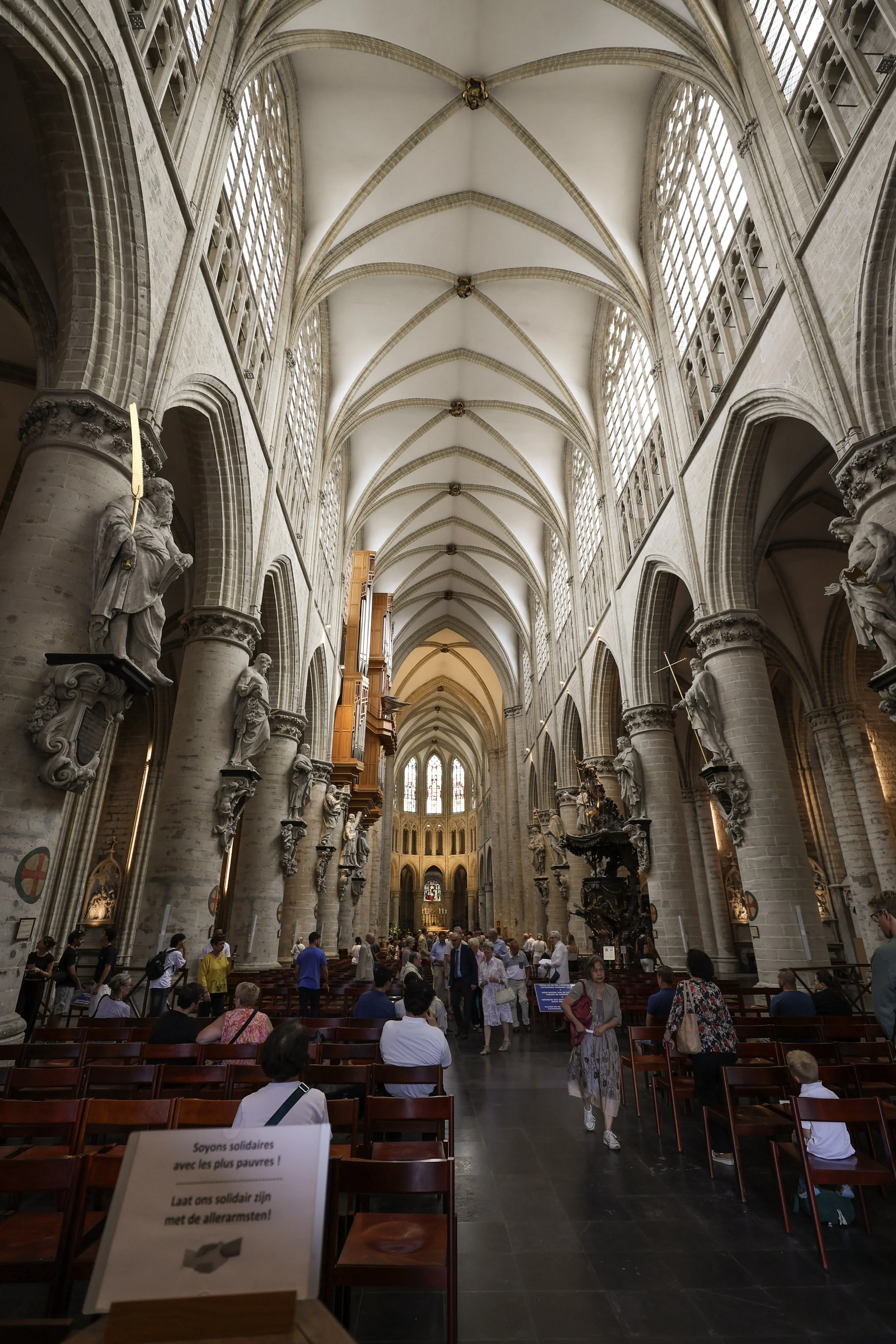
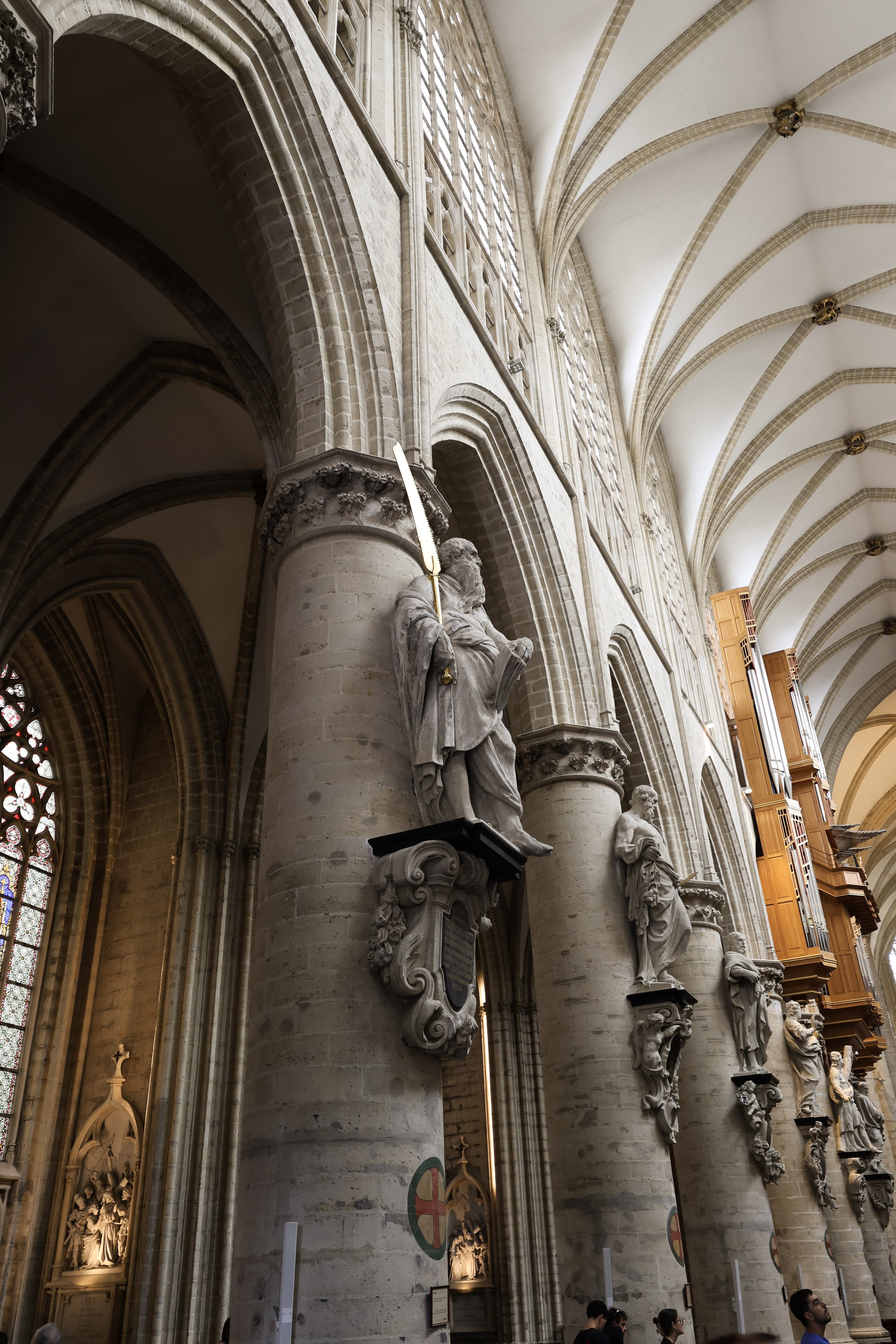
From the Atomium we headed into the city centre and visited the magnificent Cathedral of St Michael and St Gudula. Construction began in the 13th century on the site of an earlier church, and the cathedral took several centuries to evolve into the imposing Gothic building we see today. Inside, the scale is impressive — soaring vaulted ceilings, enormous stained-glass windows and beautifully detailed stonework. It is the sort of building that makes you instinctively lower your voice, even if you have absolutely no idea why.
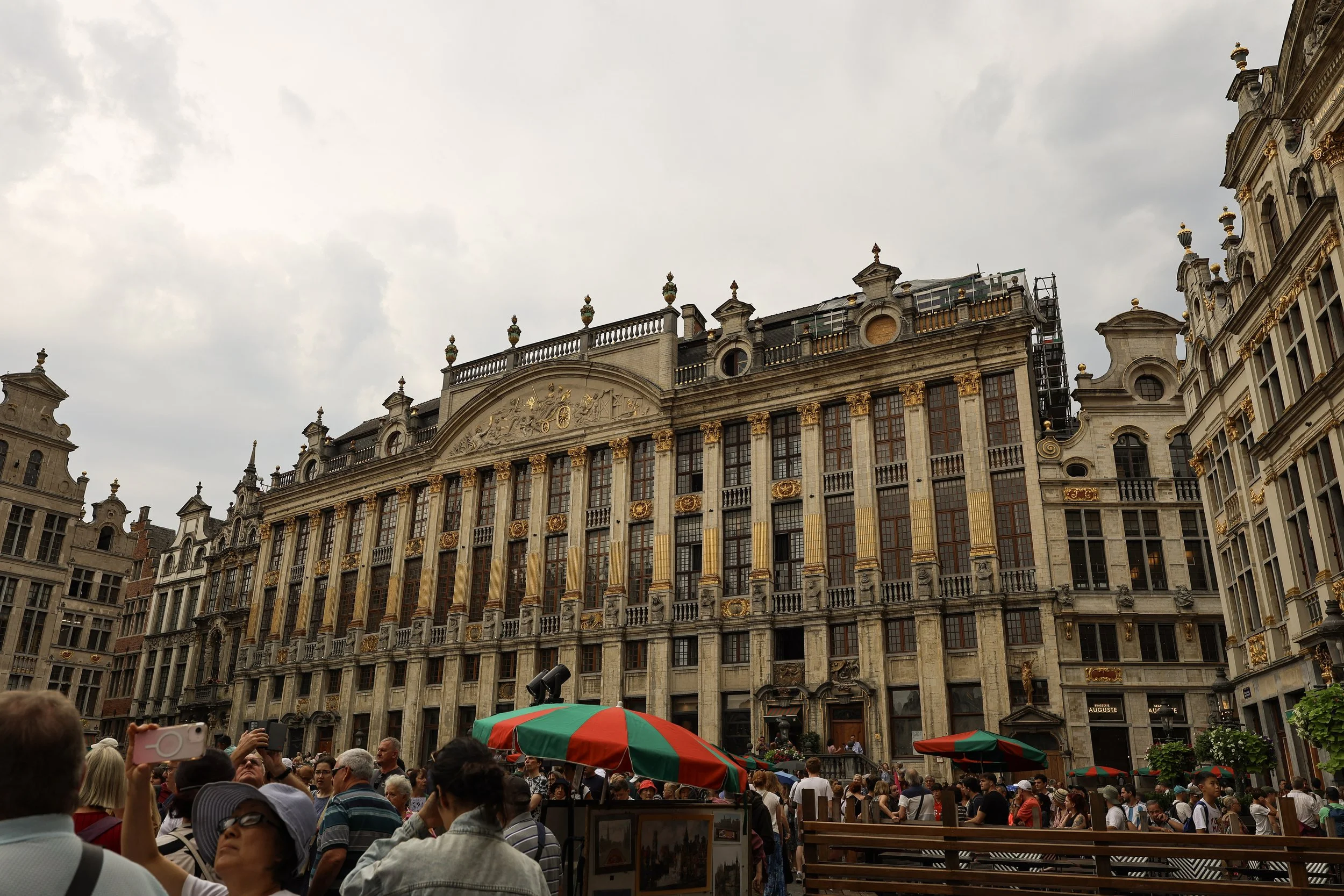
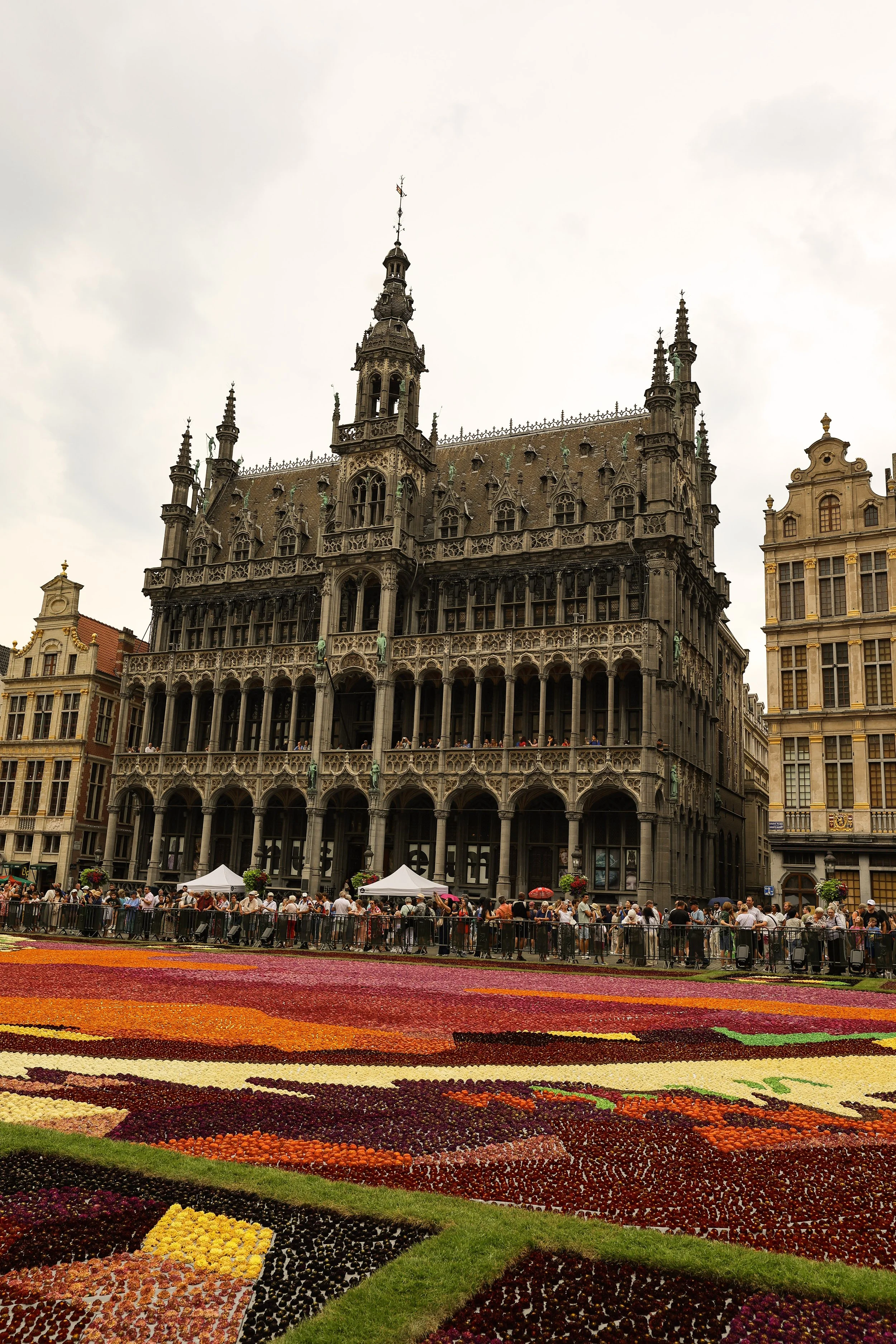
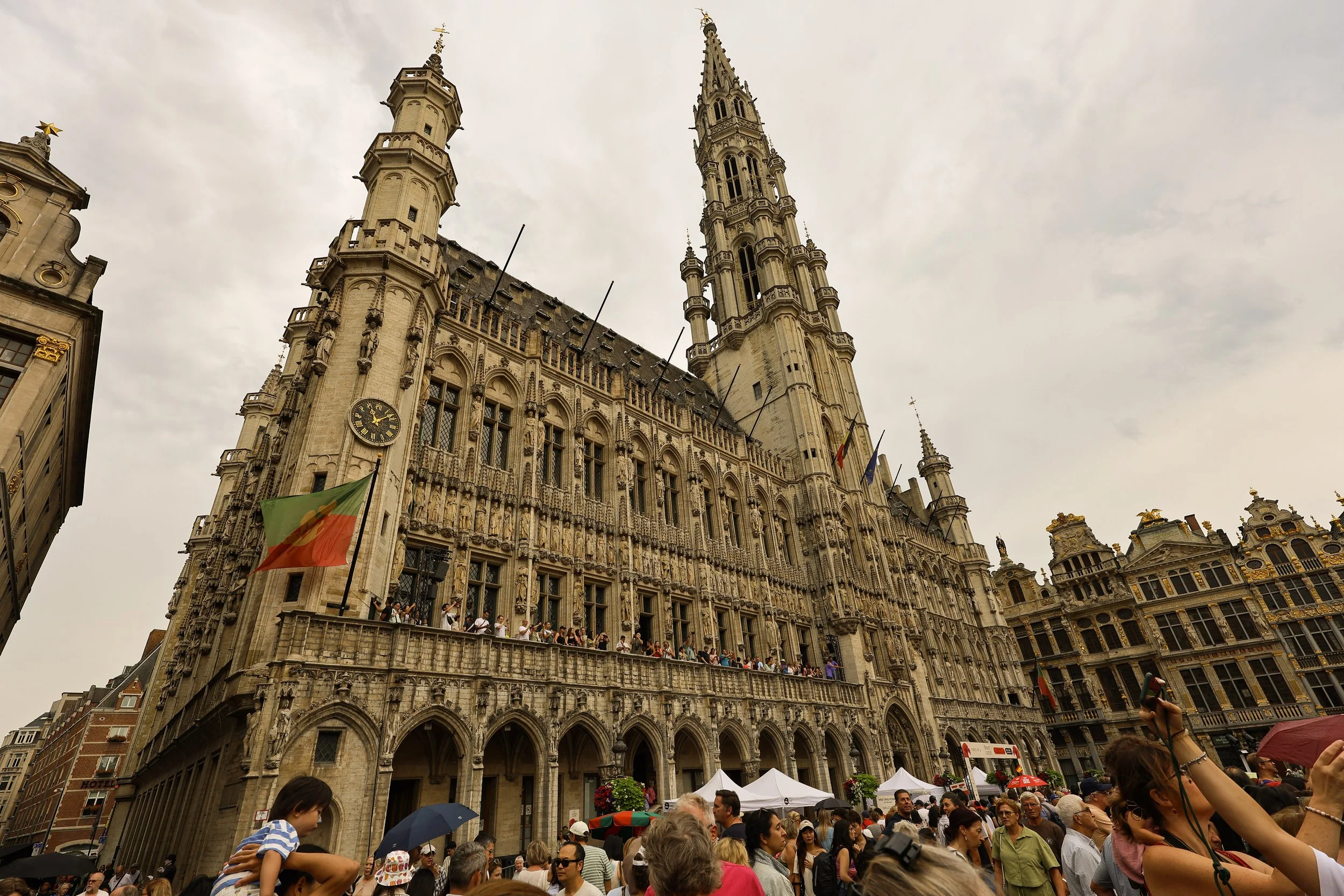
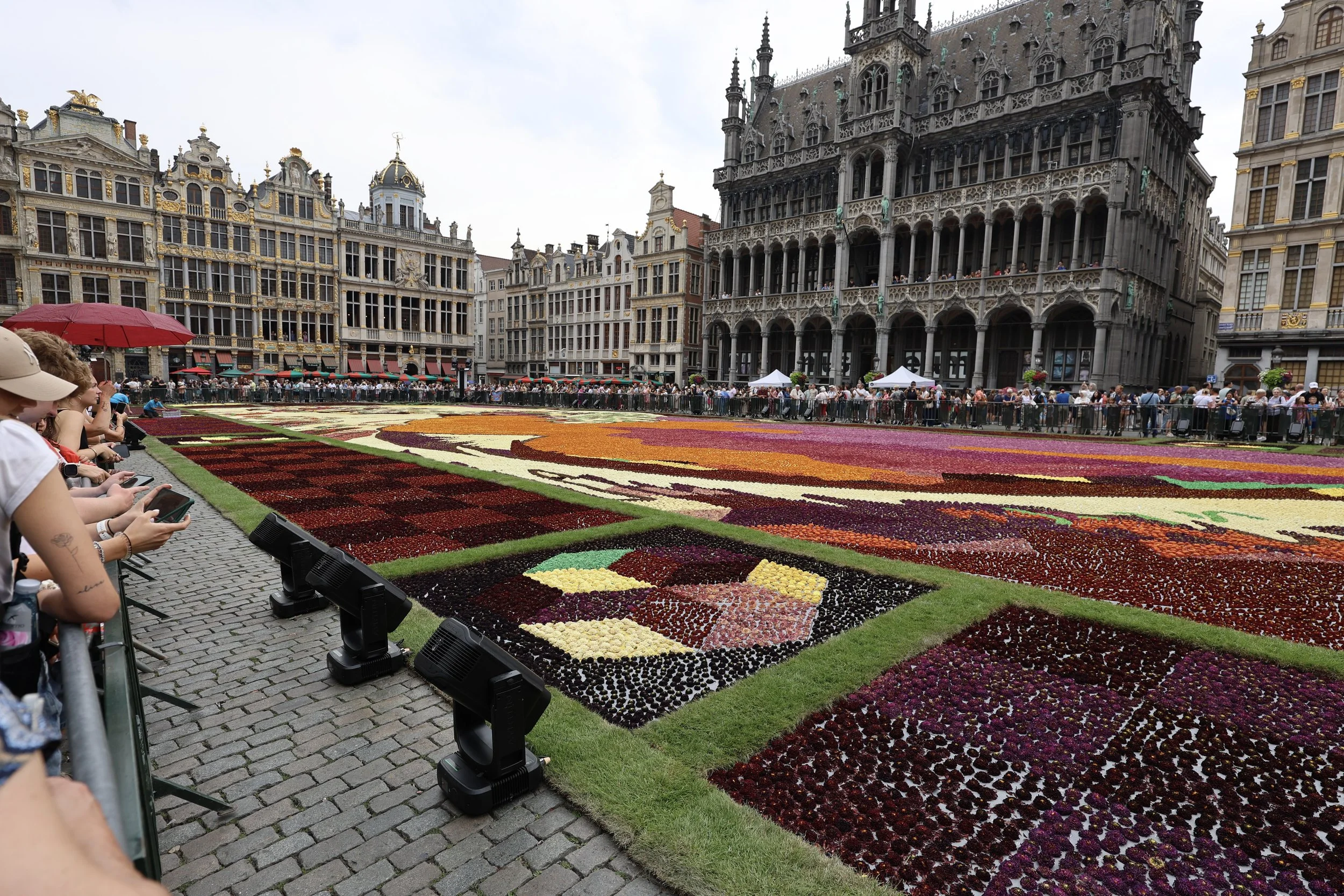
From the cathedral we continued towards the star attraction of central Brussels — Grand Place. And spectacular really is the right word. Grand Place is surrounded by some of the finest historic buildings in Brussels, including the magnificent Brussels Town Hall, with its elaborate Gothic façade and soaring tower. The square began life as a much more practical marketplace but gradually became the political and commercial heart of the city.
Standing in the middle of it, surrounded by the ornate guildhalls and Town Hall, it's easy to understand why Grand Place is considered one of Europe's great historic squares. Unfortunately, we didn't have time to sit and contemplate it for very long.
We also wandered through one of Brussels' magnificent historic shopping arcades, the Galeries Royales Saint-Hubert. Opened in
1847, it was one of Europe's earliest covered shopping galleries and remains one of the city's most elegant passages. Its glass roof, ornate architecture and beautiful shopfronts make simply walking through it an experience, even if you're not actually planning to buy anything.
Our brief visit to Brussels was over far too quickly. We'd barely scratched the surface, but we'd managed to see the Atomium, the
cathedral, Grand Place, the Town Hall and one of the city's beautiful shopping arcades. It was time to head to the airport.
As we loaded ourselves and our increasingly well-travelled luggage into the transfer, we realised that our European itinerary was already becoming something of a marathon.
We'd gone from Budapest to Amsterdam, cruised through the Netherlands and Belgium, and now we were off to Barcelona to rejoin the next part of our Grand Tour.
The river boat chapter was over.