
Salerno
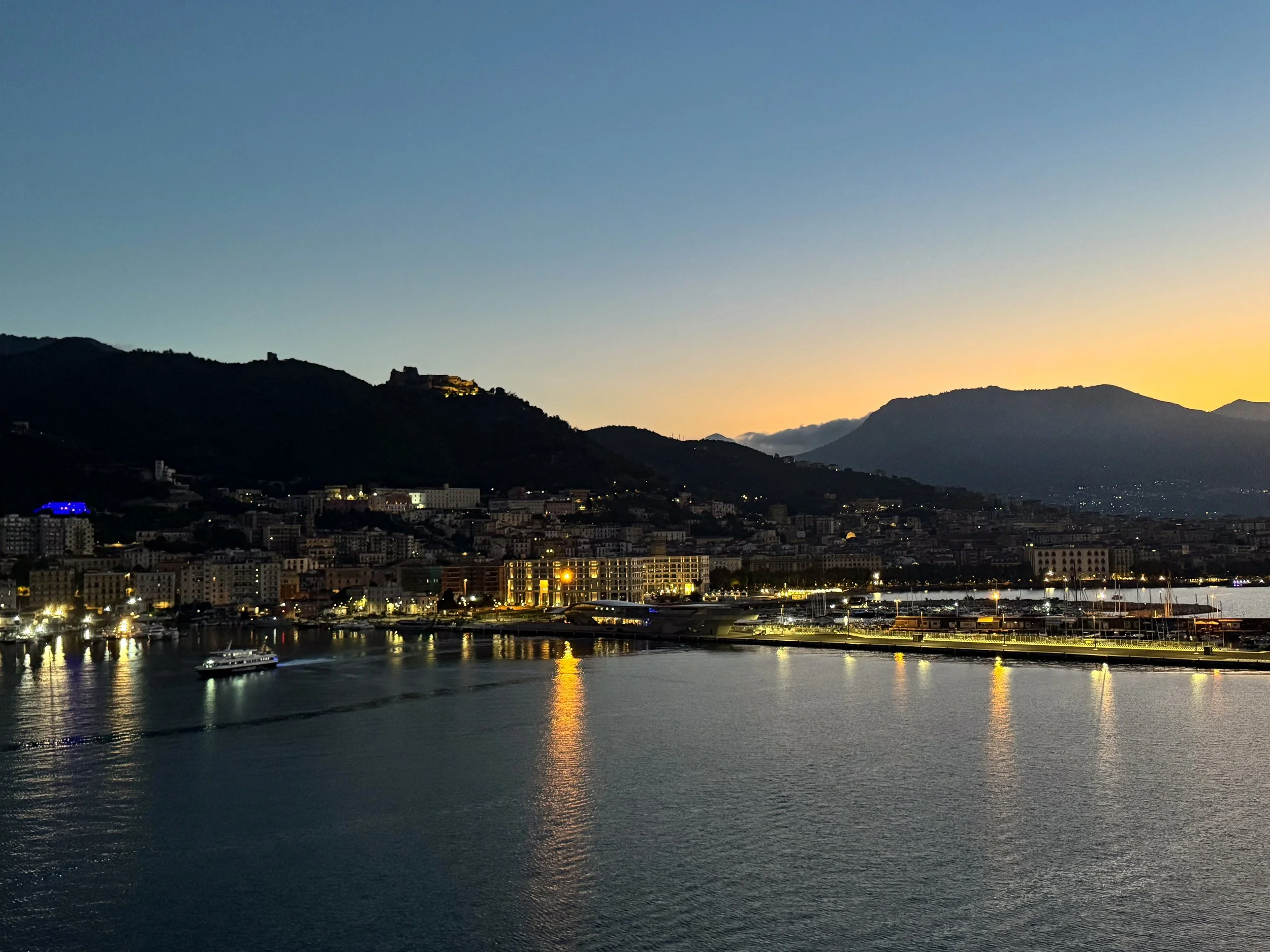
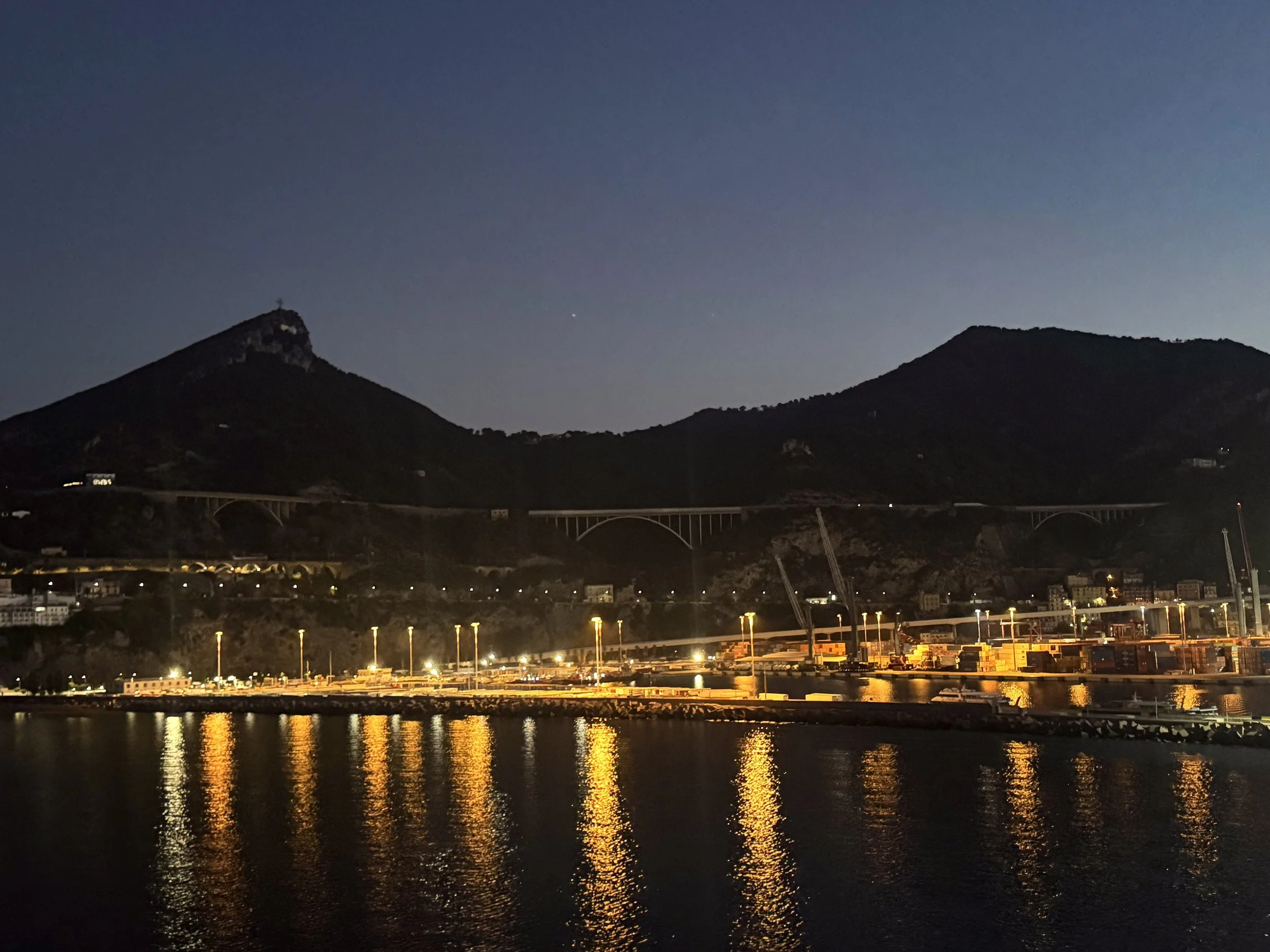
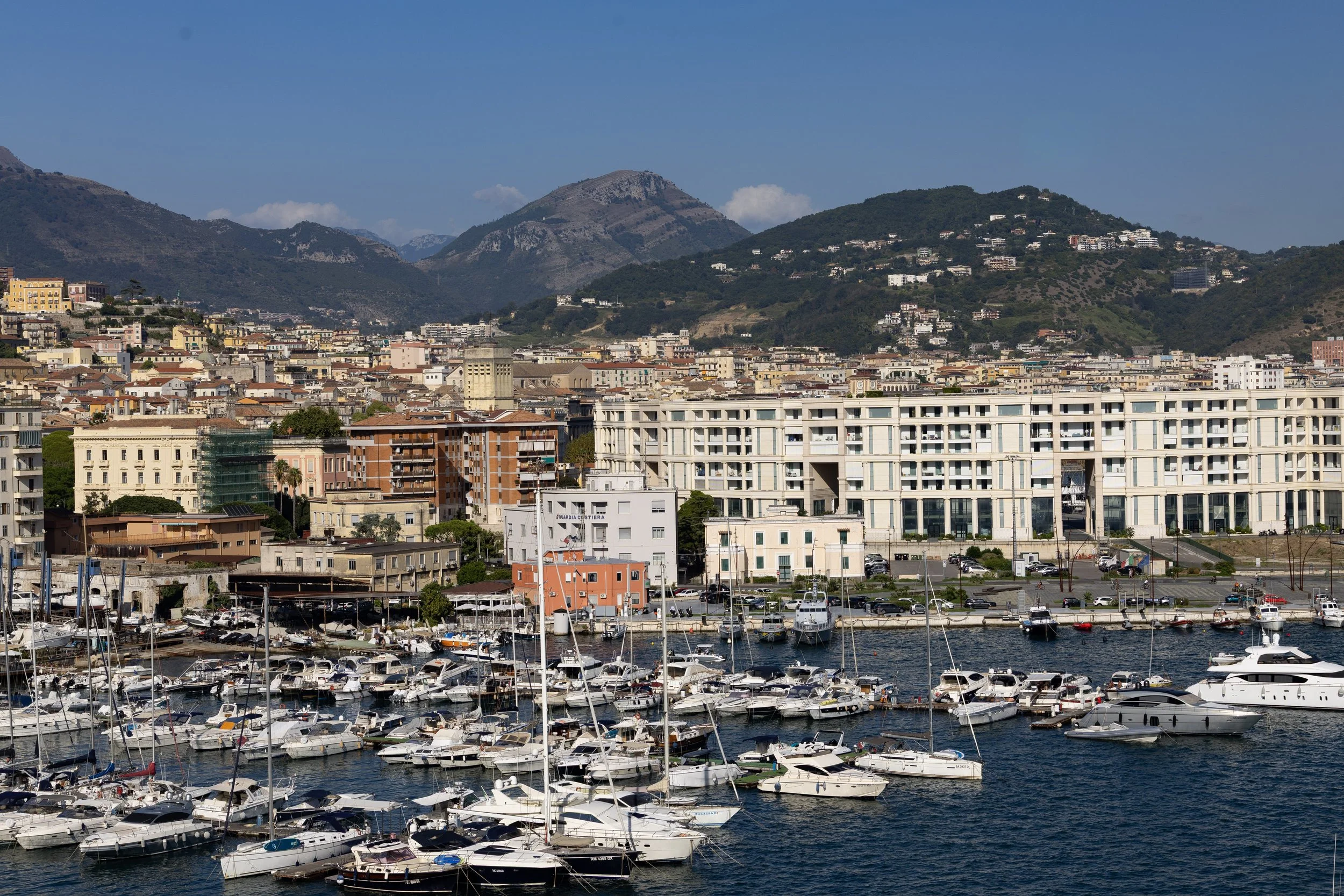
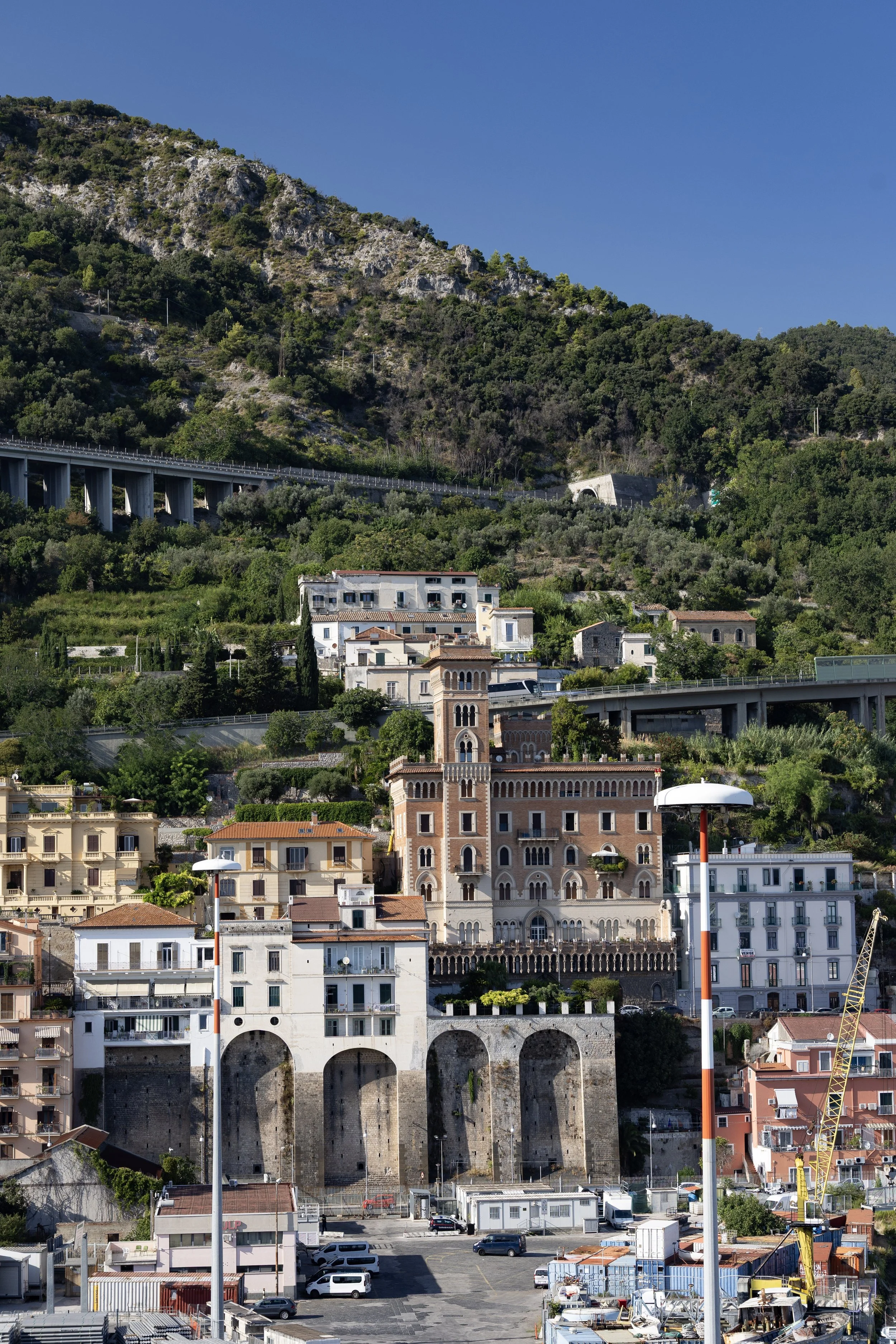
We woke the next morning in the beautiful port of Salerno, on the Gulf of Salerno in the Campania region of southern Italy. Salerno sits on the Tyrrhenian Sea and is often overshadowed by its more glamorous neighbours — Amalfi, Positano, Capri and Naples — but it has a long and fascinating history of its own.
Unfortunately, we weren't going to get the chance to explore much of it. We had Pompeii on the itinerary, so after breakfast we headed off on our tour, leaving Salerno behind.
Our tour guide was, to put it politely, a character. She was absolutely brimming with information and clearly had several decades' worth of facts stored in her head, all of which she was determined to share with us before we reached Pompeii. There was barely a pause for breath. But amongst the history, archaeology and general Italian commentary, she spent quite a bit of time talking about something that was impossible to ignore — the weather.
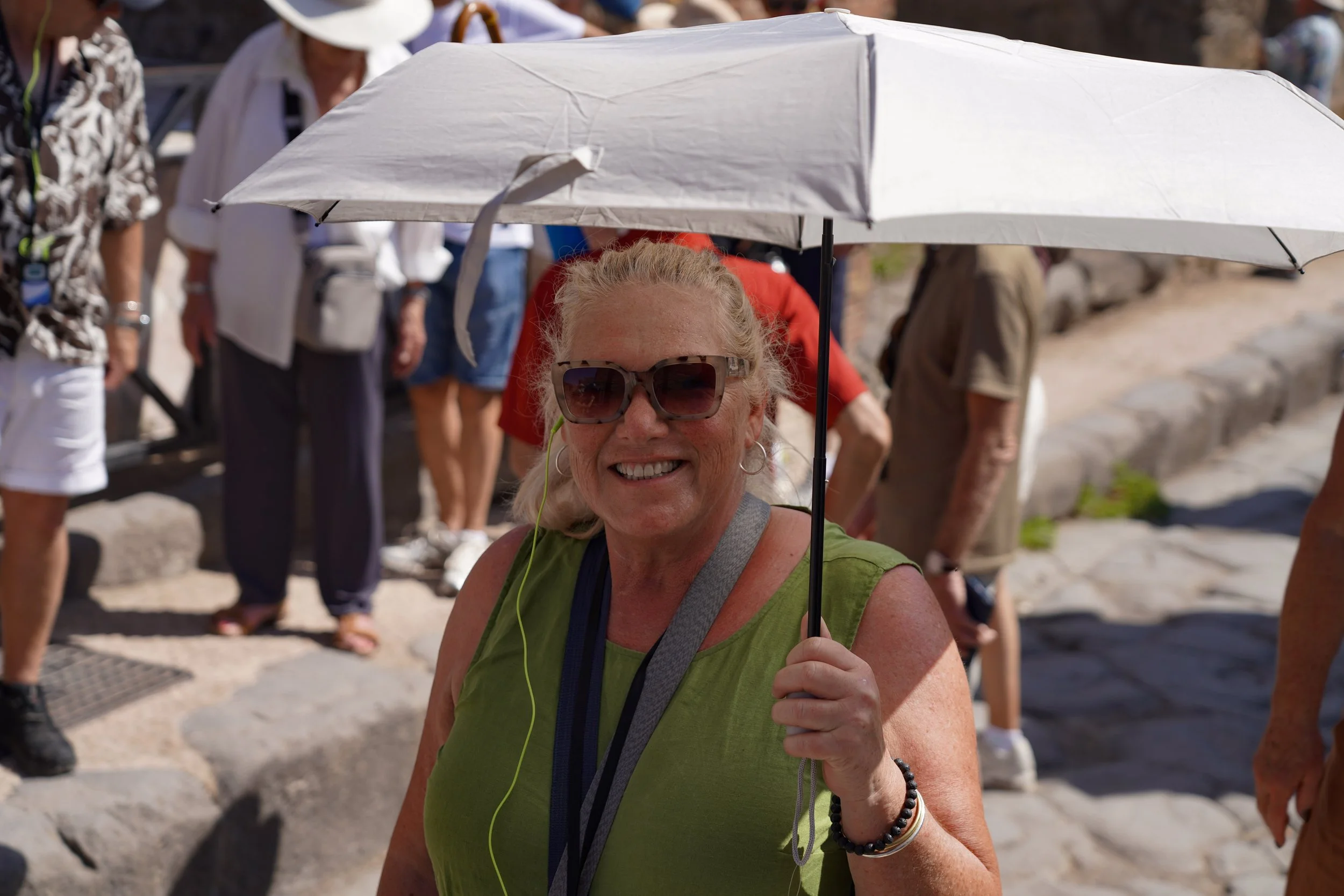
And boy, was it hot. Europe was in the grip of yet another summer of extreme heat, and Italy was certainly not escaping it. We were told that this was already the fifth heatwave of the Italian summer, with temperatures and humidity well above what would normally be expected. Climate change wasn't some abstract topic being discussed on the news — we were standing in it, sweating profusely.
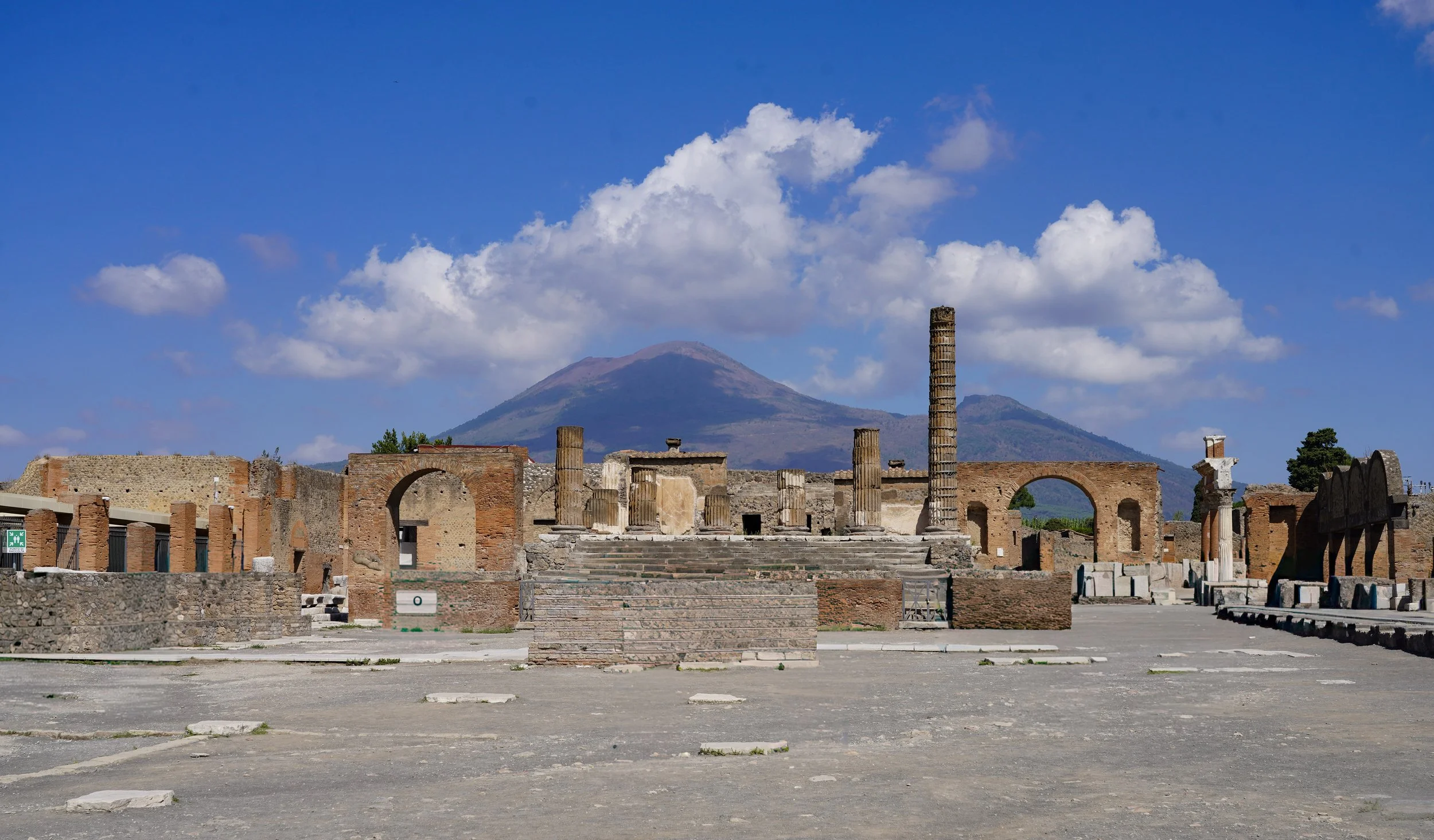
The combination of temperature, humidity and relentless sunshine was exhausting. Every time we stepped off the bus, it felt as though we'd walked directly into an oven. There was little breeze, very little shade and absolutely no sympathy from the sun.
Our guide talked about how these increasingly frequent heatwaves are affecting Europe — from agriculture and water supplies to tourism and the health of people living in some of the hottest regions. Southern Italy is particularly vulnerable, with long, hot summers becoming increasingly difficult for both locals and visitors.
We listened attentively. We also drank an enormous amount of water.
Eventually, we arrived at Pompeii. This was one of the places I had been really looking forward to seeing. Pompeii is one of those names that you've heard your entire life. The Roman city was buried in AD 79 when nearby Mount Vesuvius erupted, covering the town in volcanic ash and pumice. Unlike many ancient cities that were gradually altered, demolished and rebuilt over centuries, Pompeii was effectively sealed in time.
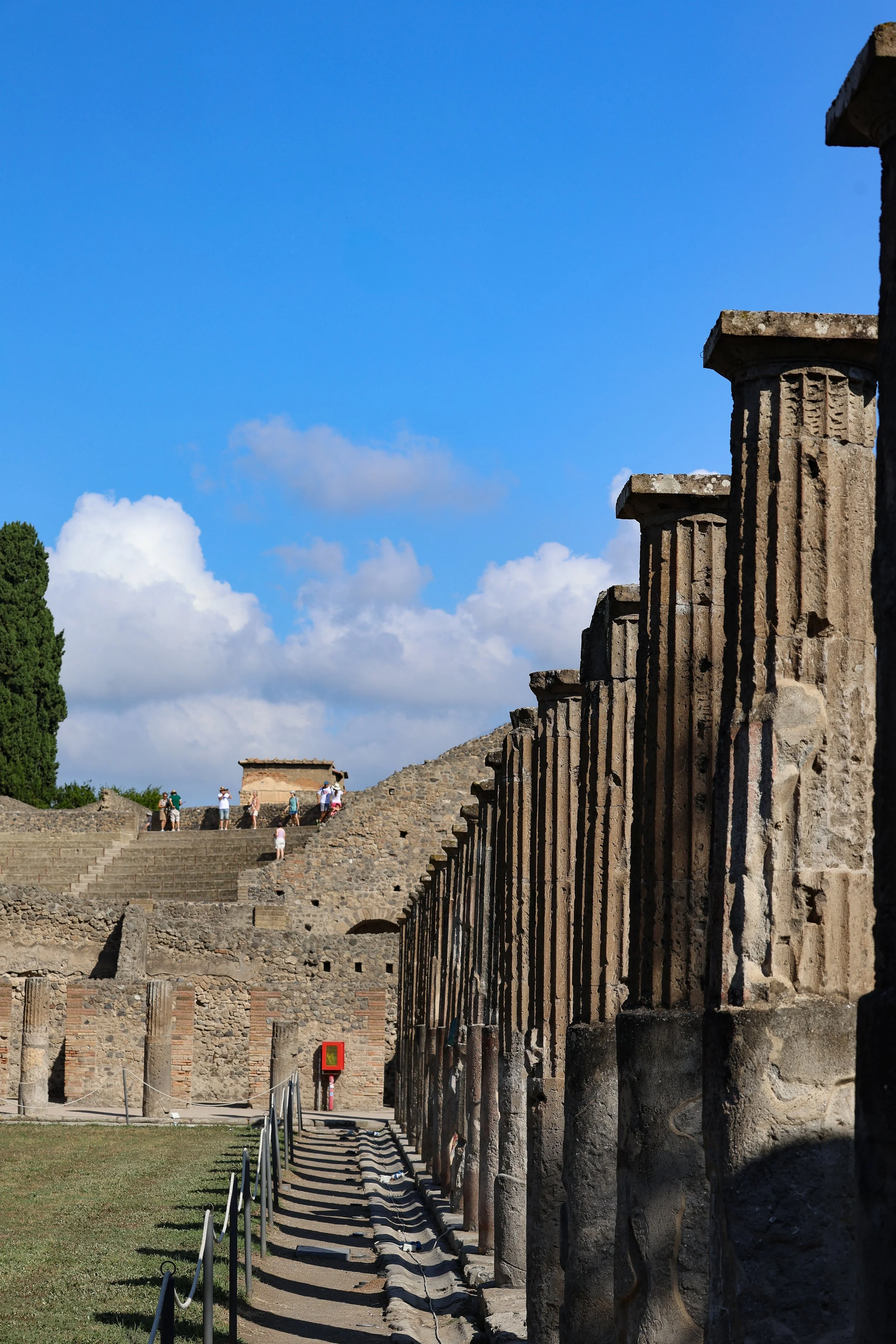
The eruption was catastrophic. Huge quantities of ash and volcanic material rained down on the city, roofs collapsed, streets disappeared and eventually much of Pompeii was buried beneath several metres of volcanic deposits. But that same disaster created an extraordinary archaeological time capsule.
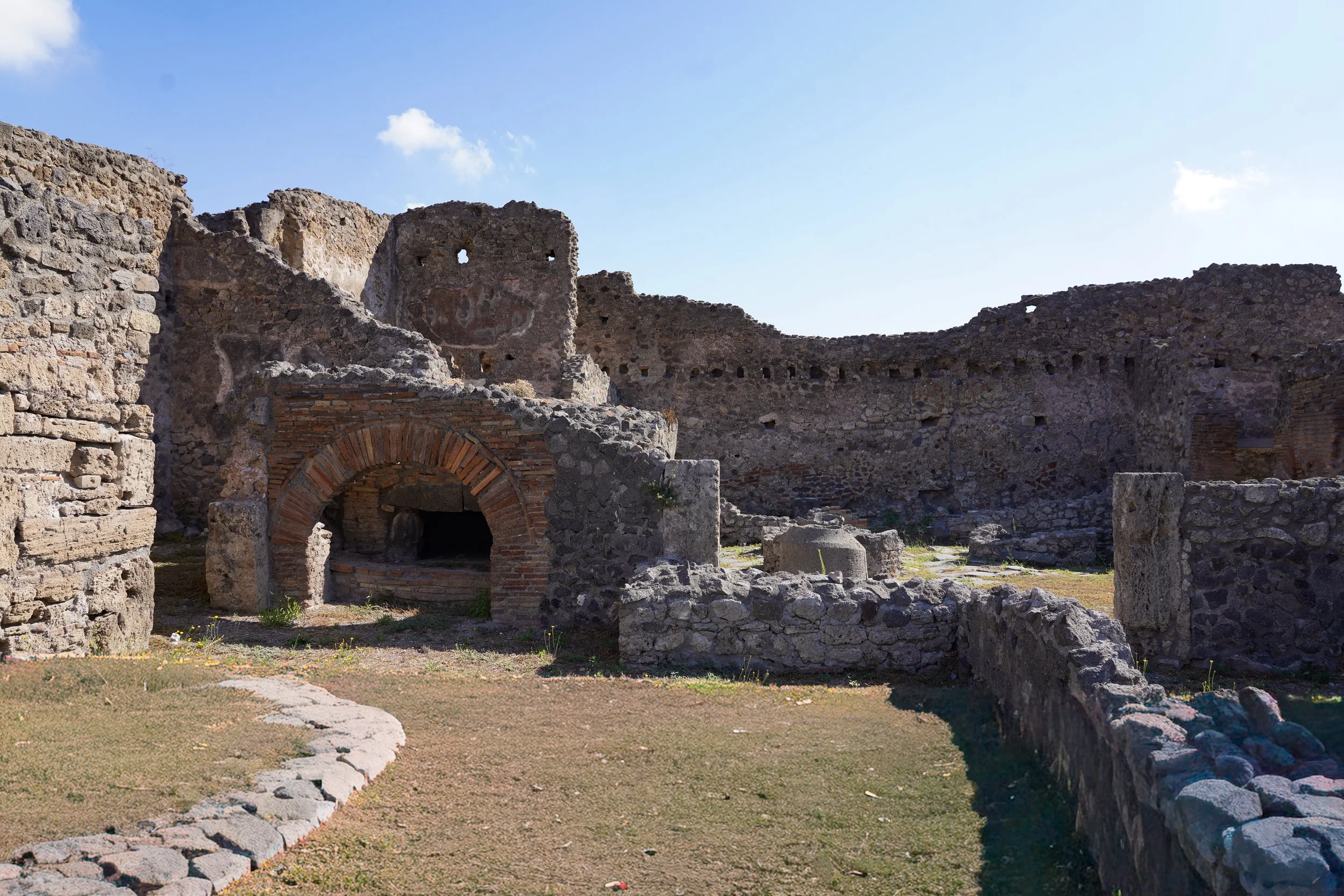
Because Pompeii was buried so quickly, archaeologists have been able to uncover an astonishing amount of everyday Roman life — houses, shops, bakeries, baths, temples, fountains, theatres, political graffiti and even the remains of food.
It isn't just the grand monuments that make Pompeii remarkable. It's the ordinary things.
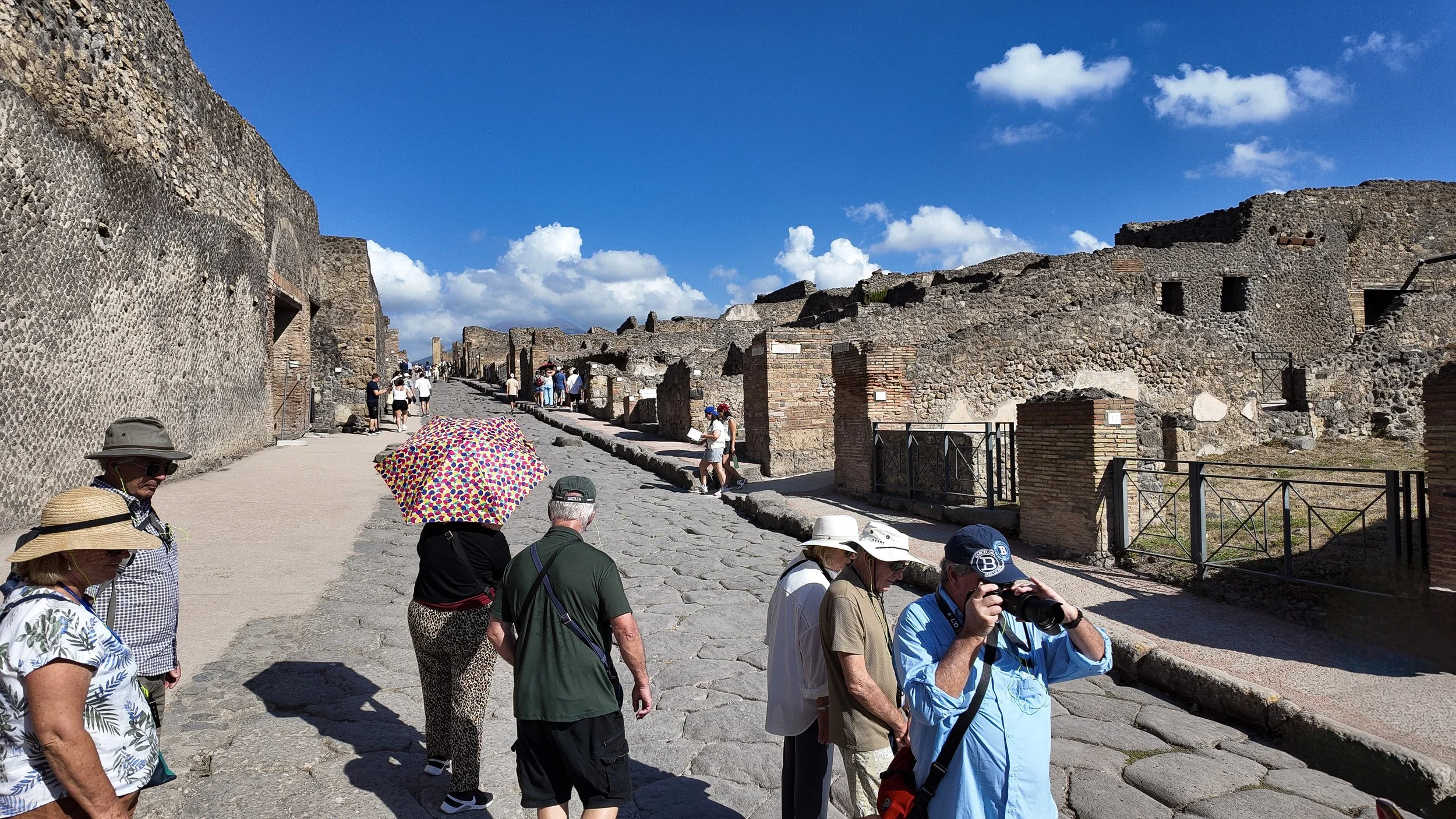
You can walk along streets that were used nearly 2,000 years ago and see the raised stepping stones that allowed pedestrians to cross the roads without walking through the muck and water that flowed along the streets. You can see the ruts worn into the stone by Roman carts. There are houses with courtyards, gardens and frescoes, shops with counters where food was served and small bars where Romans stopped for something to eat and drink.
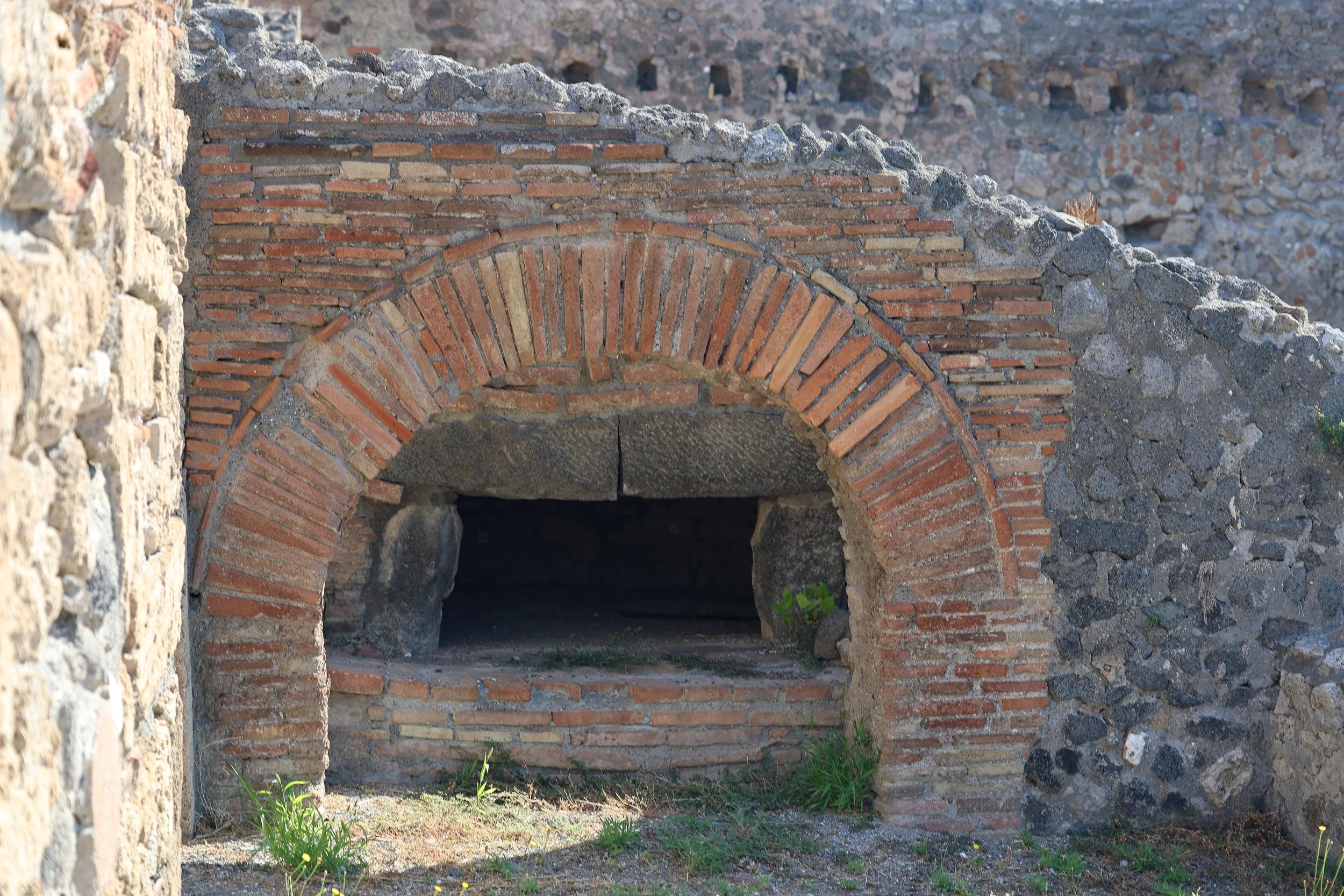
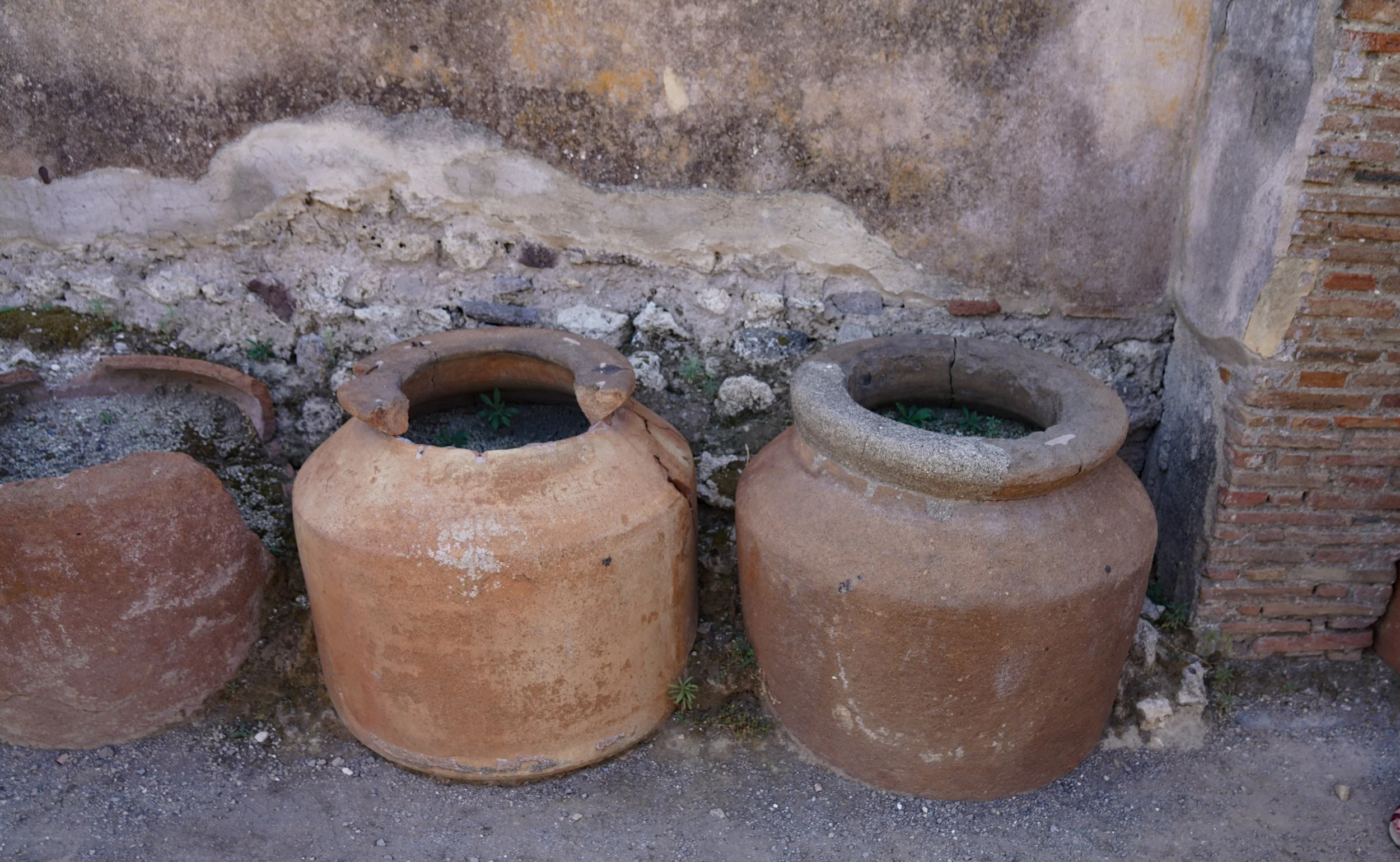
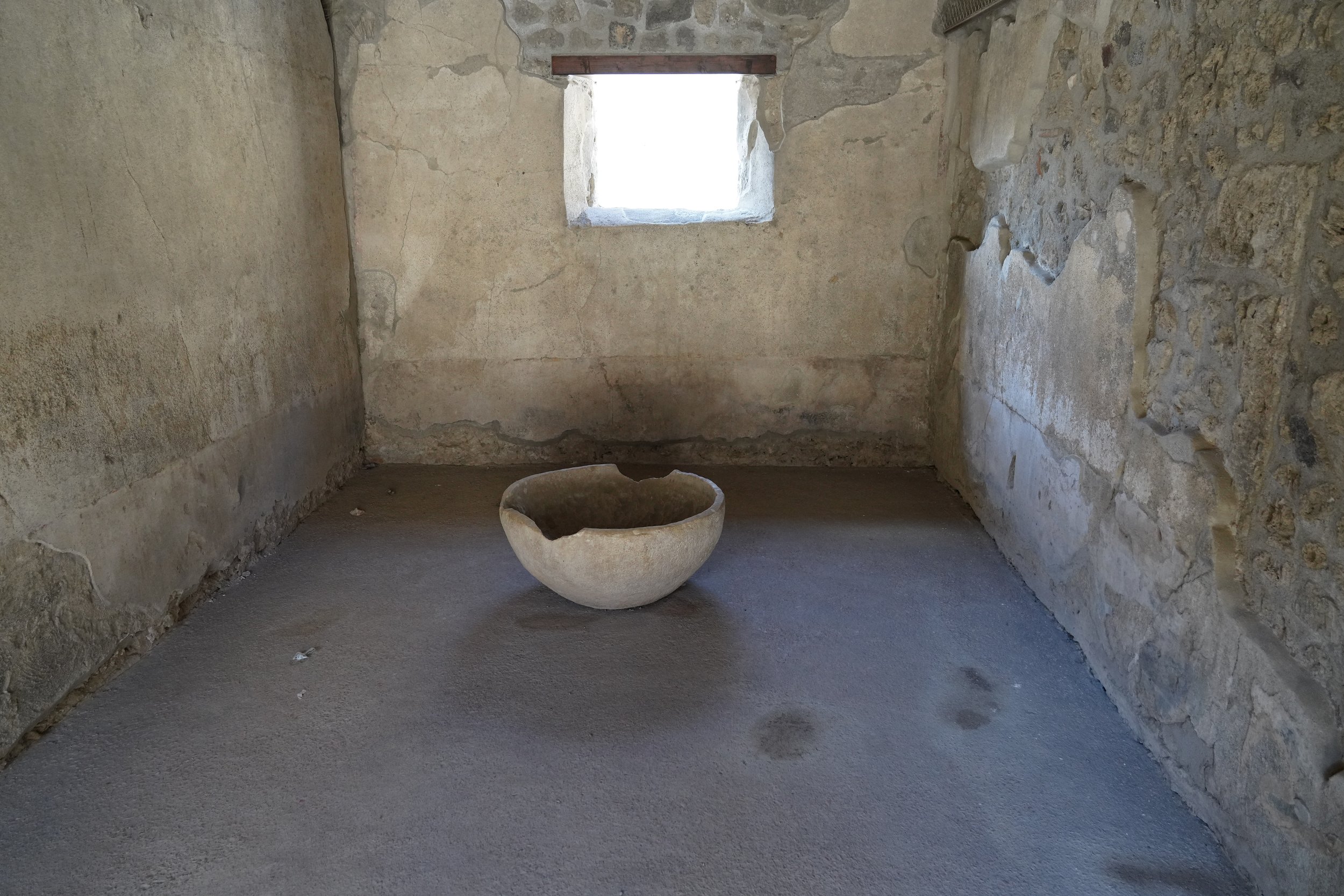
In fact, the Roman equivalent of the takeaway was alive and well in Pompeii. There were numerous thermopolia — ancient fast-food counters where people could buy hot food and drinks. Large clay vessels were built into the counters to hold food, and they were essentially the Roman version of the neighbourhood takeaway.
Our second guide was completely different from the first. We were in a much smaller group, which made a huge difference, and he had a wonderful ability to bring the ruins to life with words. Rather than simply pointing at a building and telling us what it was, he described what the streets would have looked and sounded like when Pompeii was a living, breathing city. He talked about the street bars and food sellers, the people moving through the busy streets, children playing, traders shouting to attract customers and Romans going about their everyday lives without the slightest idea that their world was about to disappear.
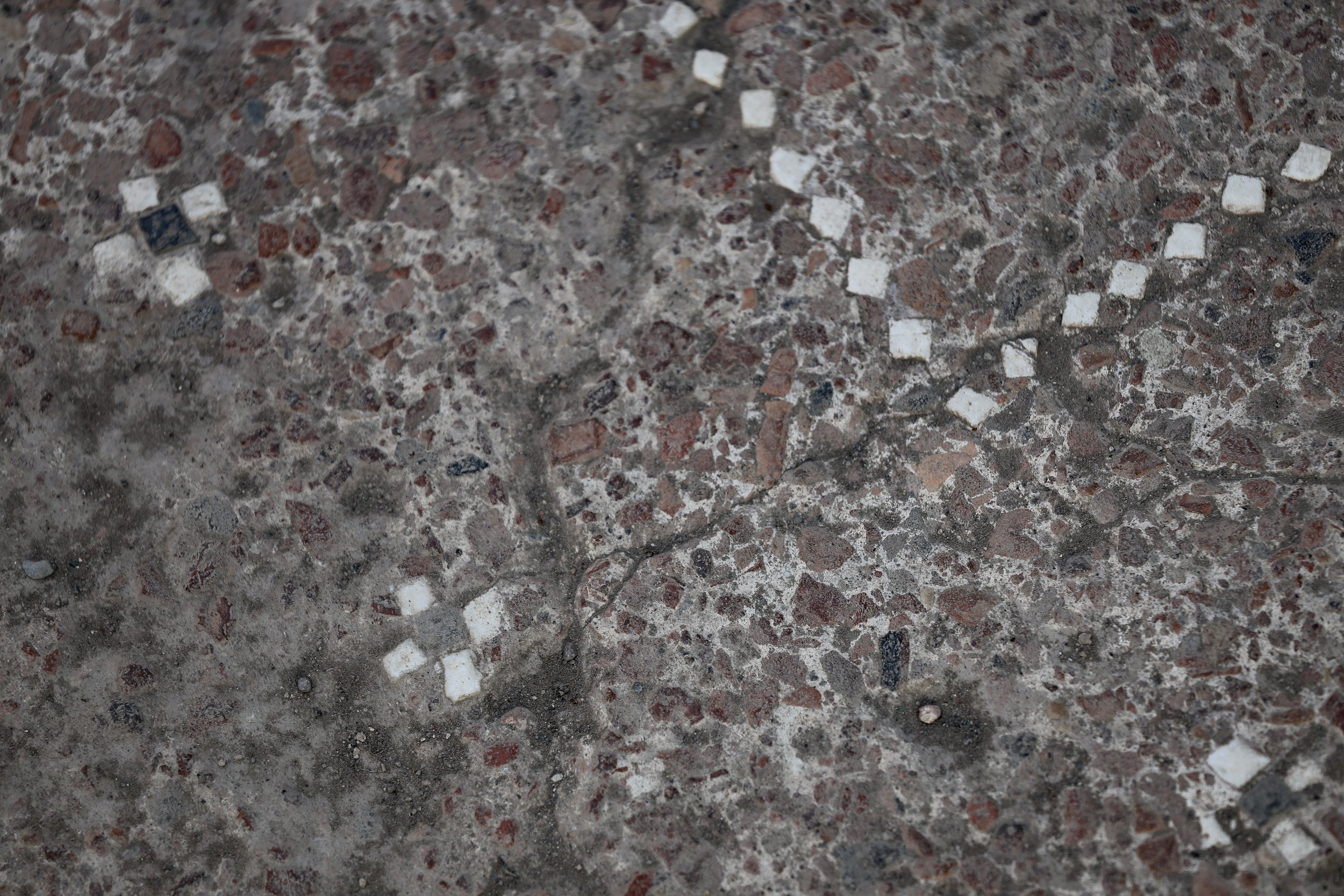
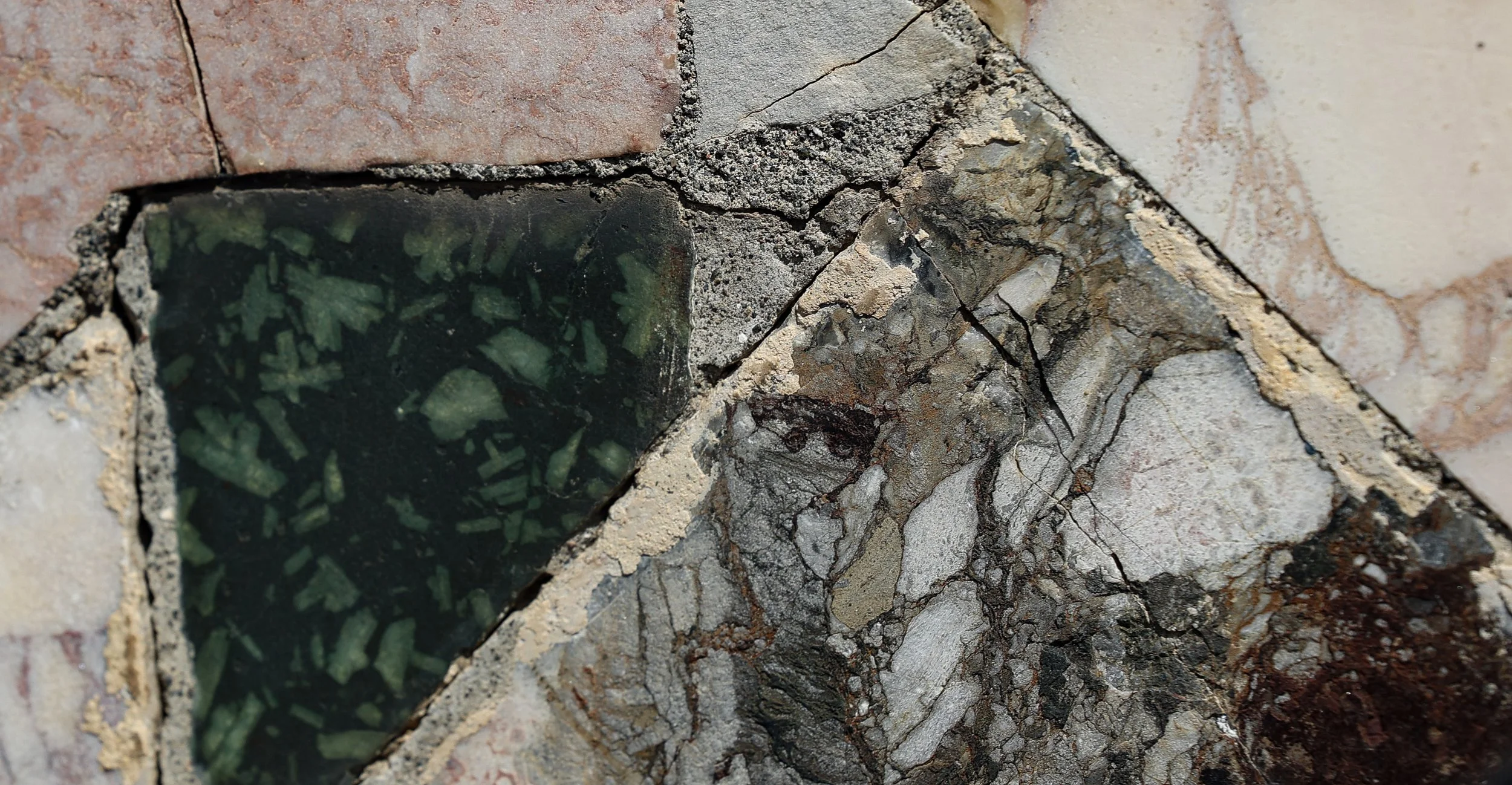
One of the details I particularly loved was his explanation of the reflective marble and stone surfaces used throughout the city. Some of the paving stones were highly reflective, and when sunlight or lamplight hit them, they could help illuminate the streets and buildings. It was a fascinating reminder that the Romans were far more sophisticated in their approach to urban design than we sometimes give them credit for.
He made it easy to imagine Pompeii as a functioning city rather than simply a collection of ruins. And yet... I have to admit that Pompeii didn't quite give me the emotional experience I had expected. I'd imagined walking through the ancient streets and being overwhelmed by a sense of gravitas — that almost physical feeling of standing somewhere where something enormous and tragic had happened. I expected it to feel haunting, perhaps even a little eerie.
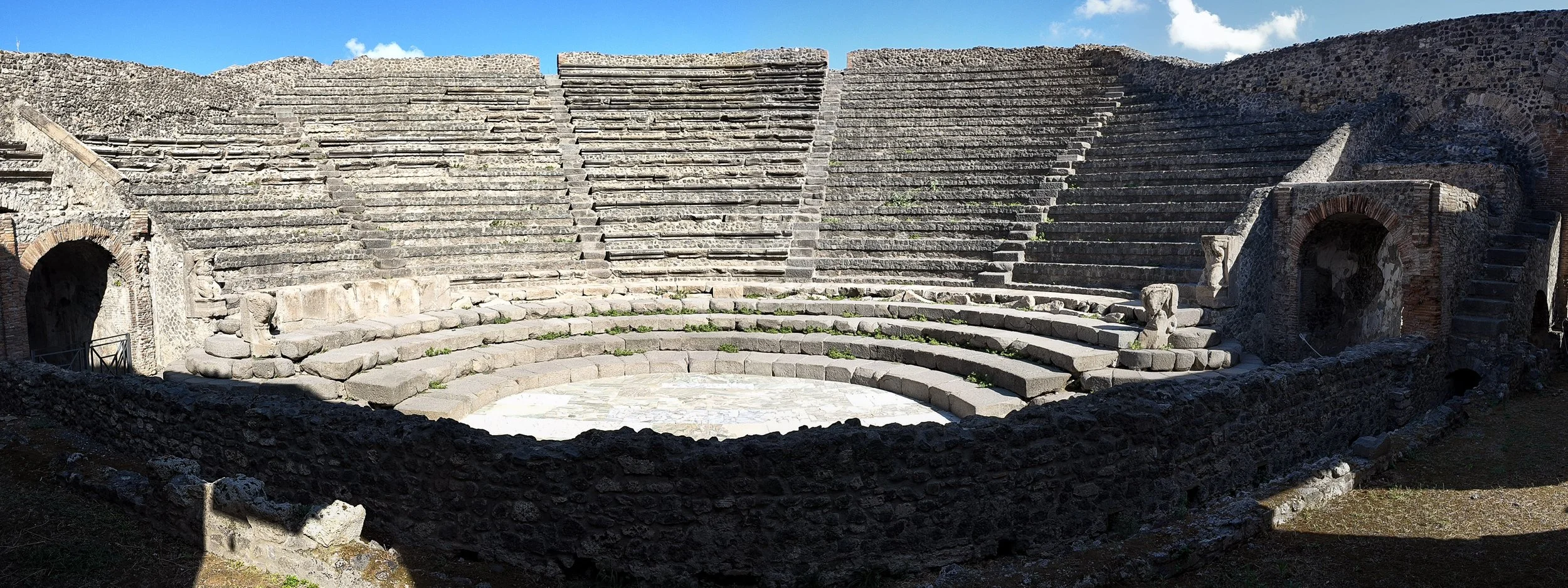
Instead, it felt strangely... antiseptic. Some of that was undoubtedly the conditions. The heat was absolutely brutal. There were crowds everywhere, people shuffling along carrying water bottles and hats, tour groups stopping in the middle of narrow streets and everyone searching desperately for the next patch of shade.
It's difficult to feel deeply reflective when sweat is running into our eyes and you're trying not to step on the person in front of you. Perhaps Pompeii needs to be experienced differently. I suspect an early morning visit, in cooler weather, with fewer people and enough time to simply wander would be a completely different experience. Standing in those streets when the site is quiet would probably allow the history to sink in far more effectively. Because the history itself is extraordinary.
Pompeii was not simply destroyed and forgotten. It was lost for centuries before excavations began in earnest in the 18th century. What emerged was an incredibly detailed picture of Roman life. The city has since become one of the world's most important archaeological sites and a UNESCO World Heritage Site.
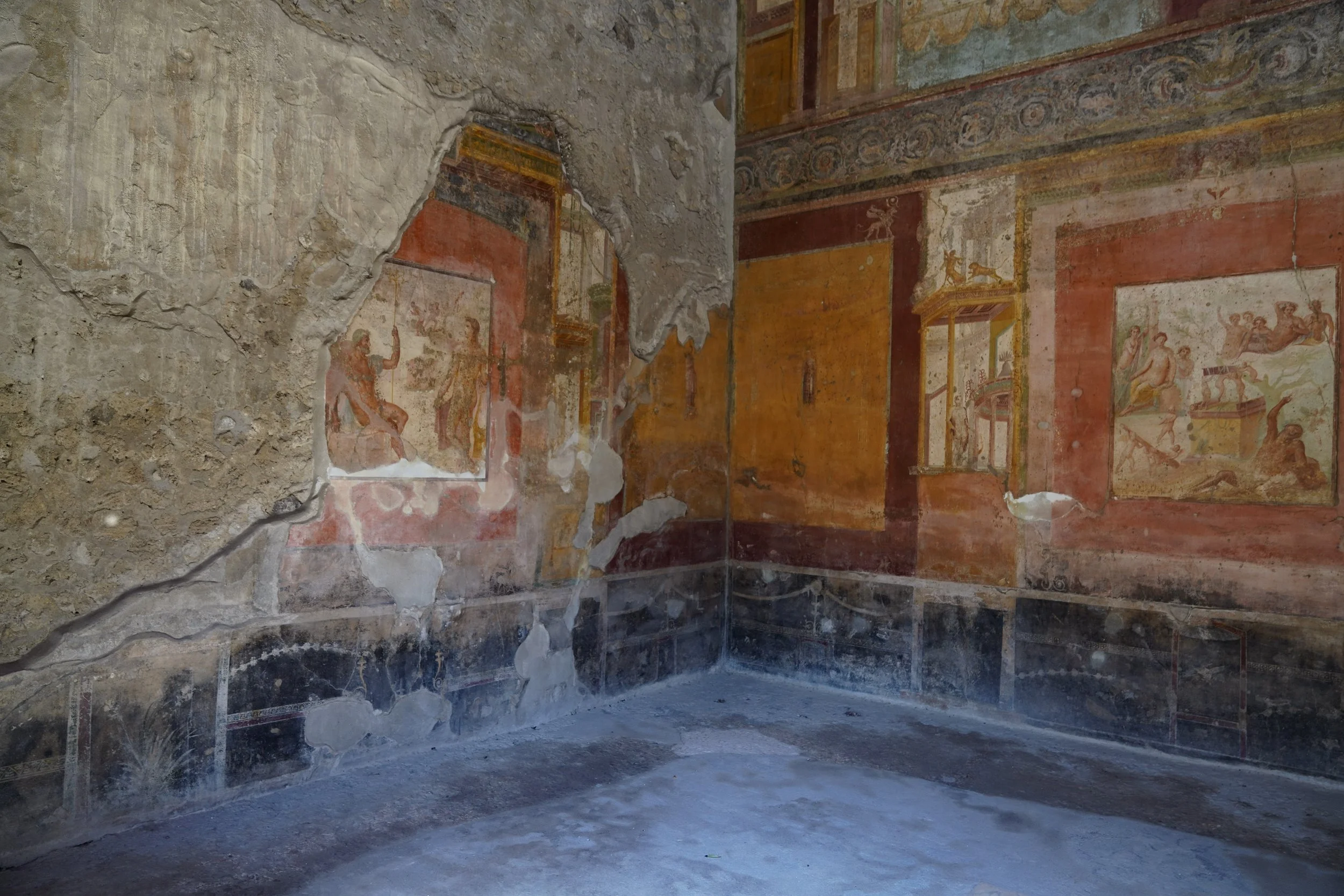
There is something quite confronting about walking through someone's home and seeing the remains of their everyday life — the mosaics on the floors, colourful frescoes on the walls, fountains, gardens and household objects — knowing that the people who lived there had absolutely no idea that their ordinary Tuesday was about to become one of history's most famous disasters.
And then, of course, there are the plaster casts of some of the victims. These are probably the most confronting part of Pompeii. As the bodies of victims decomposed within the hardened ash, they left cavities behind. Archaeologists eventually discovered that by pouring plaster into these cavities, they could recreate the positions of the people at the moment they died.
It is a powerful reminder that Pompeii wasn't simply an archaeological event. People died here. Families were separated. Lives ended in a matter of hours. A thriving city disappeared beneath the volcano.
We could see Mount Vesuvius looming in the distance — the seemingly innocent mountain responsible for everything we were standing amongst. It is strangely beautiful. And perhaps that's part of what makes the story so compelling.
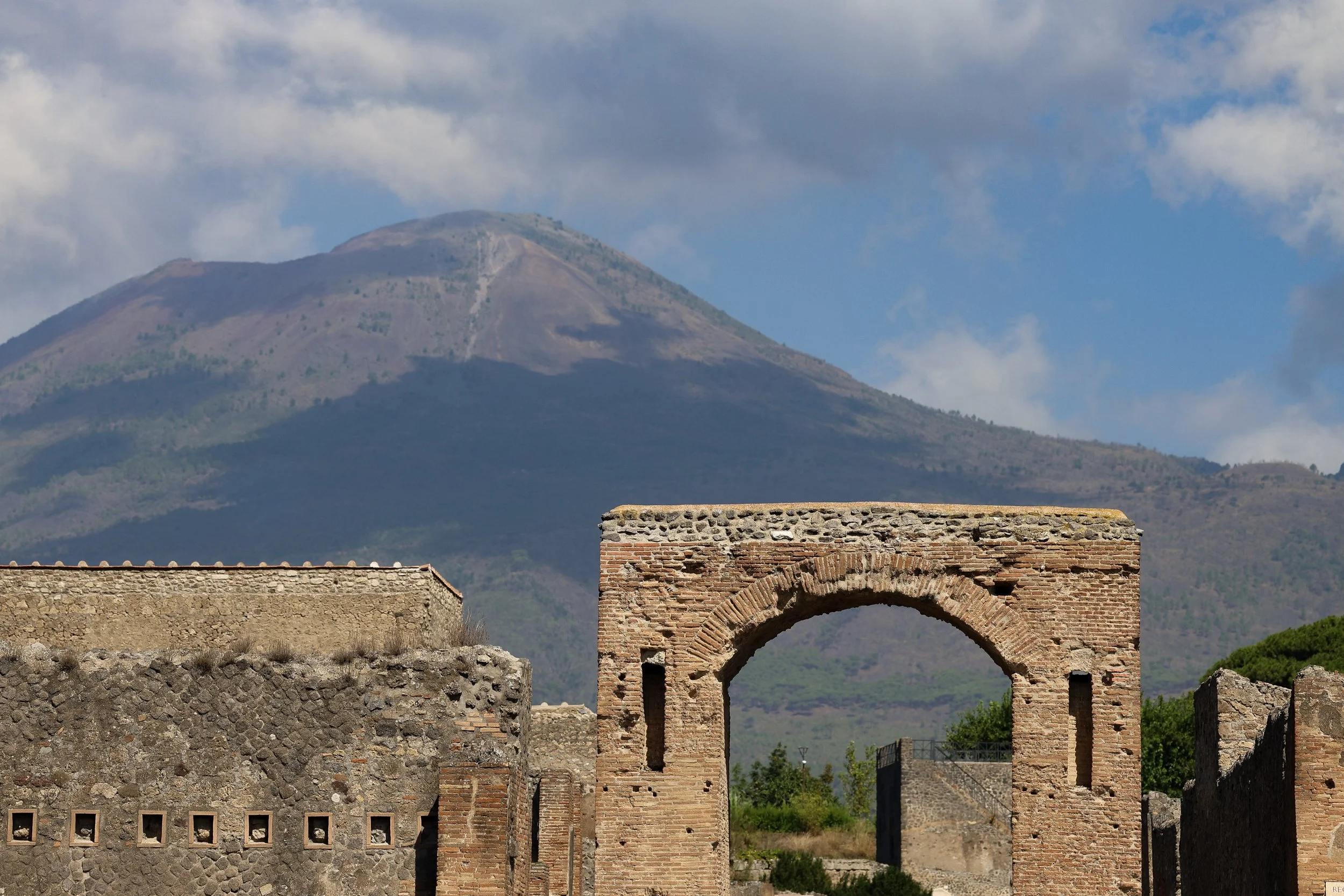
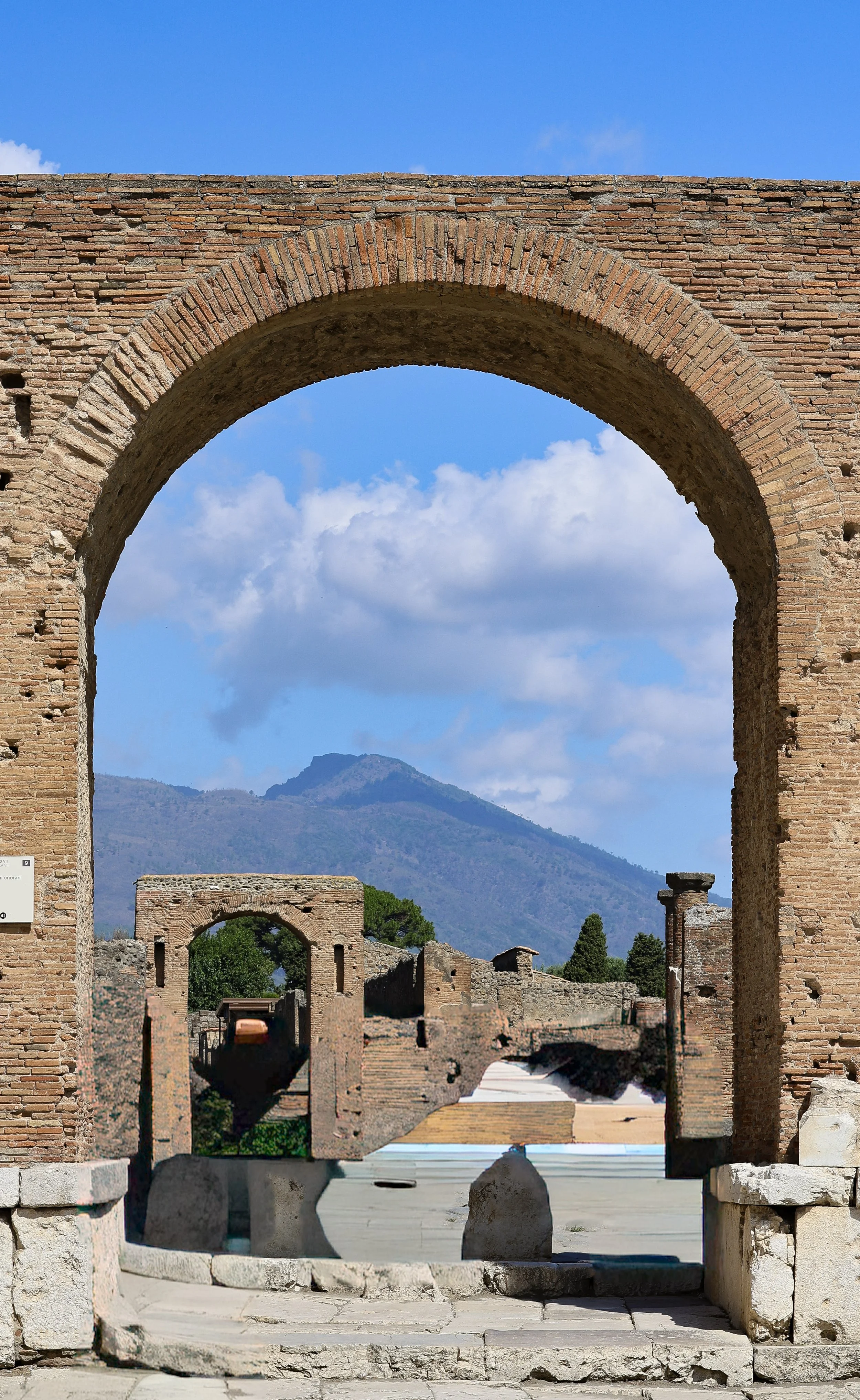
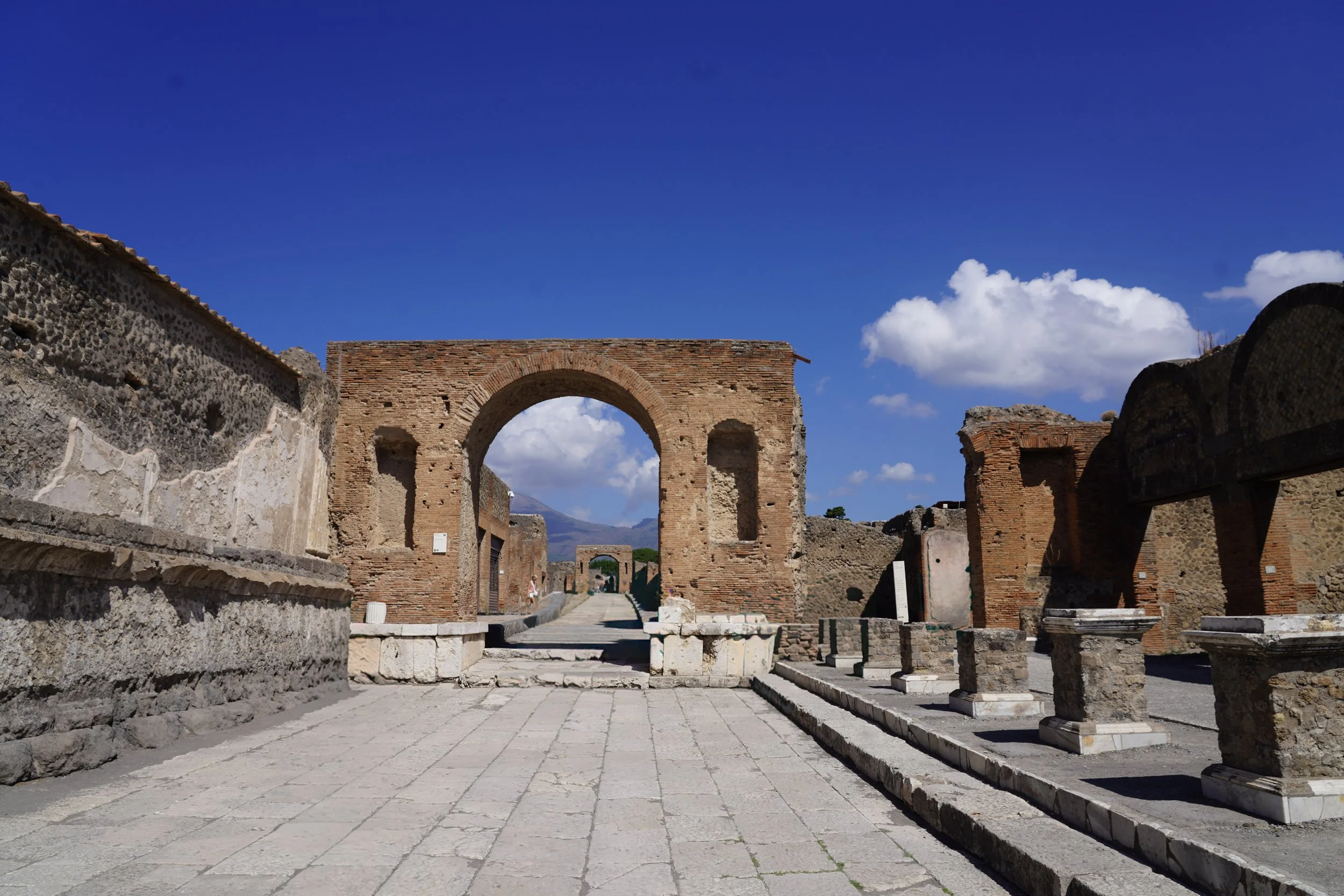
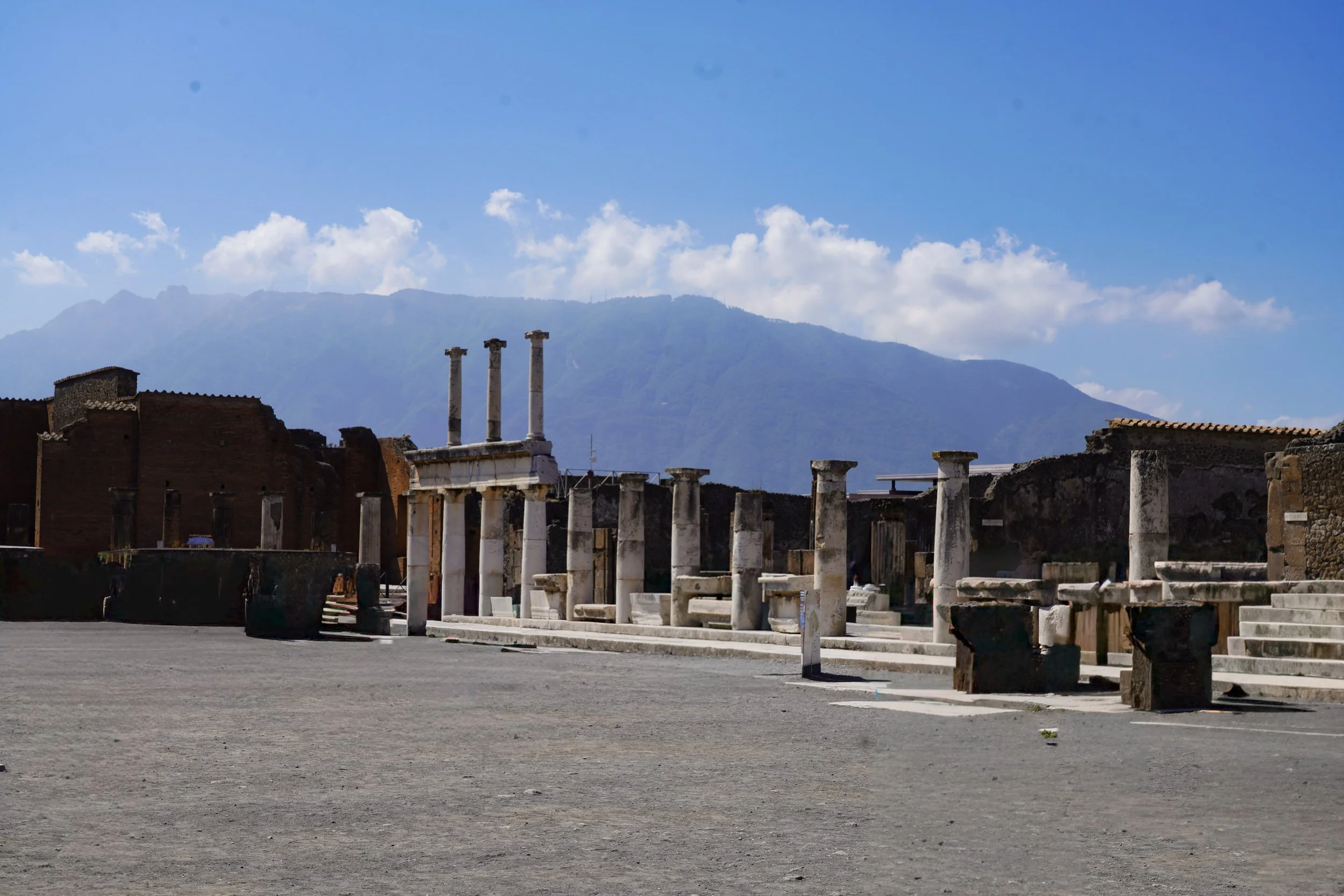
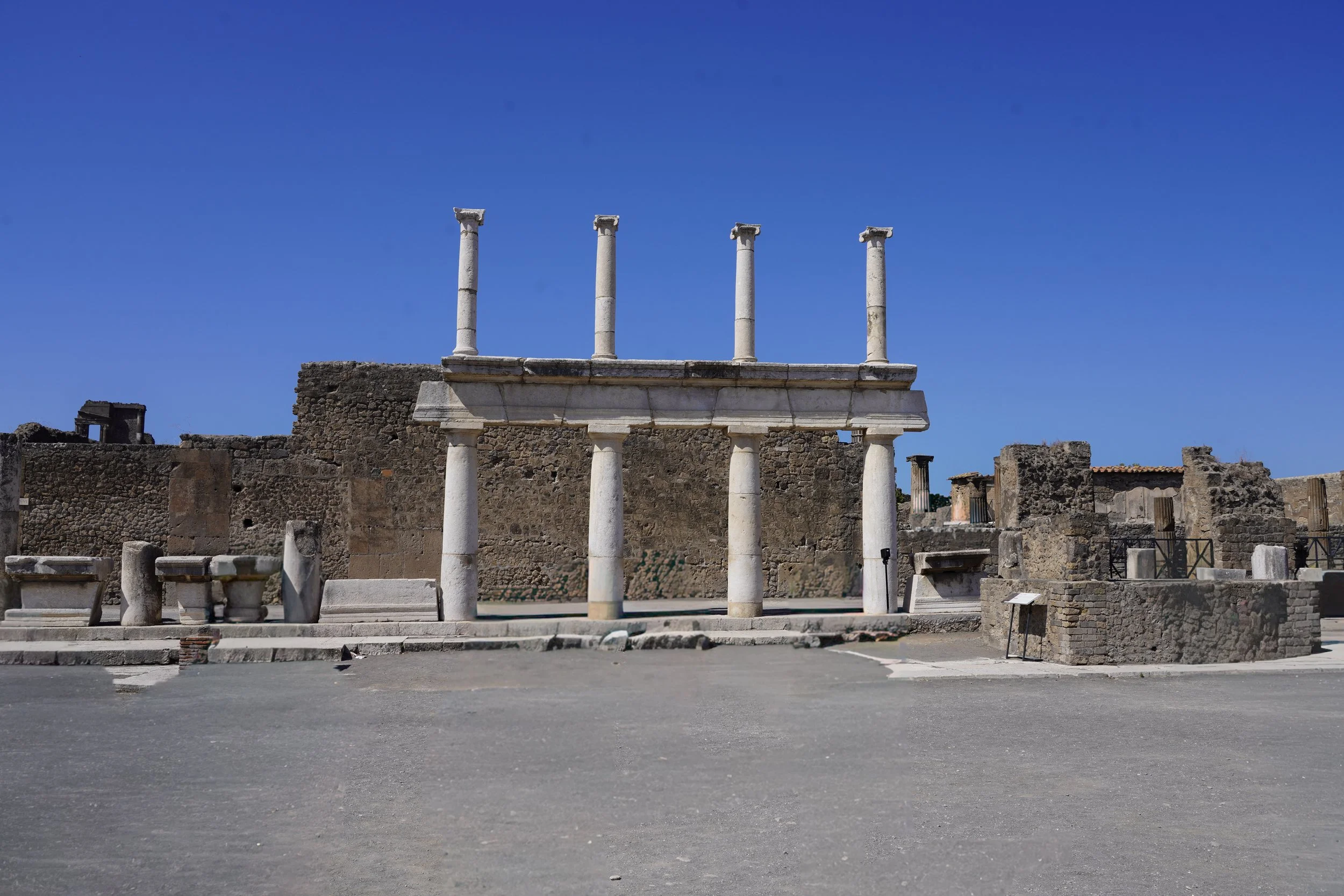
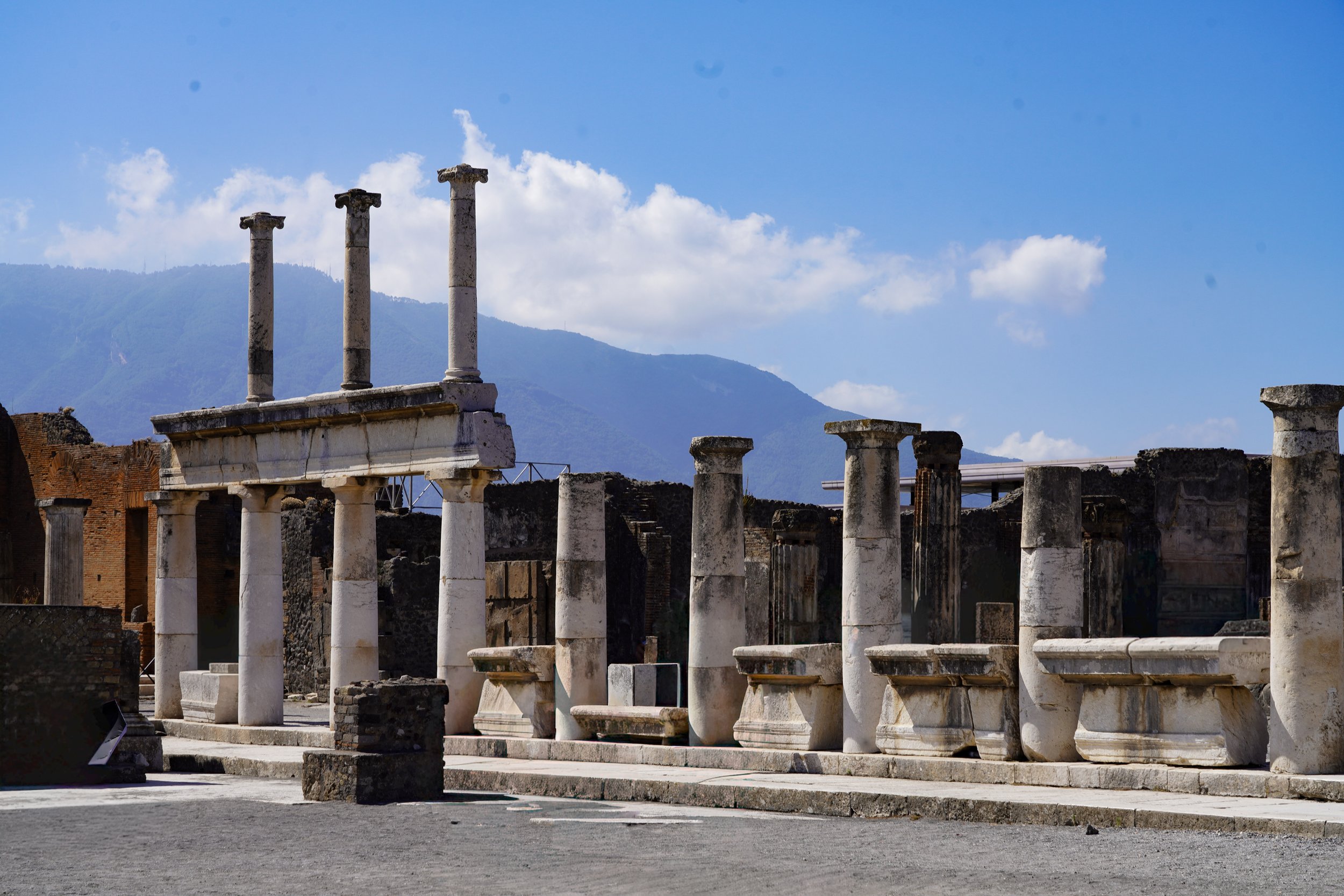
Despite my slightly underwhelming emotional reaction, I am still very glad we went. There is something special about being able to walk along those ancient streets and physically stand inside a city that has been preserved for nearly two thousand years. I just didn't get the overwhelming sense of gravitas I'd hoped for.
Maybe Pompeii wasn't the problem. Maybe it was the 36-degree heat, 80% humidity and several thousand other tourists standing between me and my moment of profound historical reflection. Either way, I'm very glad I got to walk those streets.
And when we finally climbed back onto the air-conditioned bus, nobody needed to ask whether we wanted the air conditioning turned up. We did. Very, very much.
As we set sail for Civitavecchia, the captain made a rather intriguing announcement. He suggested that around 9.30 pm we should make our way to the starboard side of the ship because there was going to be “something magical” to see. Well, that was enough to get our attention. There’s not much that can tempt you away from a comfortable chair and a drink at that time of night, but “something magical” certainly did the trick. And he wasn’t exaggerating.
As the light began to fade, the unmistakable silhouette of Stromboli emerged from the distance. One of the world’s most active volcanoes, Stromboli has been putting on its own fireworks display for thousands of years, without the need for a booking, a ticket or an annoying commentary over the loudspeaker.
Every few minutes, glowing bursts of red-orange lava erupted from the summit, briefly illuminating the darkening sky before plunging back into the darkness. It was nature at its most spectacular, and we had front-row seats from the comfort of our ship. No crowds, no hiking boots, no scrambling up a mountainside in the dark. Cruising does have its advantages!
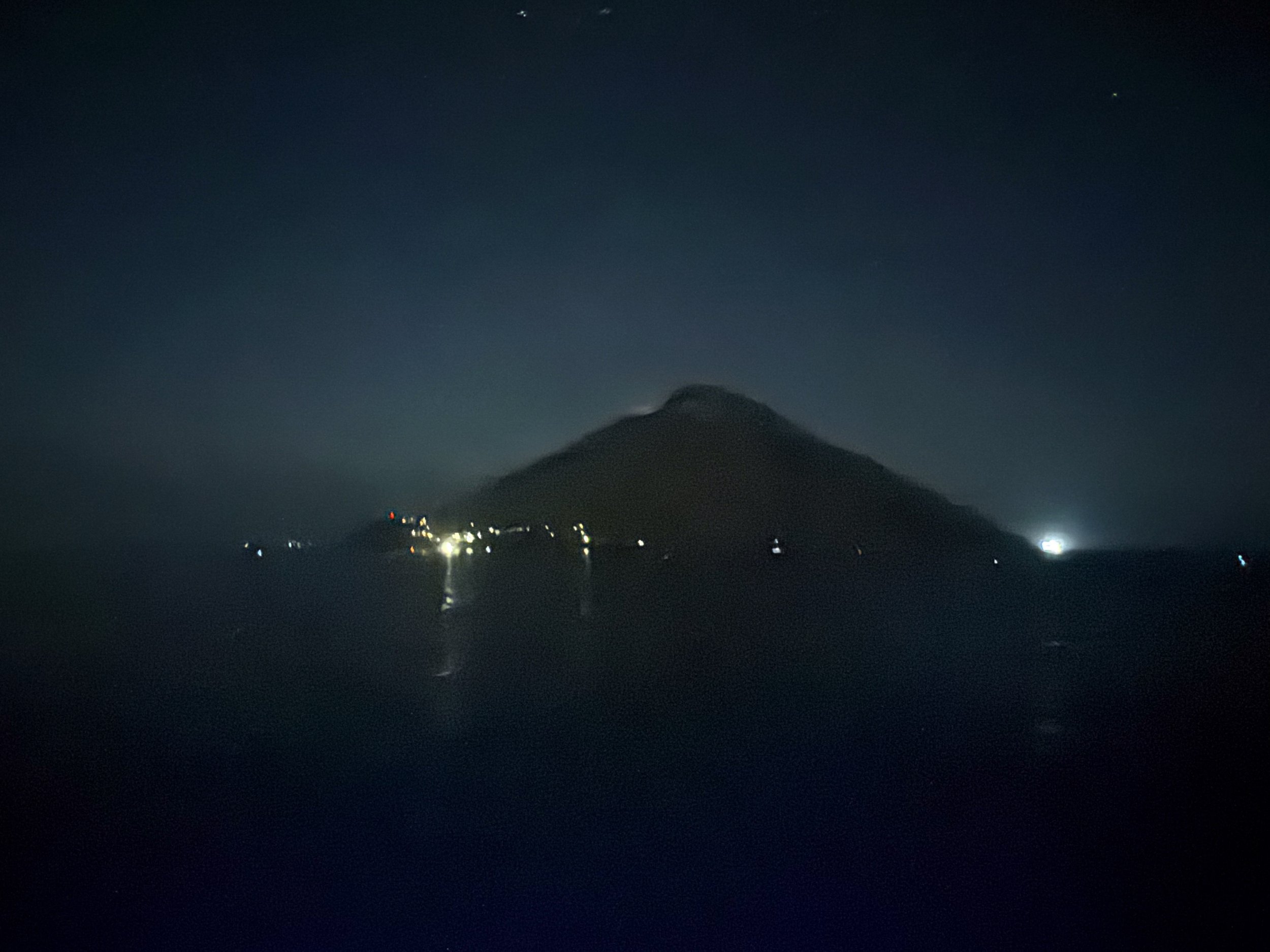
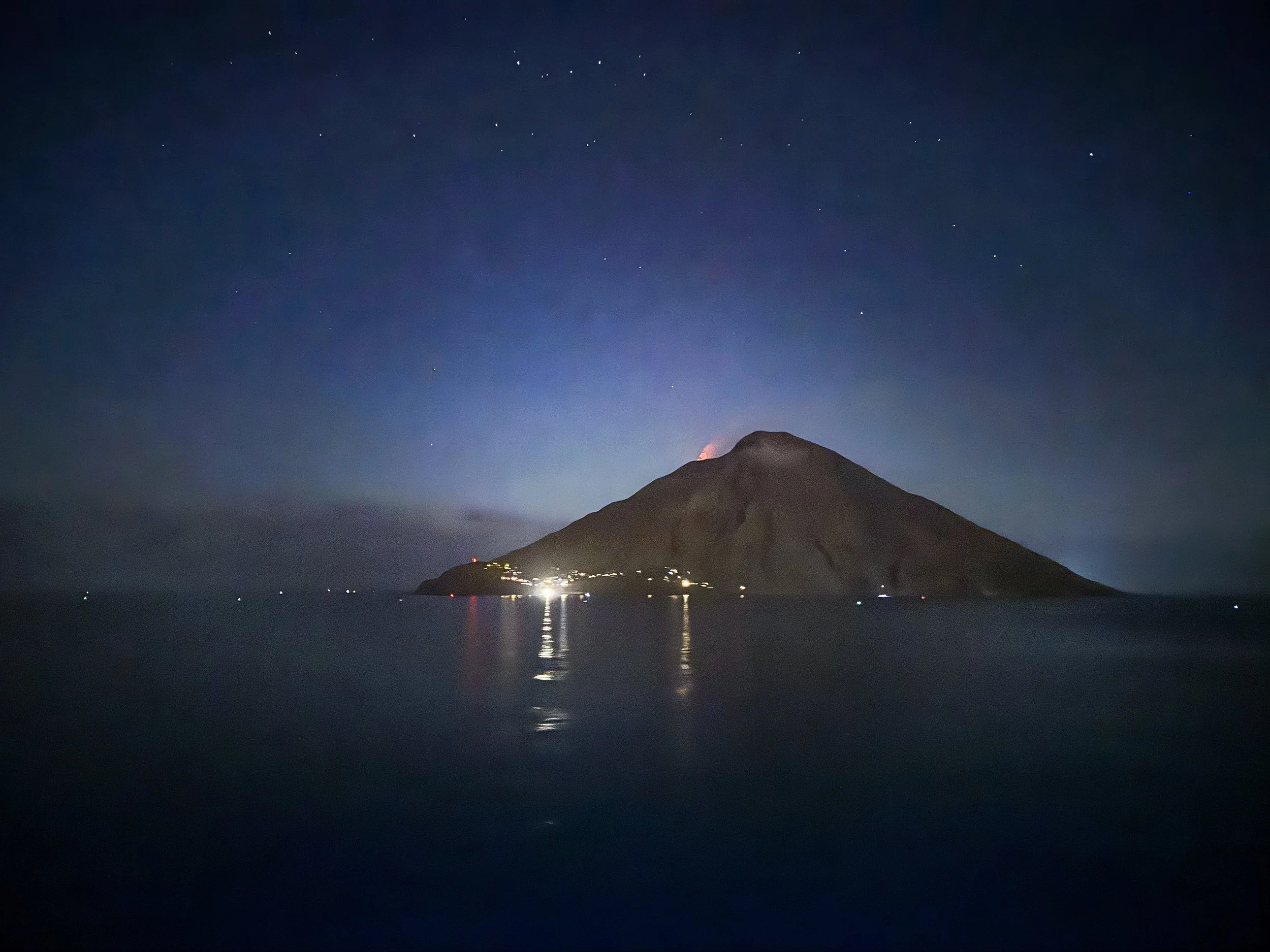
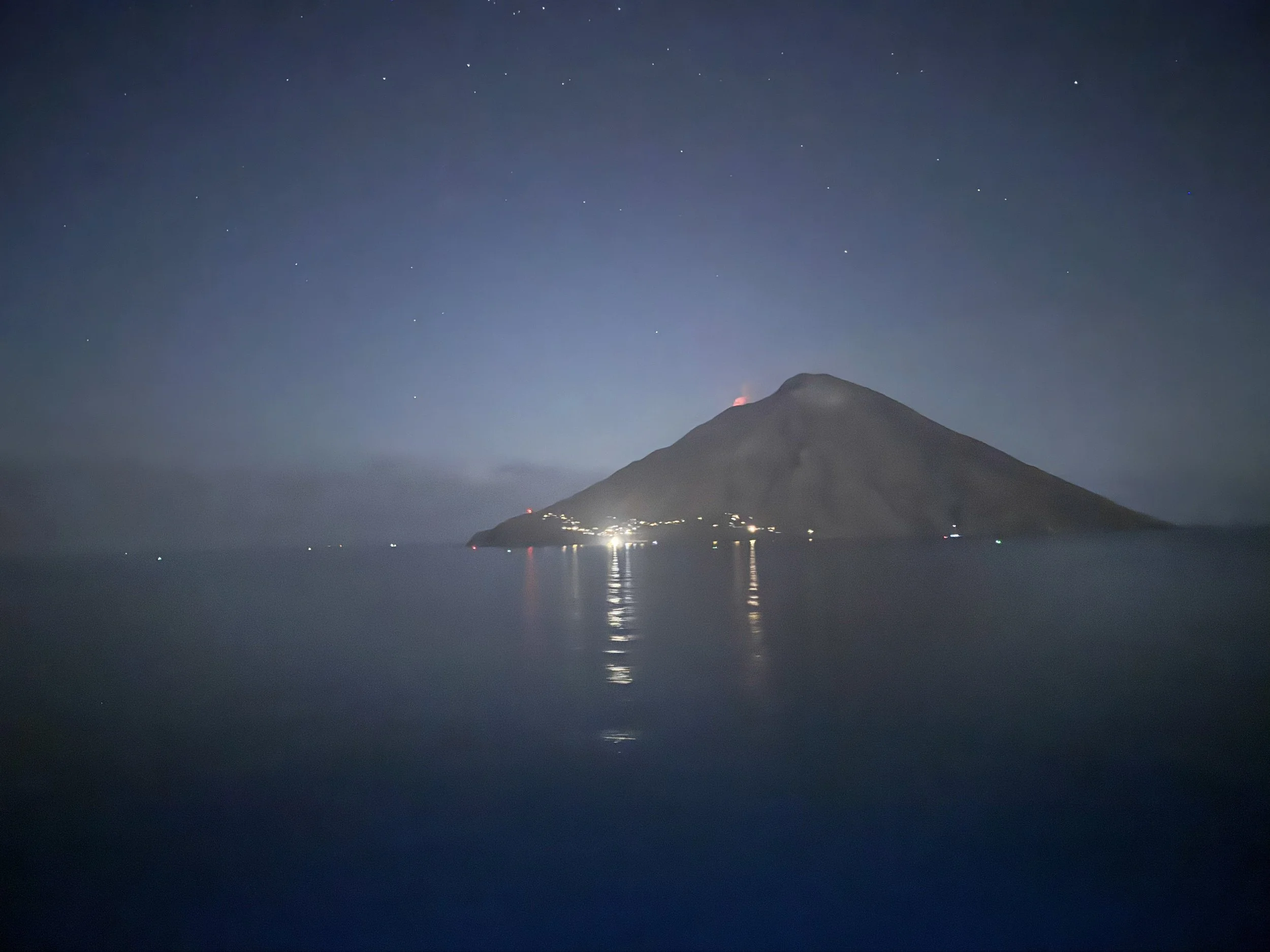
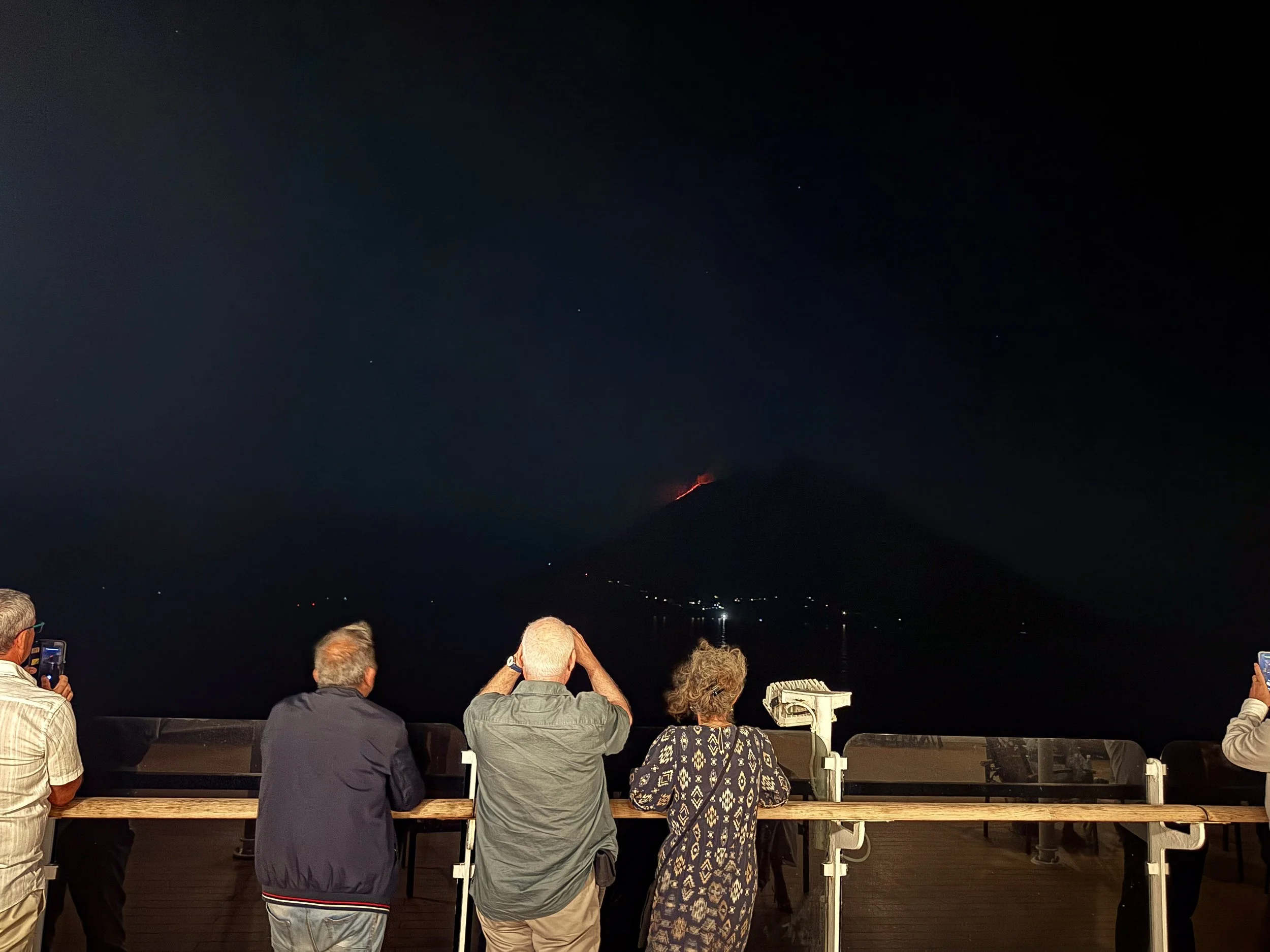
We should probably apologise for the quality of the photos. In our defence, the whole thing was so mesmerising that the thought of racing back to the cabin to retrieve a proper camera never crossed our minds. Besides, by the time we’d thought about it, the moment might have passed, and we weren’t about to miss the show for the sake of a better photograph.
Unfortunately, our trusty mobile phones weren’t exactly up to the job. Between grubby lenses, lingering sea mist and the heavy, humid air after a stinking hot day, the results were less National Geographic and more evidence of a volcanic event captured on a potato.
Still, we reckon you get the picture. Well, sort of. You'll just have to take our word for it that Stromboli was putting on a magnificent show, even if our photographic efforts suggest it was erupting behind a very dirty shower screen!
For almost an hour, we slowly sailed past, watching Stromboli rumble and erupt as though it had been booked especially for our evening’s entertainment. The twilight made the whole scene even more spectacular, with the fading blue sky, the dark outline of the volcano and those sudden flashes of fiery red. There was something strangely peaceful about standing on the deck in the warm evening air, surrounded by hundreds of other passengers who, for once, were unusually quiet as everyone watched.
It was one of those unexpected moments that make cruising so special. We hadn’t planned it, we hadn’t paid extra for it and we certainly hadn’t expected to be standing on a ship watching an active volcano erupt in the middle of the evening. The captain had promised us something magical — and, for once, the captain actually delivered.