Barcelona
We were shuffled onto a Vueling flight out of Brussels, and quite frankly, the less said about that airline the better. It was one of those travel experiences where you begin to wonder whether the airline actually has a personal grudge against its passengers. Apparently, you can pay to upgrade your seats, but that doesn’t necessarily mean they will remain your seats. Other people were happily installed in ours, which made for a slightly awkward game of musical chairs before we eventually got ourselves sorted. Not exactly the relaxing start to a holiday we had envisaged.
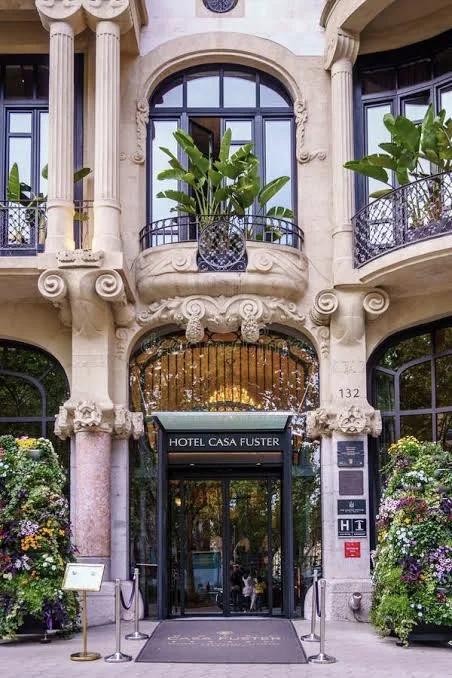
While we were waiting for the flight, we received a message from Imagine Cruising saying they weren’t happy with the hotel we had originally been booked into for our next two nights. Their solution was to move us all to the rather splendid Casa Fuster. Now, there are worse things that can happen to you while travelling.
Casa Fuster is one of Barcelona’s architectural treasures. Designed by the legendary Catalan modernist architect Lluís Domènech i Montaner and completed in 1908, the building was commissioned by wealthy Majorcan Mariano Fuster as a grand wedding gift for his wife. At the time, it was reportedly the most expensive private residence in Barcelona, and its magnificent white marble façade certainly gives the impression that nobody was trying to save a few euros on the building materials.
The building is part of Barcelona’s extraordinary Modernisme heritage and is recognised as part of the UNESCO World Heritage listing of the works of Domènech i Montaner. As we approached it, we wondered, somewhat tongue-in-cheek, whether there could possibly be anything more magnificent to see in Barcelona.
As it turned out, there was.
But Casa Fuster was pretty spectacular in its own right, and our stay there was exceptional. From the beautiful architecture and elegant interiors to the rooftop bar and views across the city, it was a very welcome upgrade from our original accommodation.
Our first night was spent doing what any sensible traveller would do after a hideous day of airports, planes and general travel chaos — washing off the horrors of the journey, finding a cold beer and admiring the view from the rooftop bar.
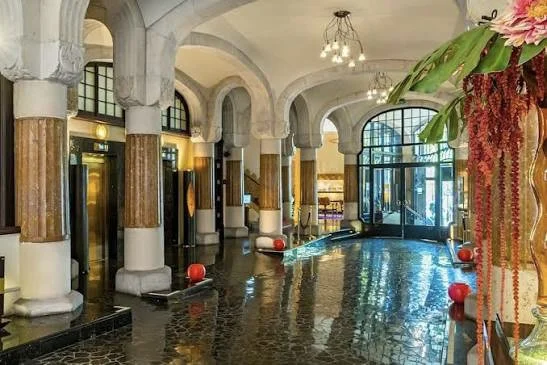
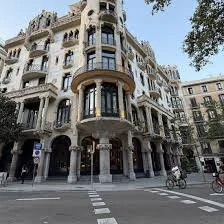
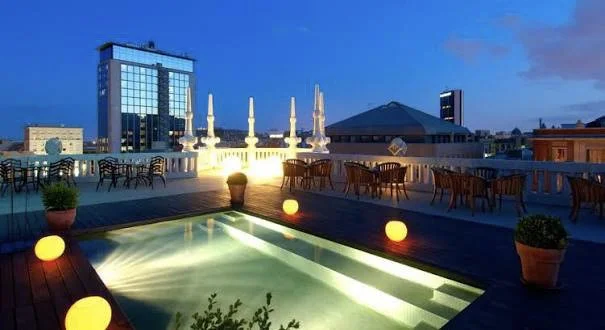
Unfortunately, relaxation was short-lived. We had an early morning tour booked through Viator, rather ambitiously called “Barcelona in 1 Day.” It was all the time we had, so we figured we should make the most of it. Barcelona in one day is a bit like trying to read War and Peace during a lunch break, but we were willing to give it a go.
Our Catalan guide, Annie, turned out to be fantastic. She was knowledgeable, entertaining and clearly knew exactly how much Barcelona could be squeezed into a single day.
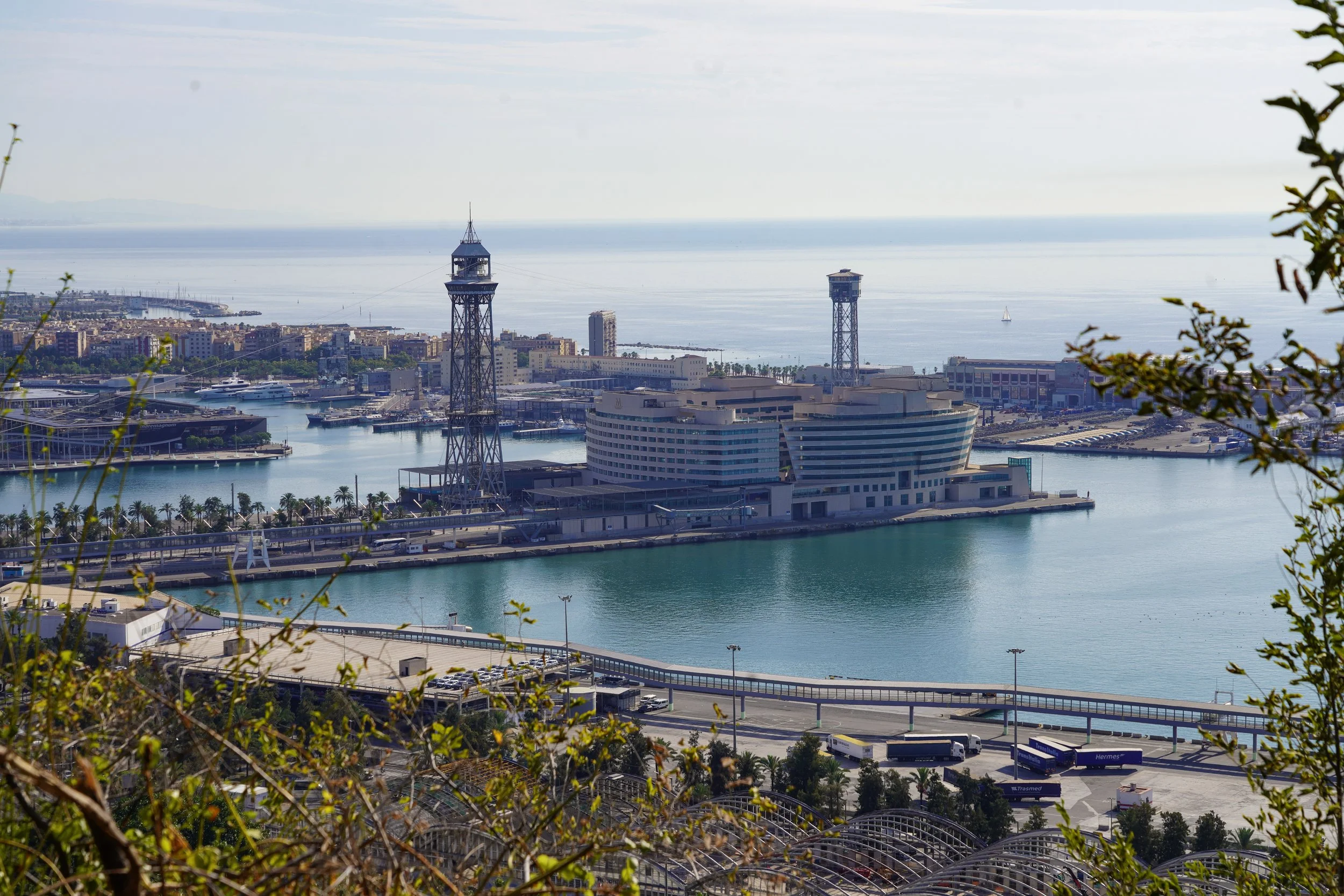
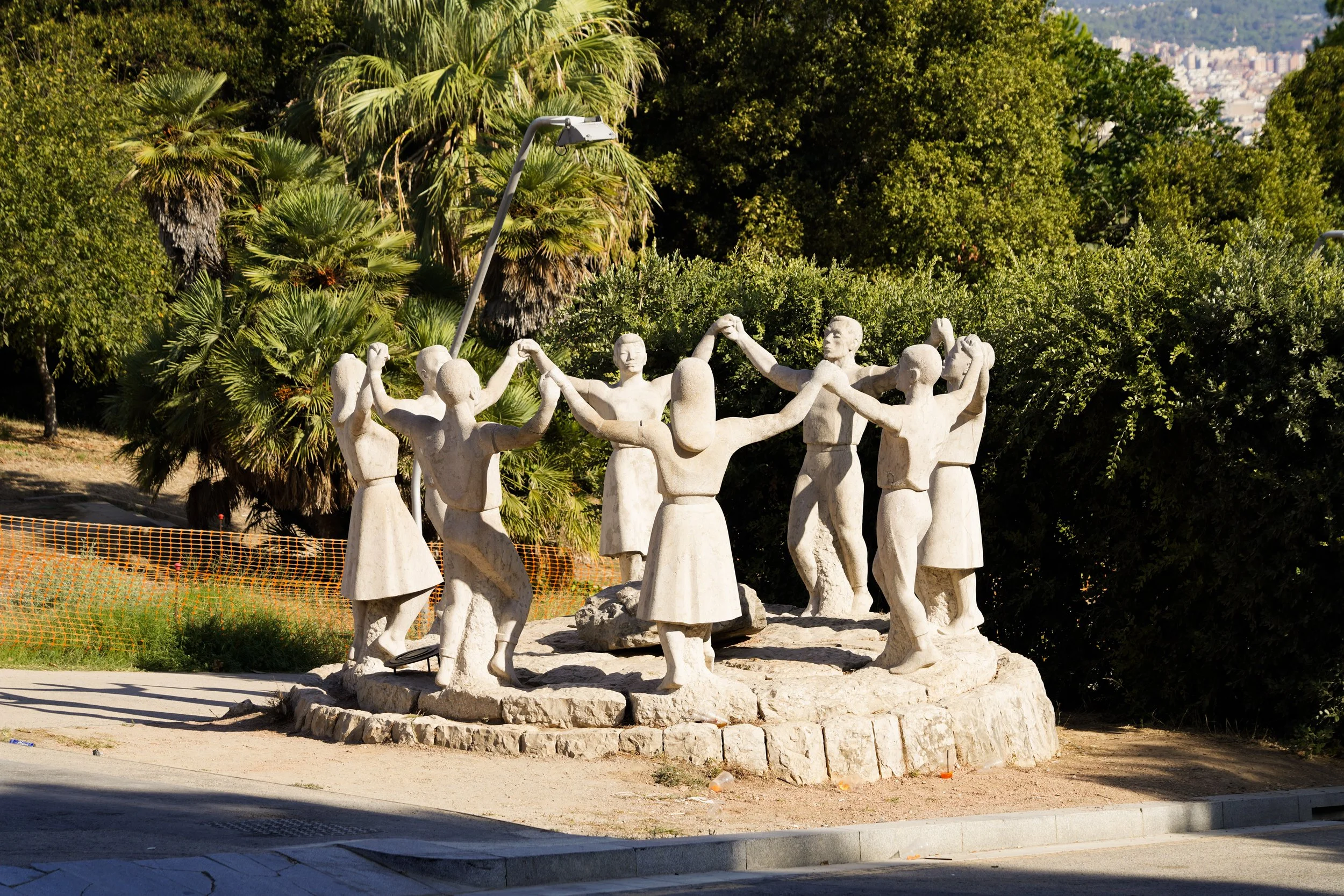
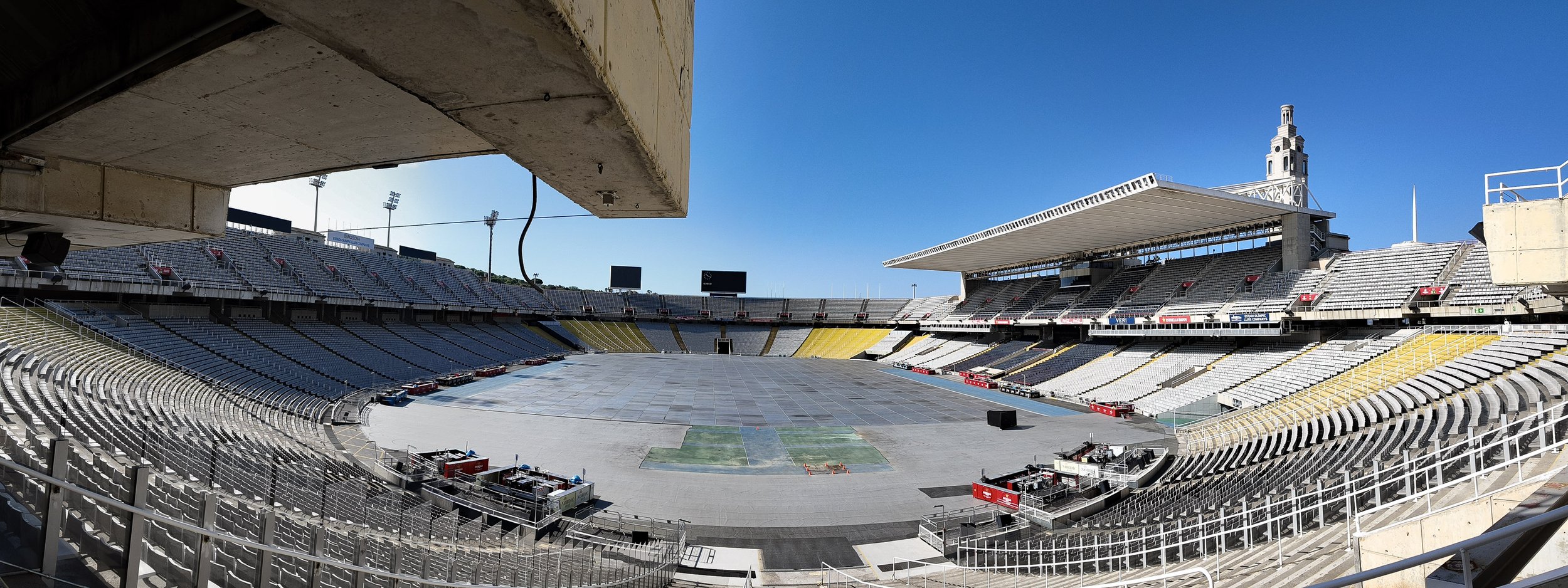
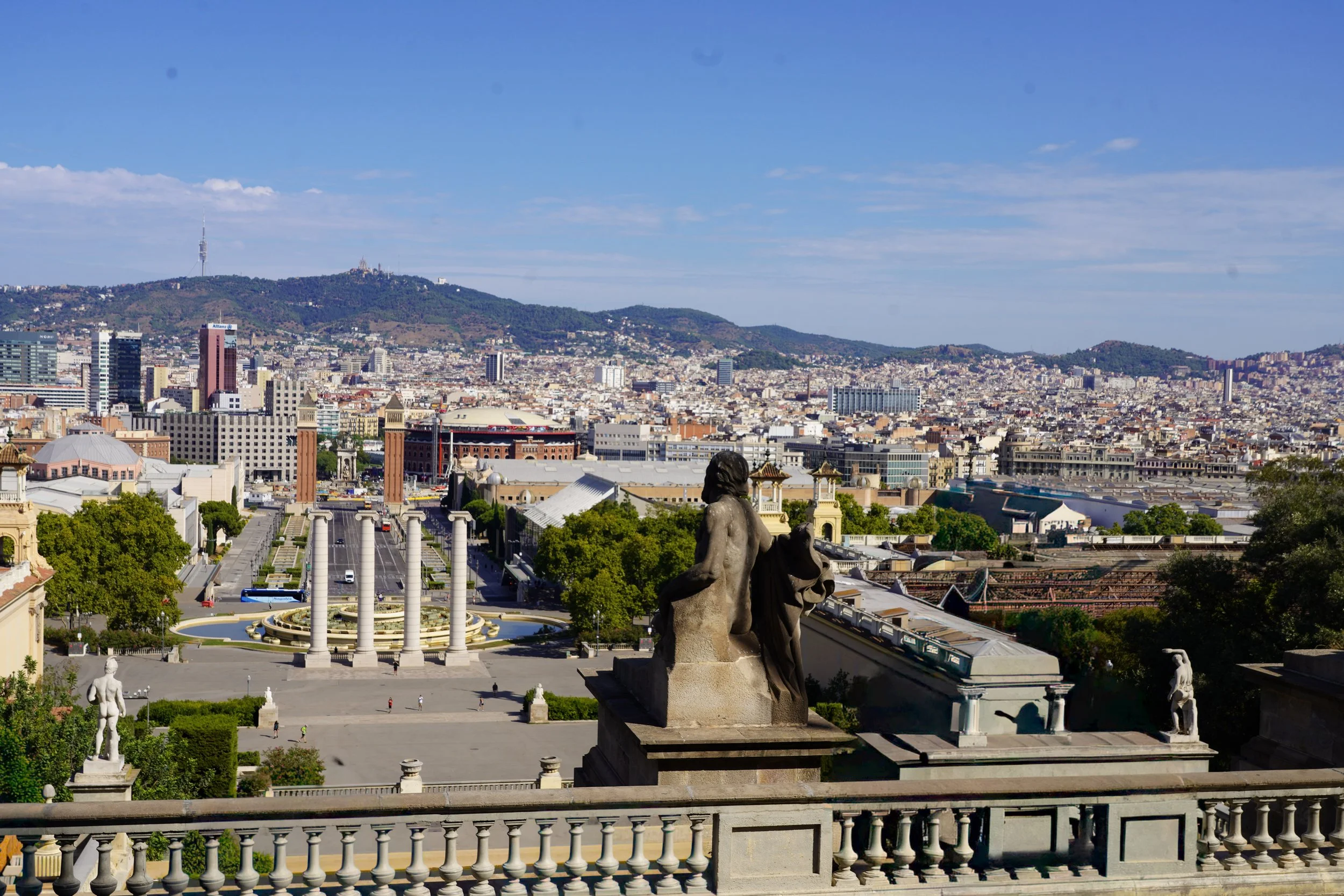
Our first stop was Parc de Montjuïc, where we took in the breathtaking views across Barcelona and the harbour. We wandered around the Olympic Stadium and explored the area around the Museu Nacional d’Art de Catalunya and Montjuïc Castle. It was a great introduction to the city, although we were beginning to appreciate that Barcelona was going to require considerably more than 24 hours.
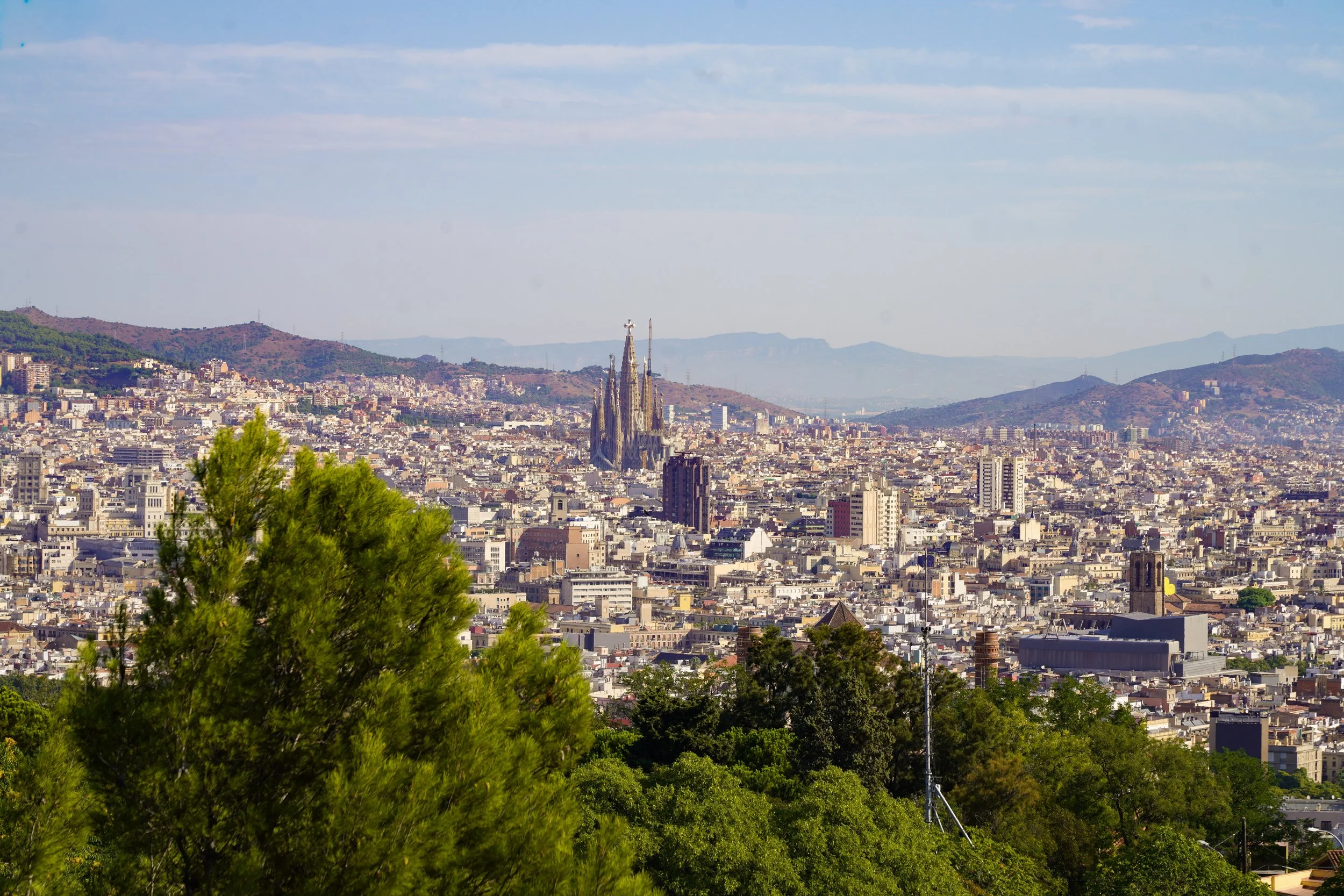
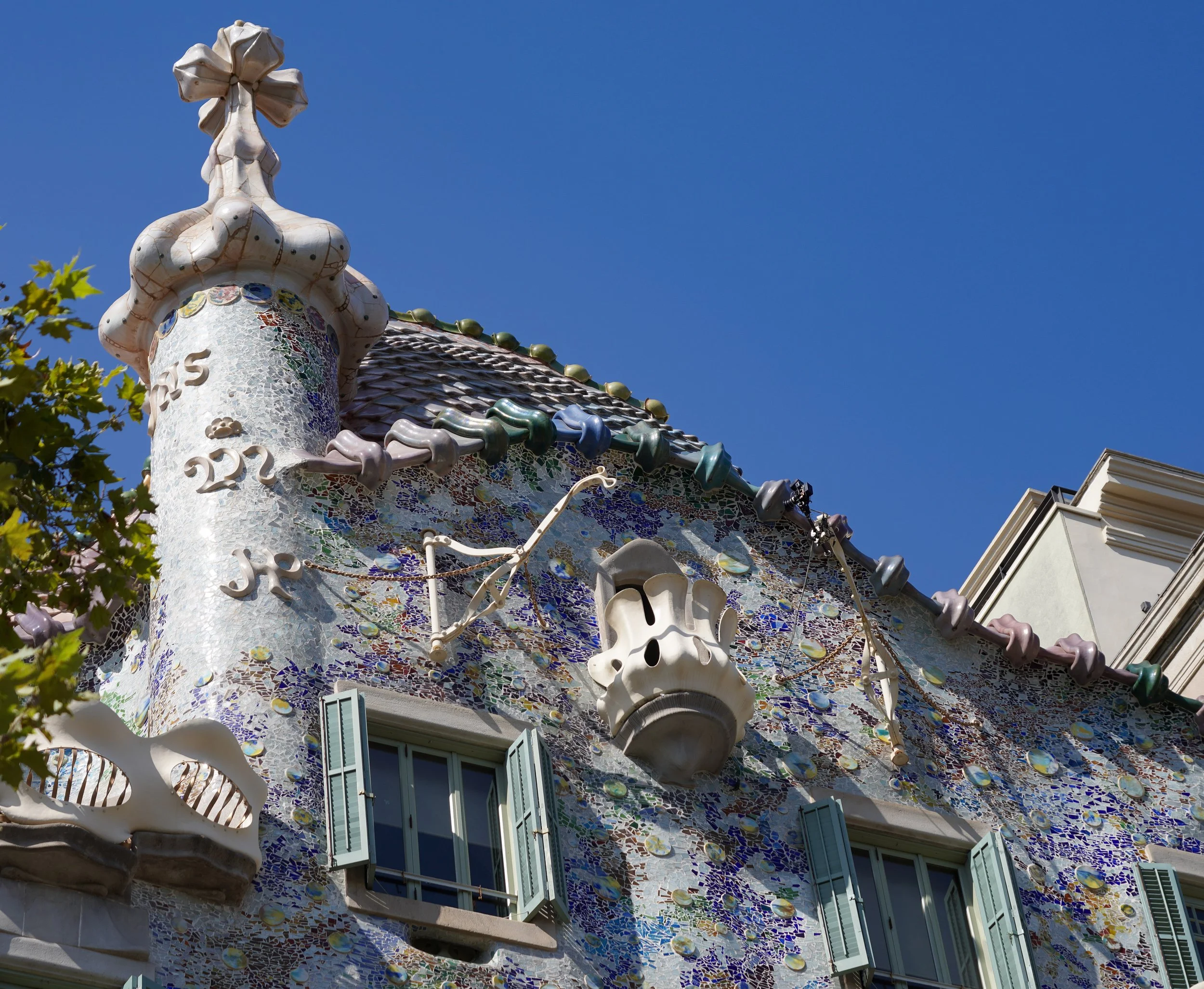
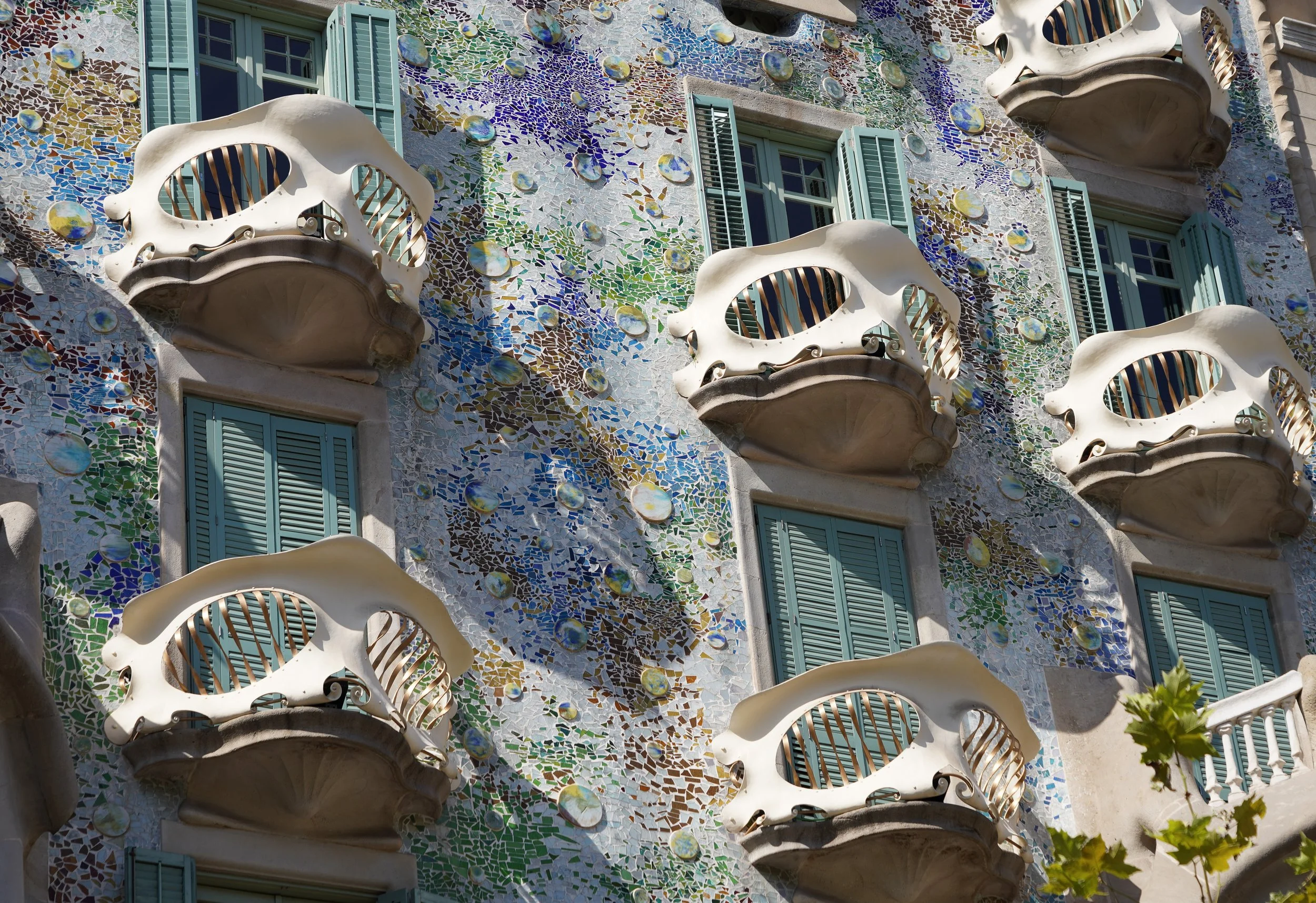
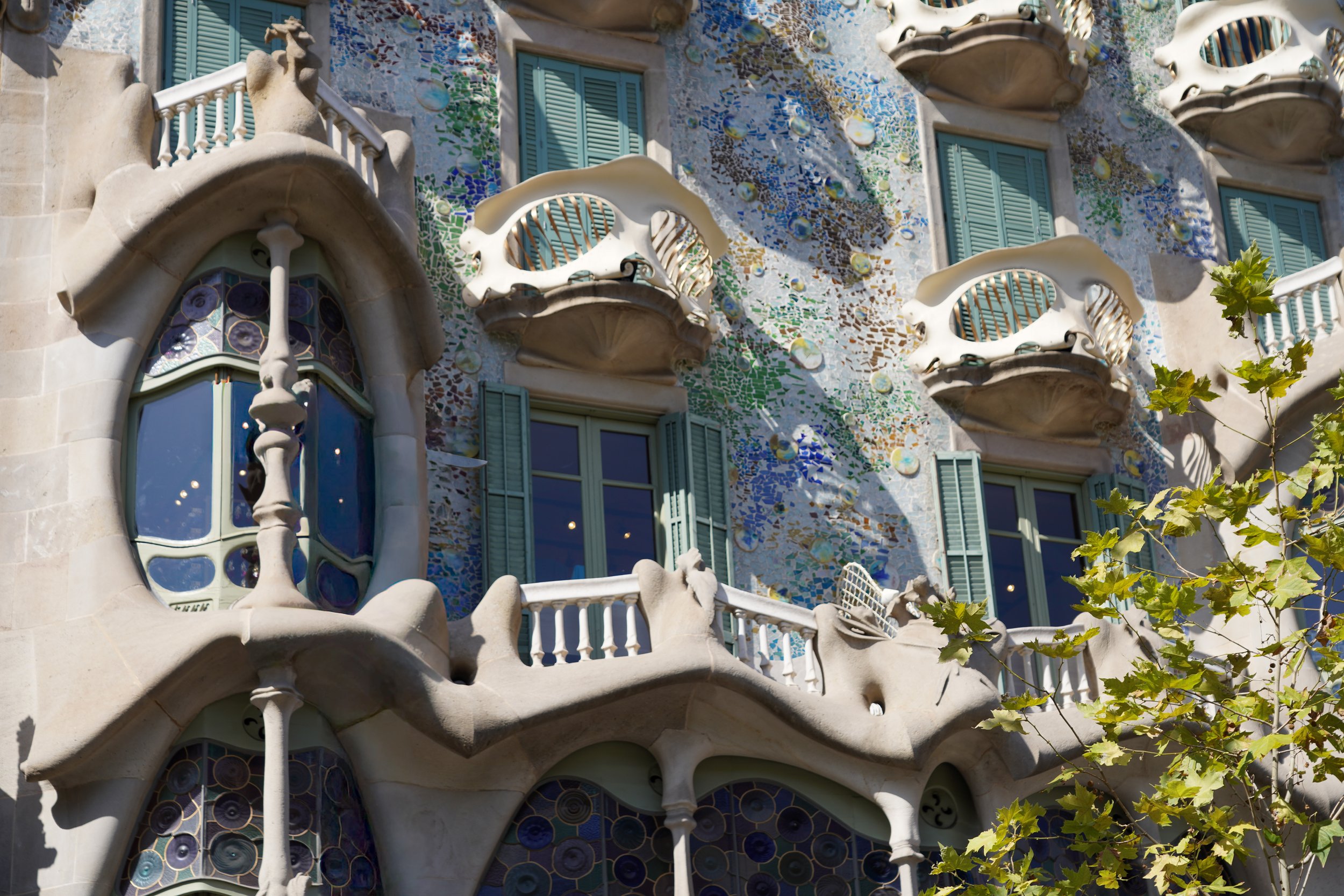
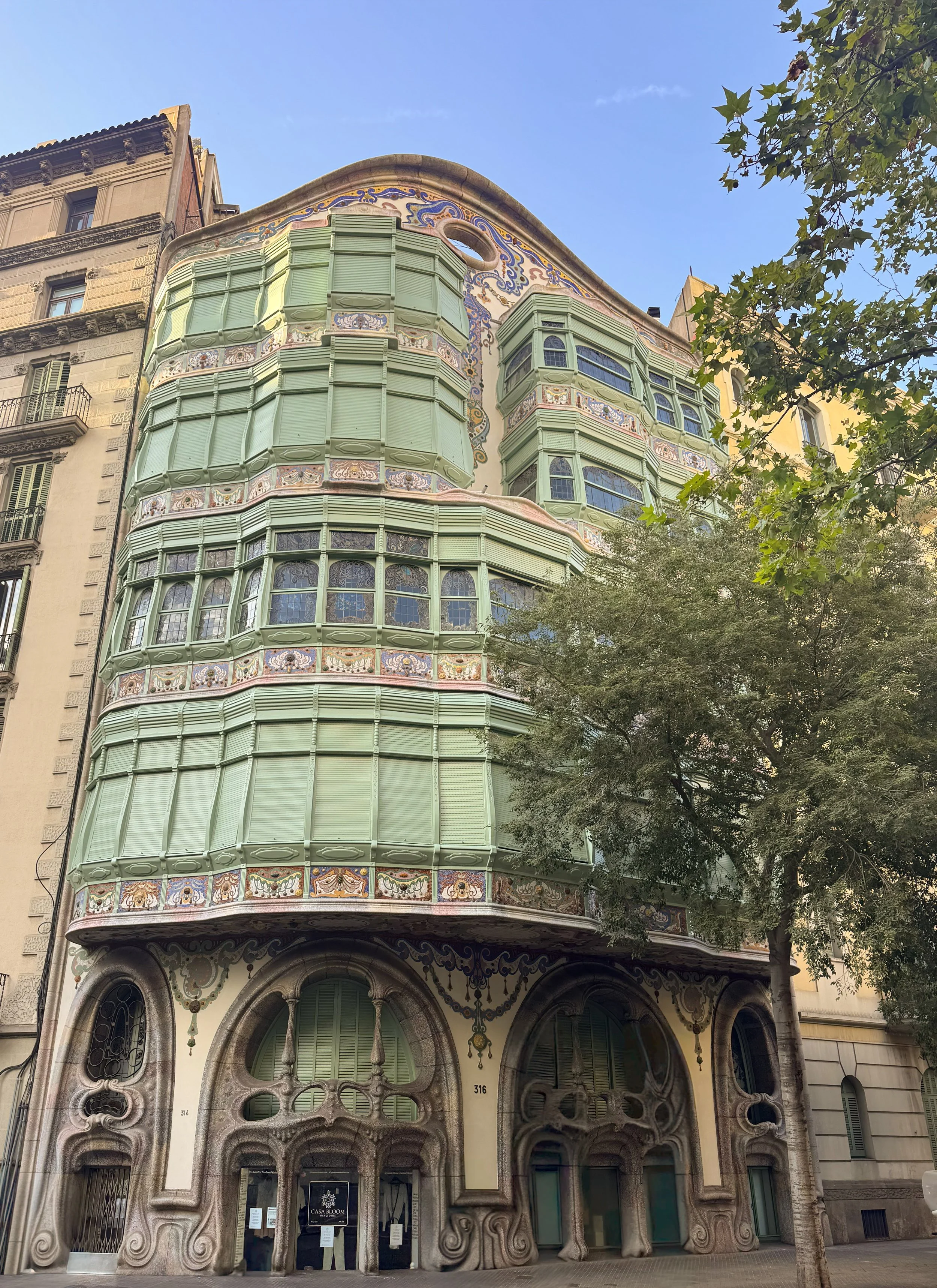
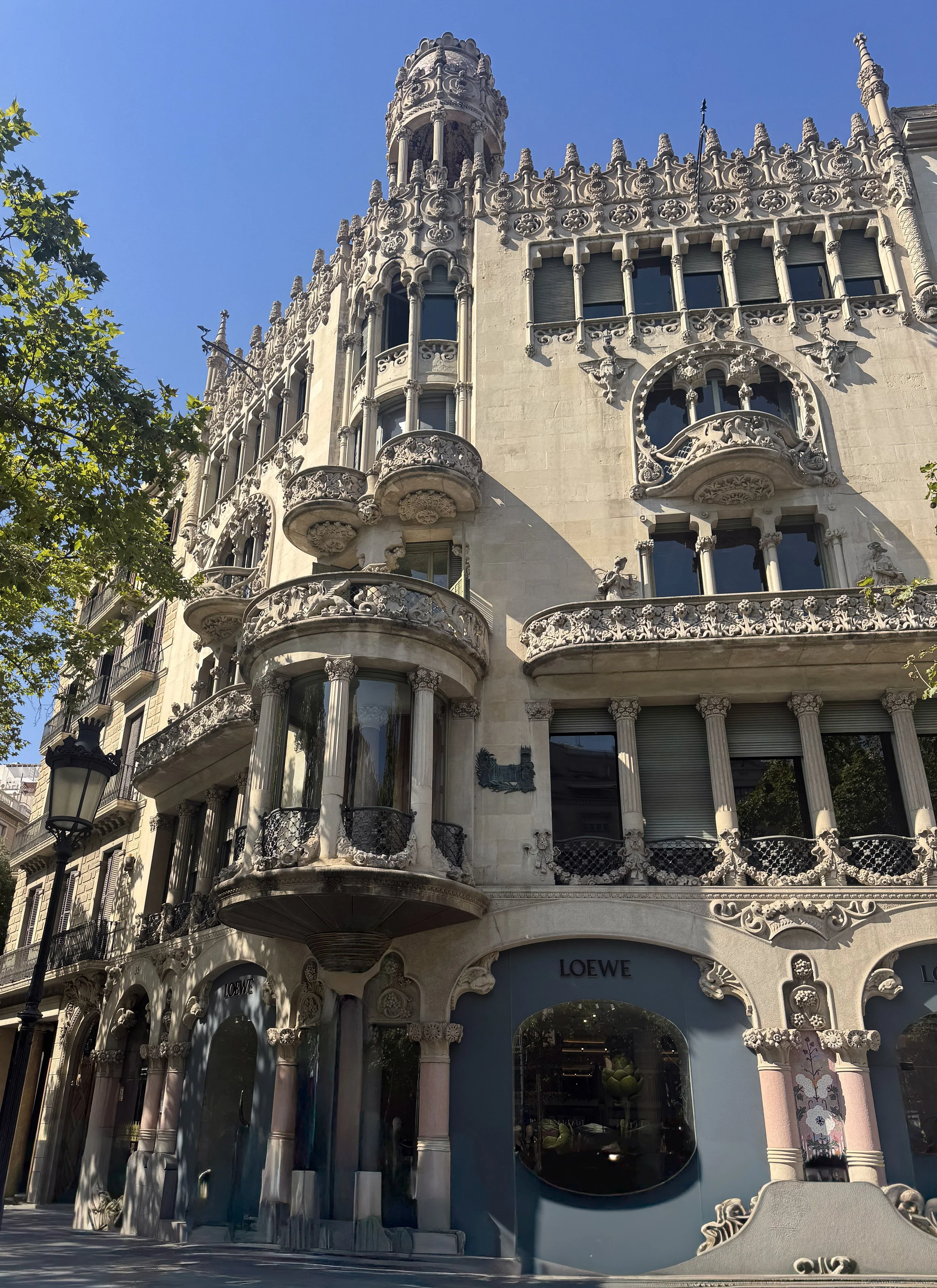
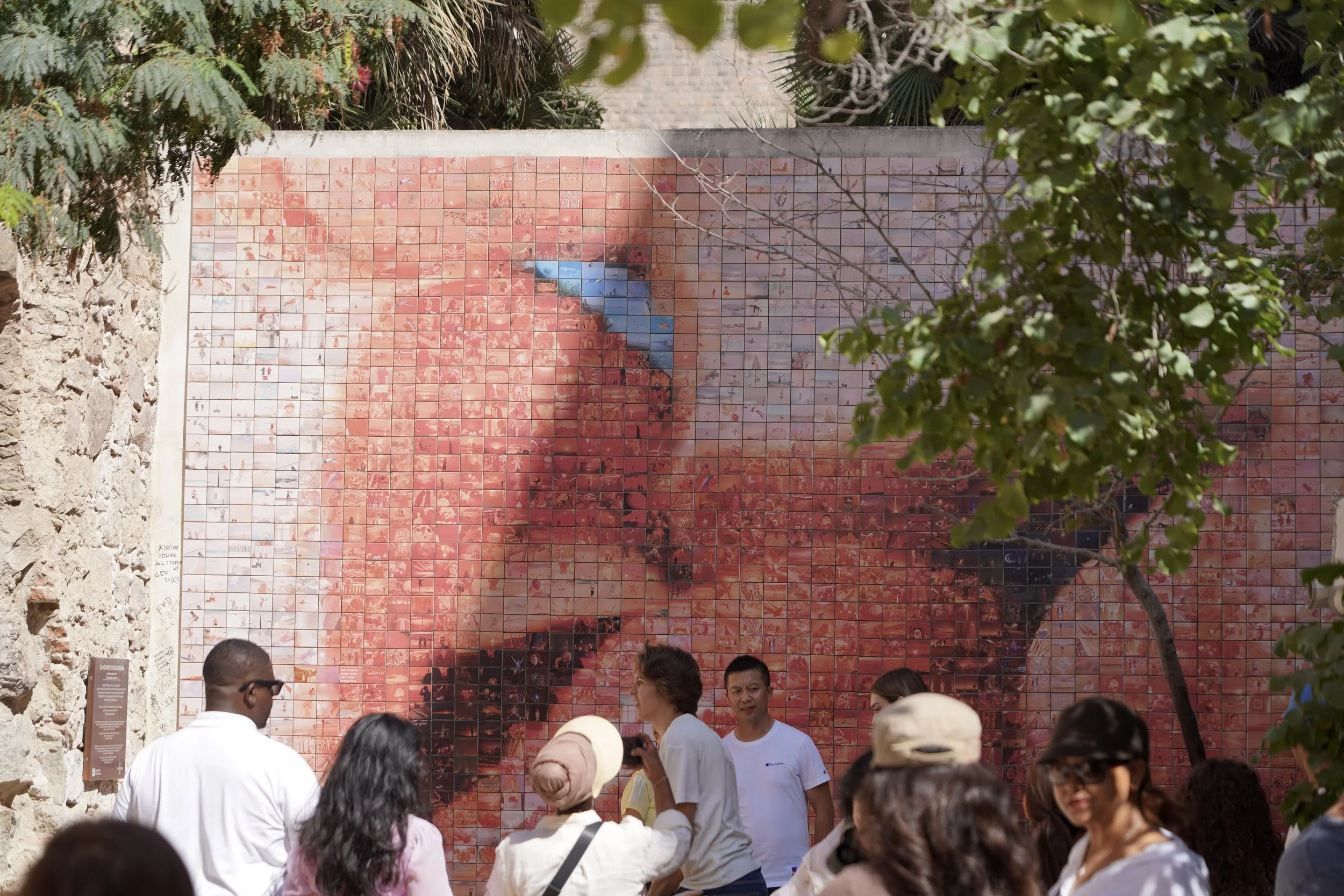
Our cheeky bus driver then decided that we deserved more than the usual drive-by glimpse of Gaudí’s famous Casa Batlló. In a move that I’m fairly sure wasn’t included in the official tour itinerary, he drove the bus up onto the footpath and gave us around 30 minutes to get out and properly admire the building. Nobody complained.
Casa Batlló is one of Gaudí’s most extraordinary creations, with its undulating façade, colourful tiles, strange balconies and almost
other-worldly appearance. It looks less like a building and more like something that has escaped from Gaudí’s imagination and somehow ended up in the middle of Barcelona.
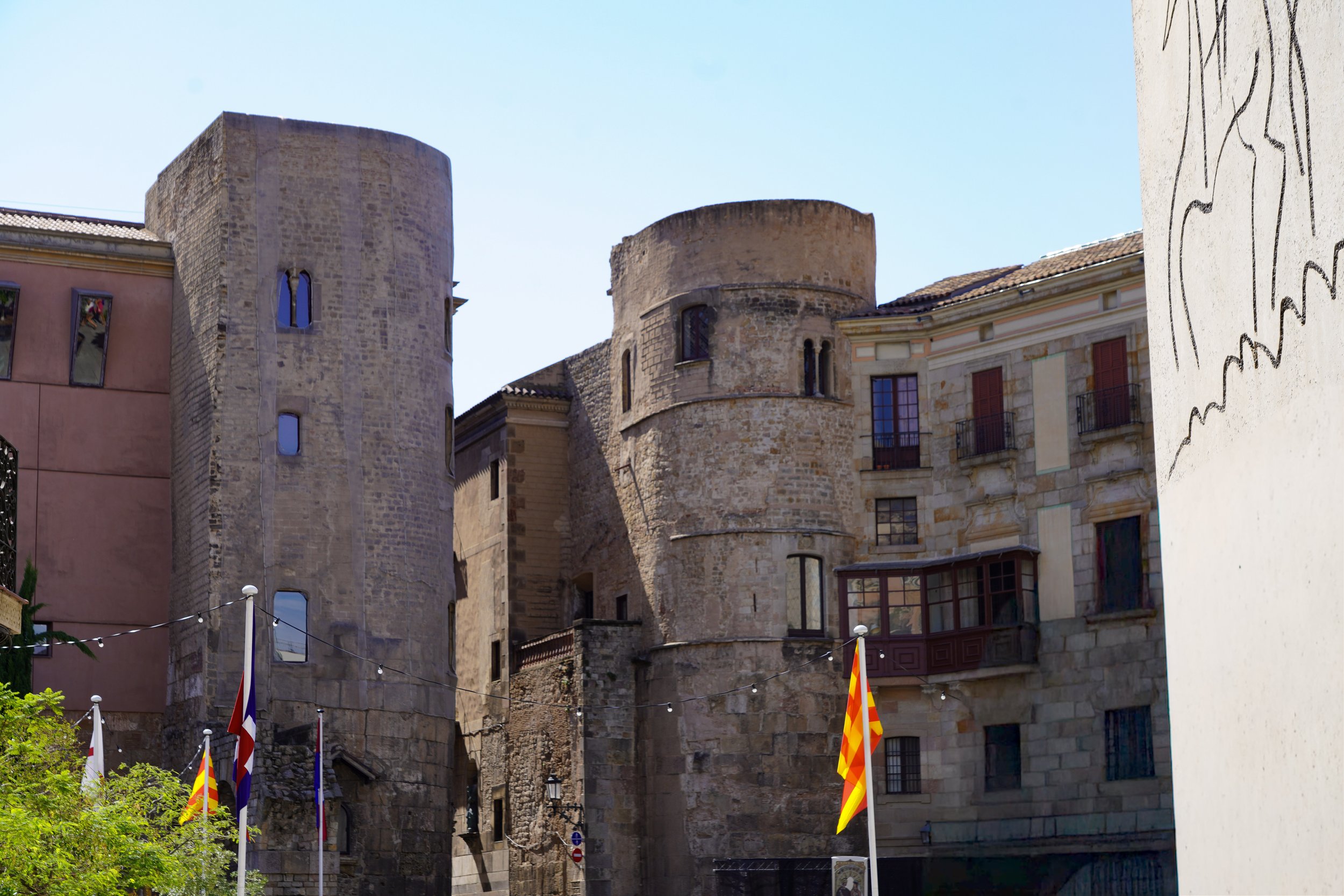
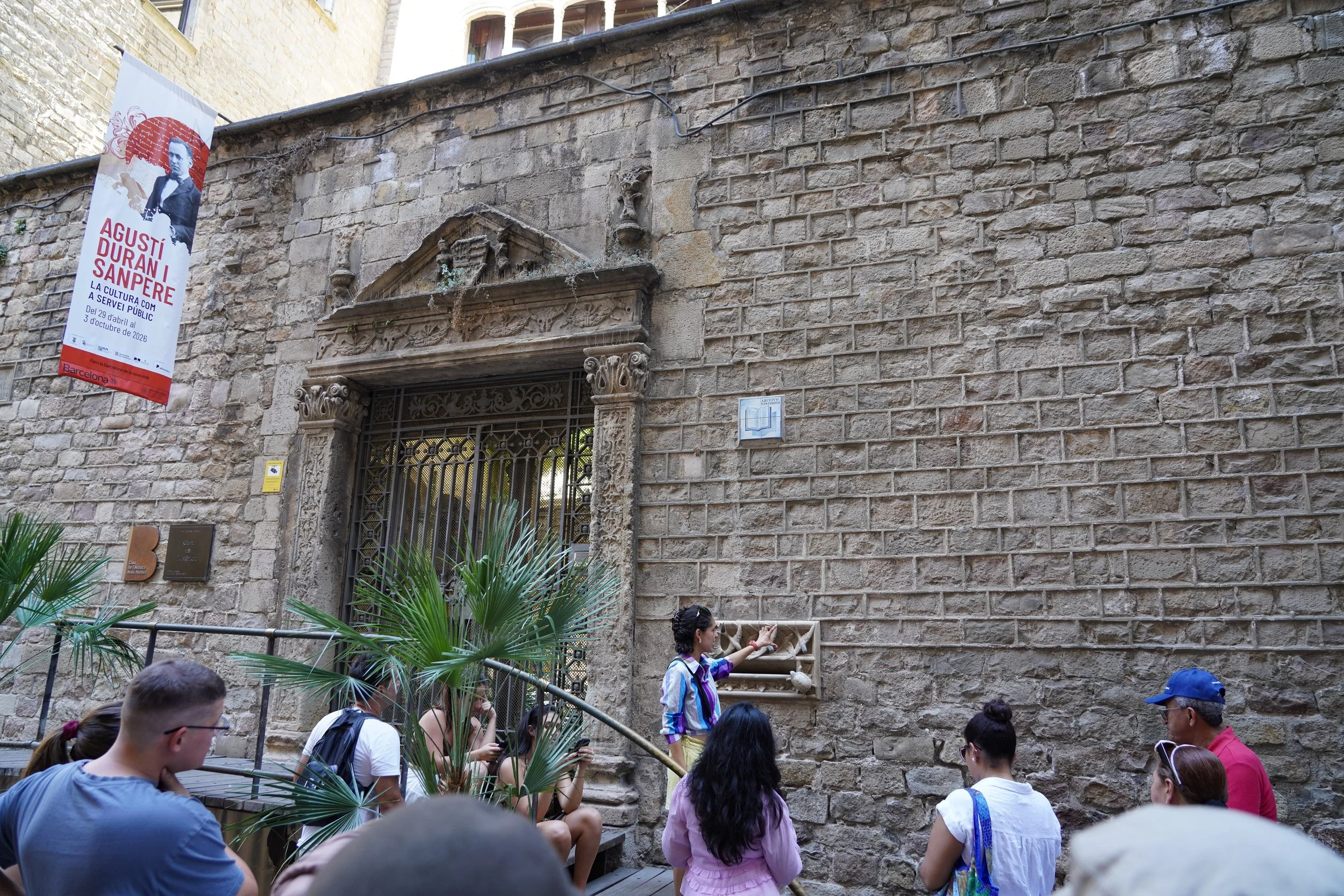
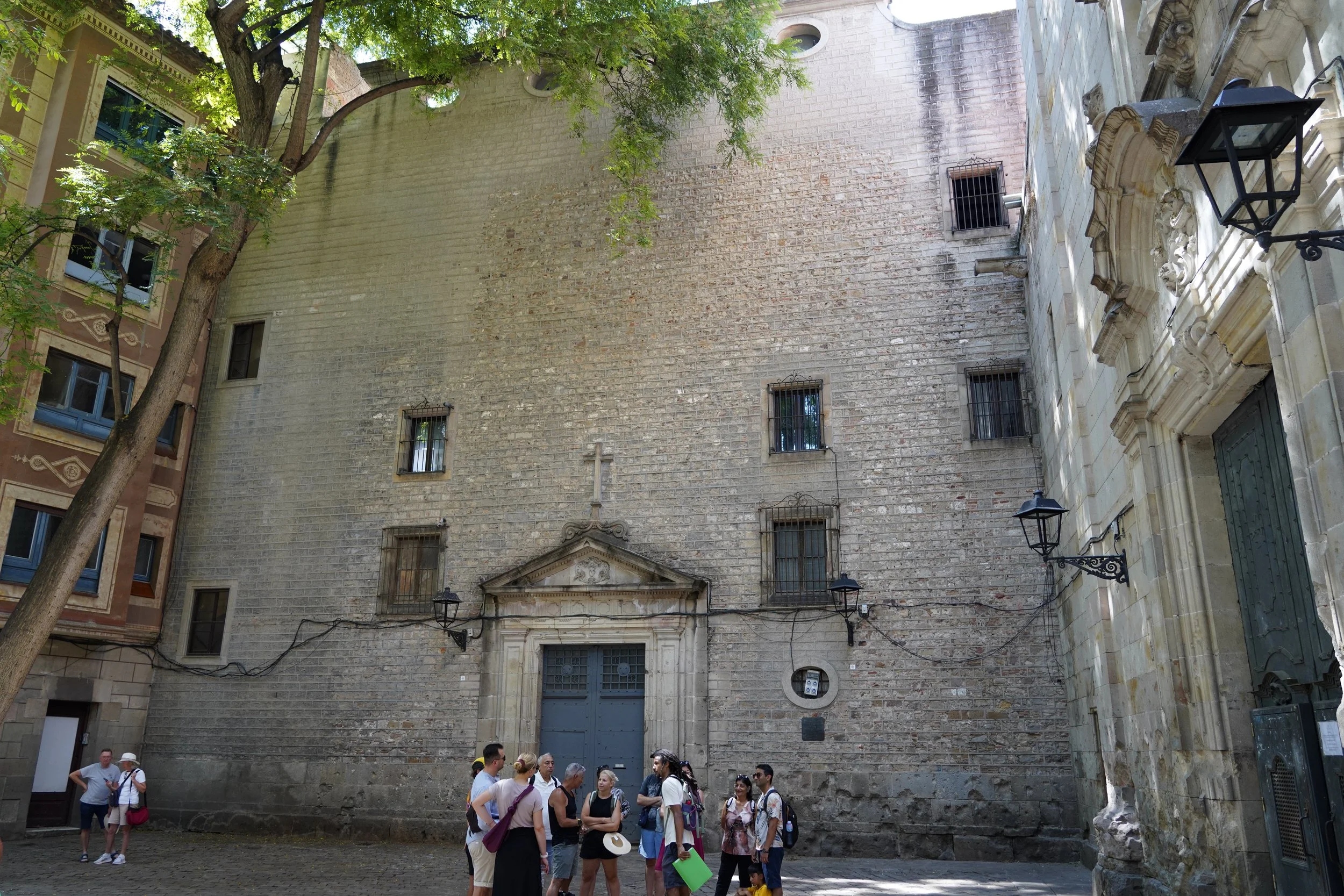
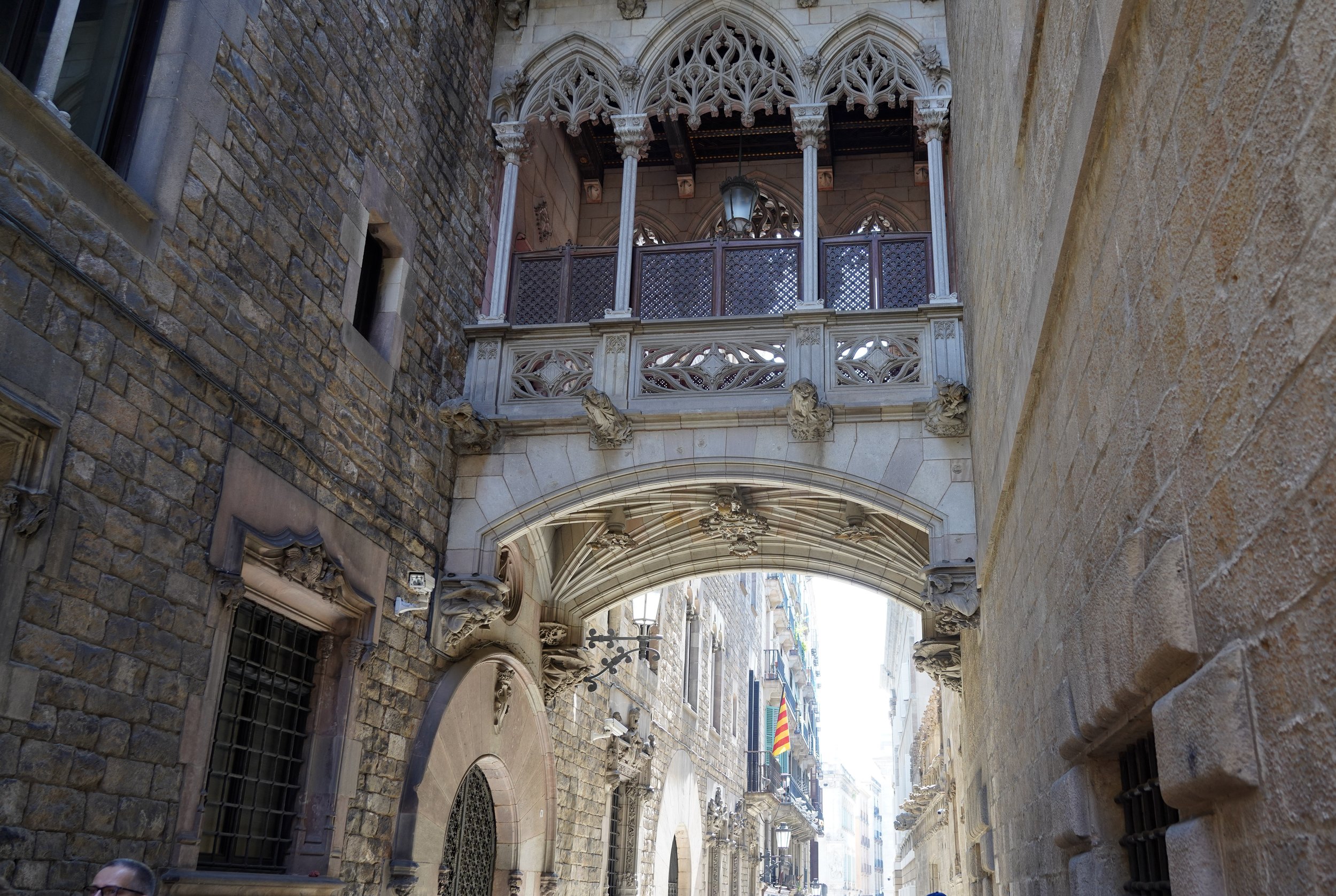
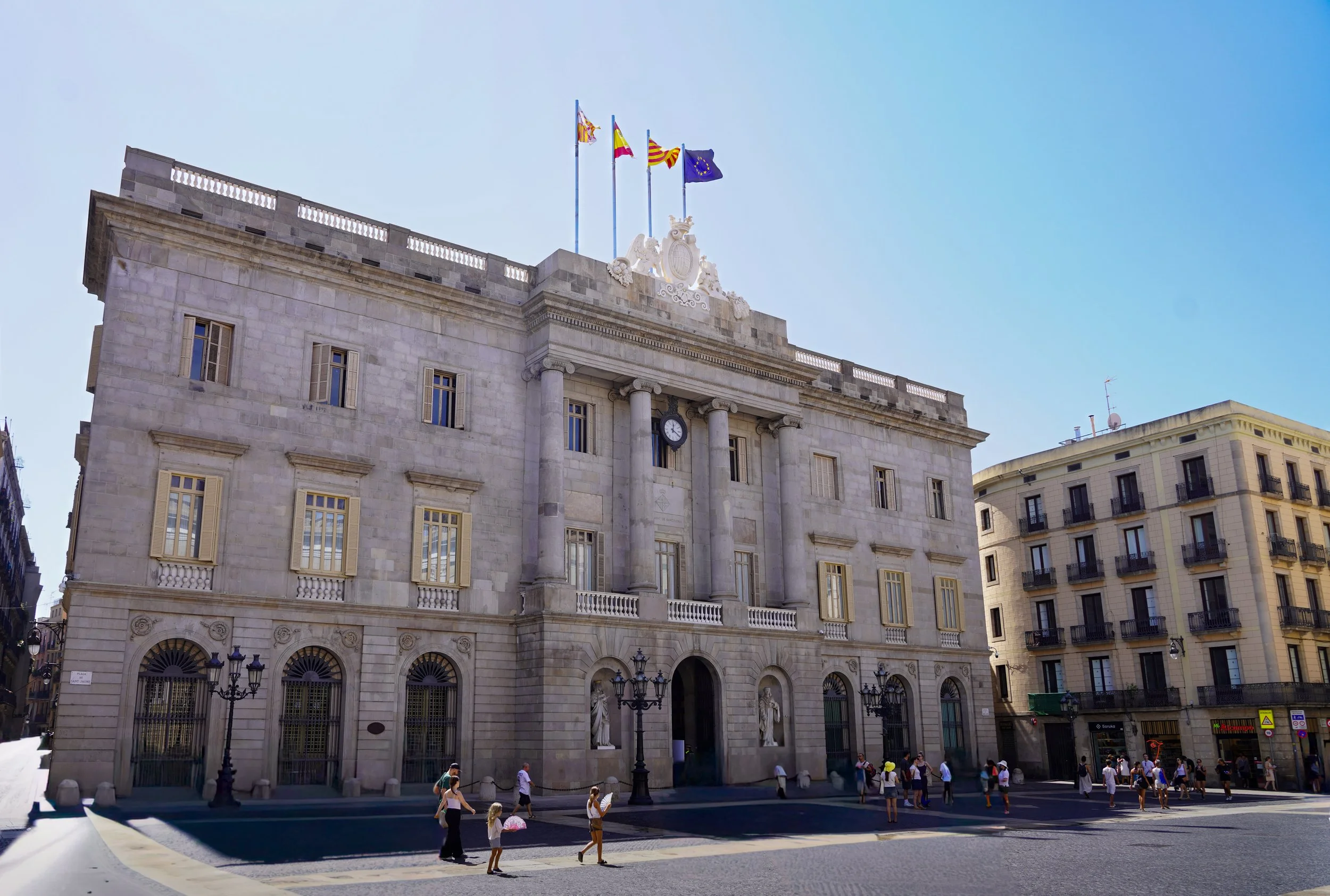
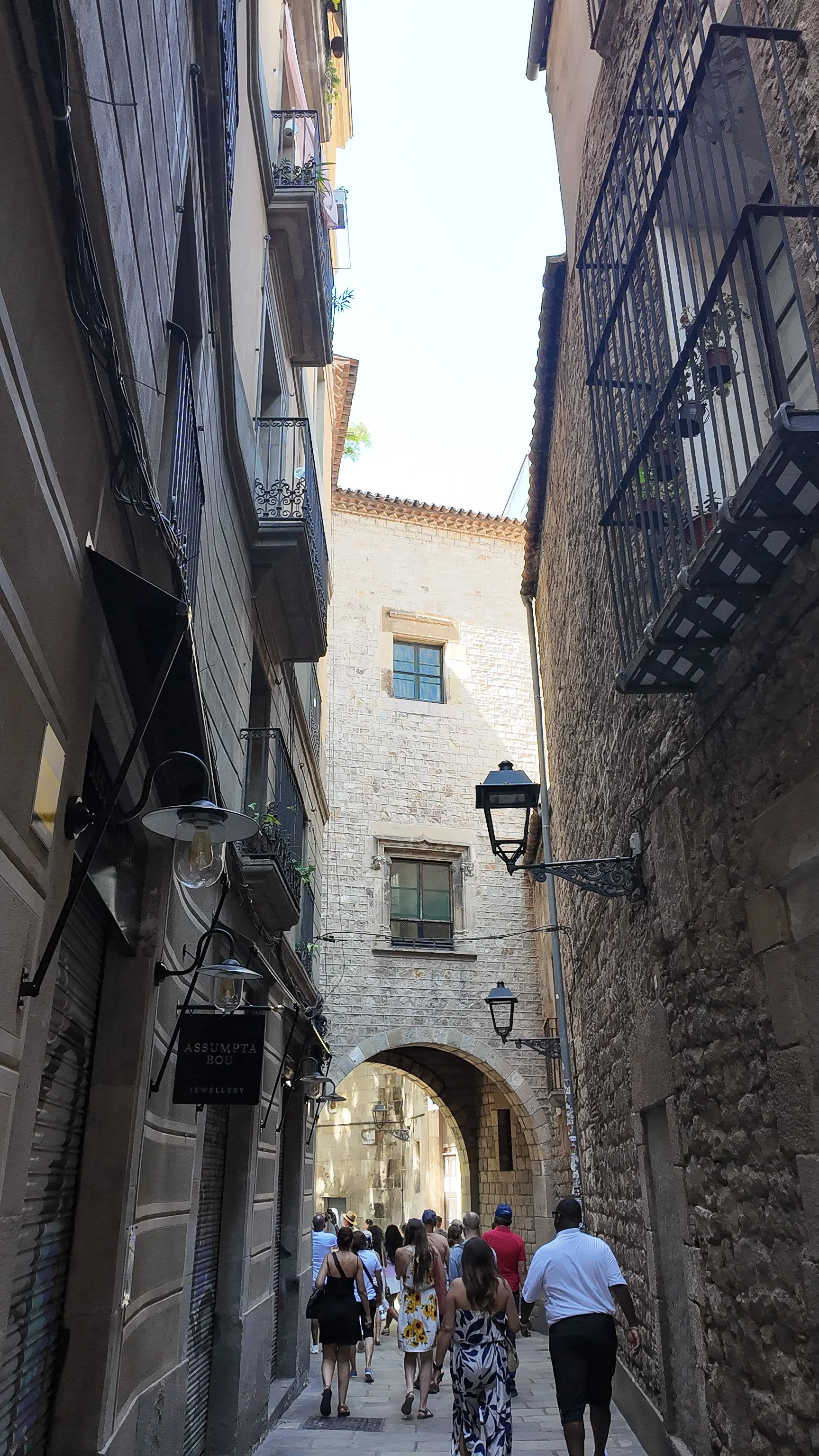
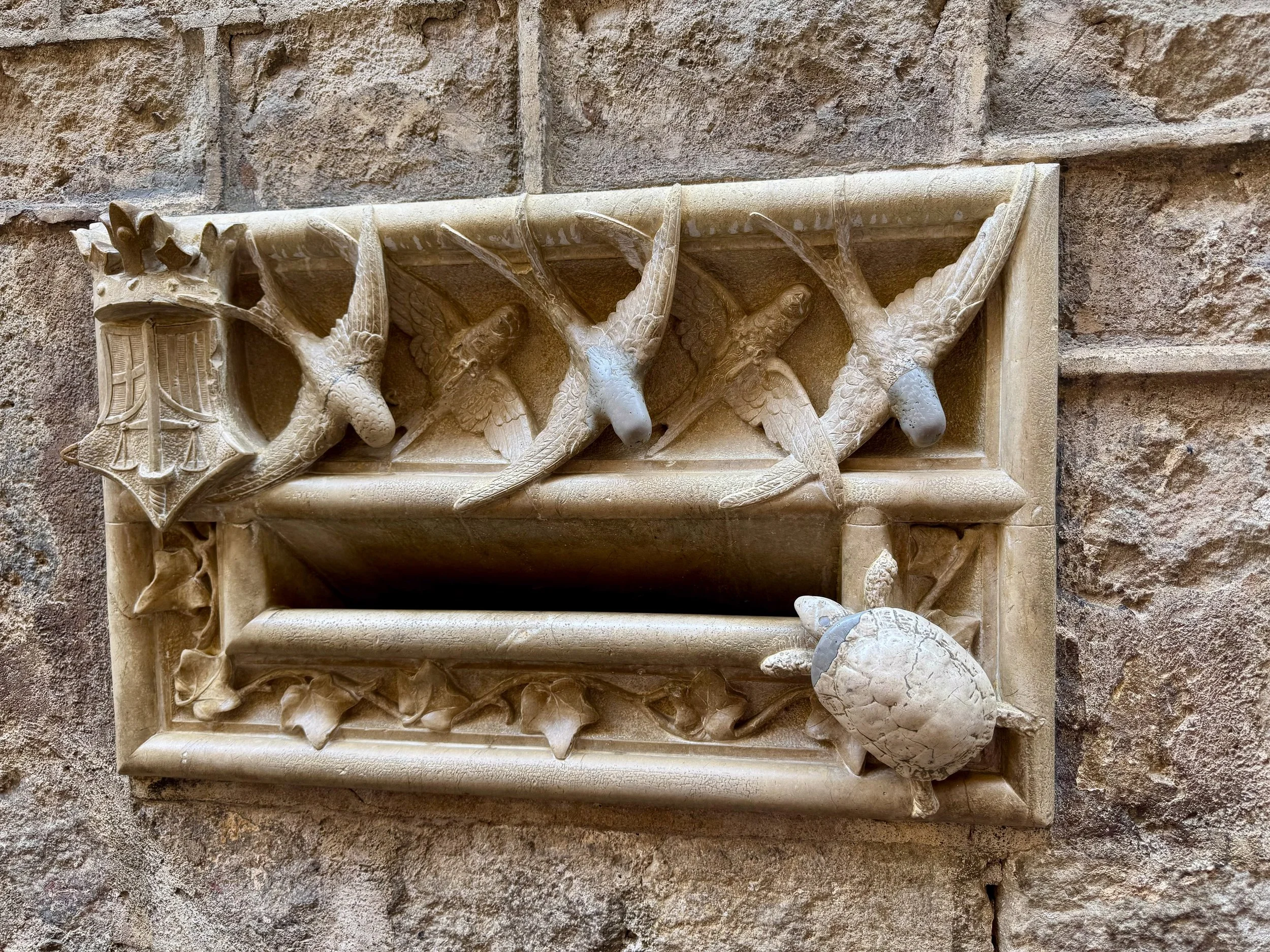
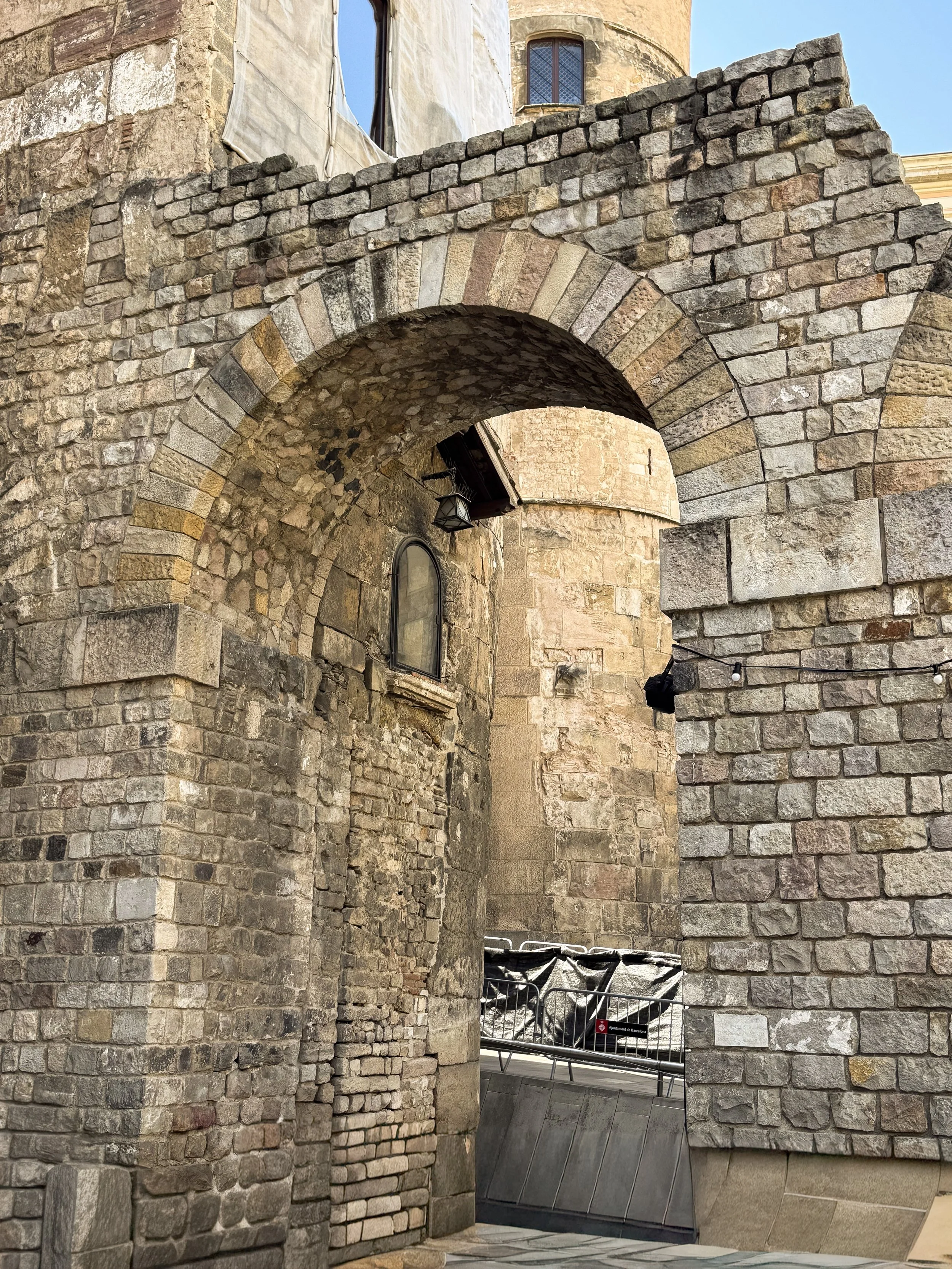
From there, we plunged into the Gothic Quarter, where 2,000 years of history are crammed into a maze of medieval streets, Roman ruins and alleyways seemingly designed by someone with a grudge against maps. We wandered for a couple of hours, but the combination of blistering heat, crowds and streets that stubbornly refused to take us where we wanted to go began to wear us down.
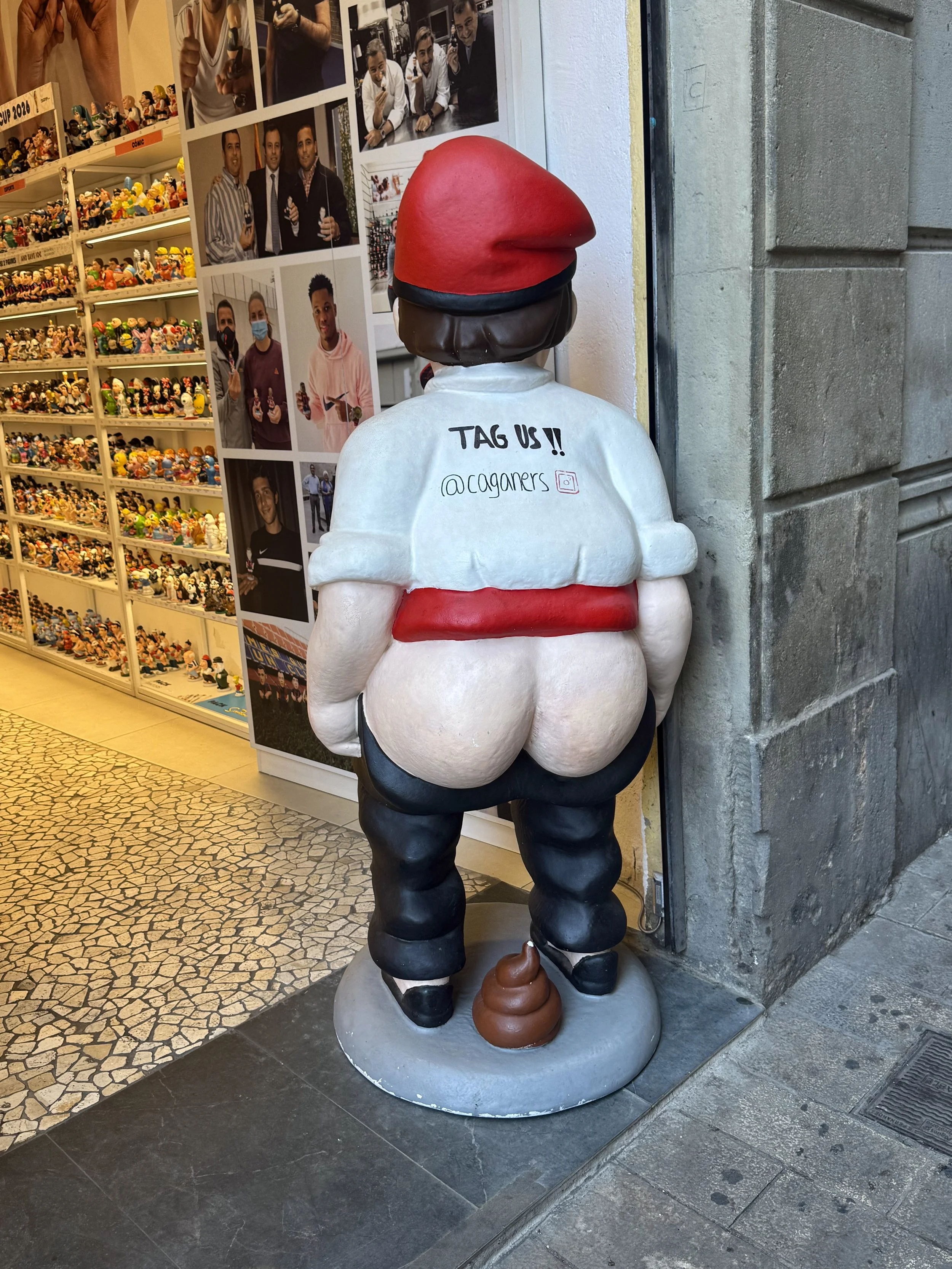
Fortunately, Barcelona had one more surprise up its sleeve: El Caganer, or the “pooping boy” — a traditional Catalan figurine discreetly tucked into nativity scenes at Christmas. Nothing quite says the spirit of Christmas like a little chap having a dump in the corner of the stable. It certainly raised a few laughs, and gave us something to talk about other than how bloody hot we were.
Our original itinerary allowed us two hours to find our own lunch. Annie took one look at us — and presumably the temperature — and decided that two hours of wandering around looking for food in the heat and crowds was probably not the best idea.
Instead, she took us to one of her favourite restaurants. Apparently, it had the best paella in Barcelona. More importantly, it had the best air conditioning. We had absolutely nothing with which to compare the paella, but we didn’t care. It was outstanding. Add an icy cold Catalan beer and a complimentary icy cold Manzana liqueur — an apple schnapps — at the end of the meal, and Annie had pretty much cemented her reputation as the best tour guide in Barcelona.
She had made the right call.
Refreshed, fed and considerably happier, we headed to Park Güell, another of Antoni Gaudí’s masterpieces. And what a place.
Park Güell began life as a rather ambitious real-estate project. Count Eusebi Güell commissioned Gaudí to create an exclusive residential estate inspired by the British garden-city movement. Construction began in 1900, but the project ultimately failed because, at the time, the location was considered too far from the centre of Barcelona. Only two houses were ever built. Gaudí eventually bought one of them and lived there for several years.
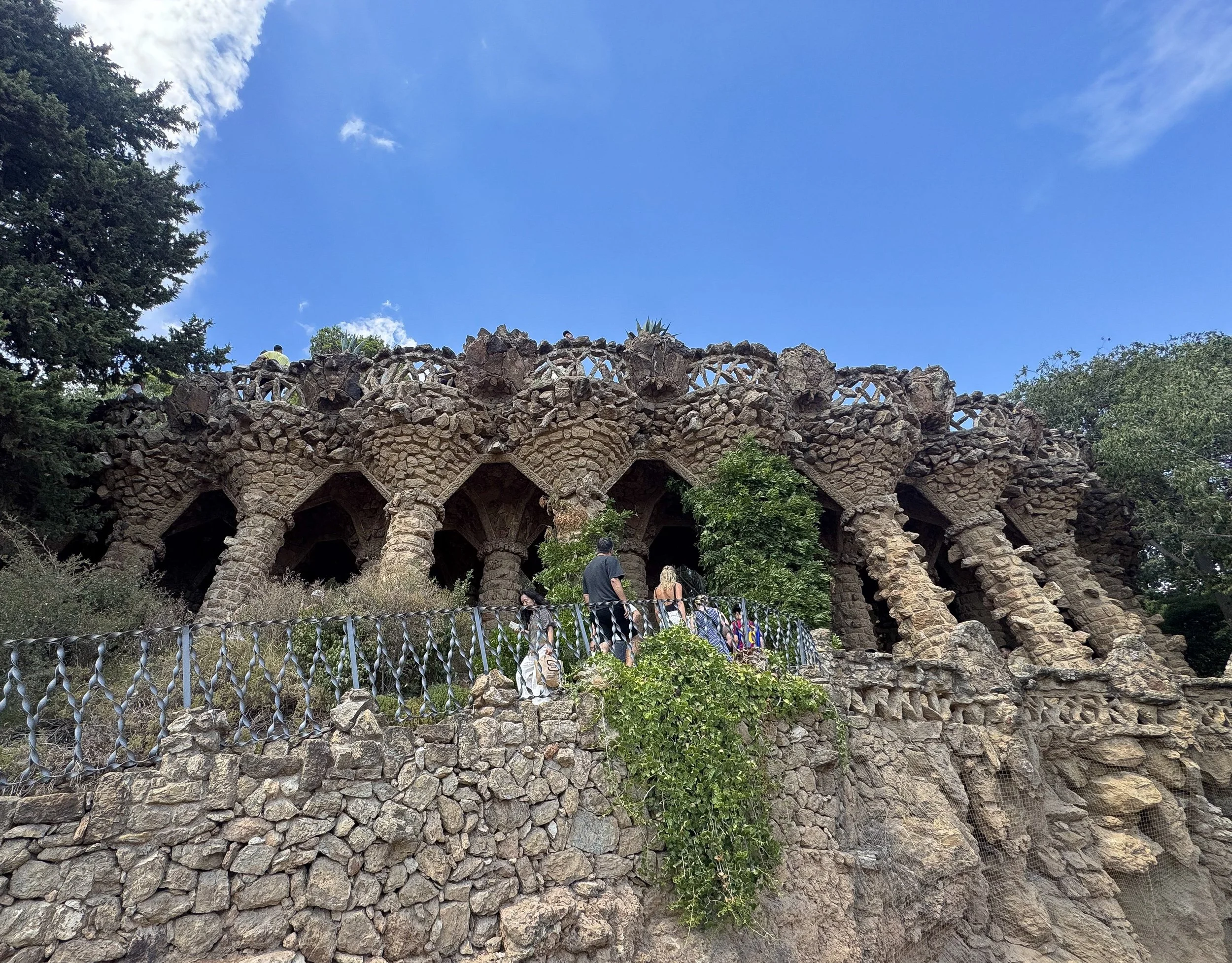
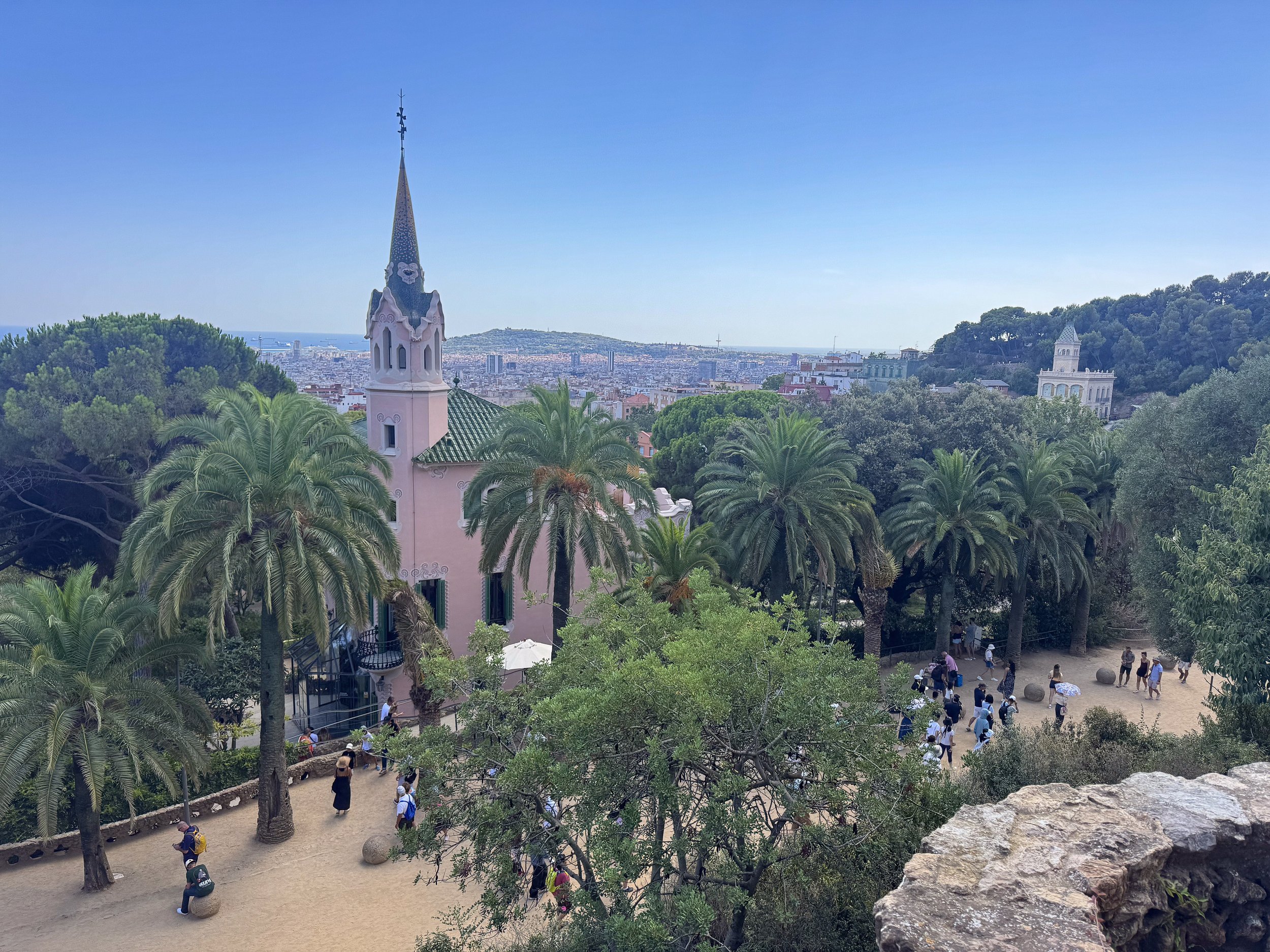
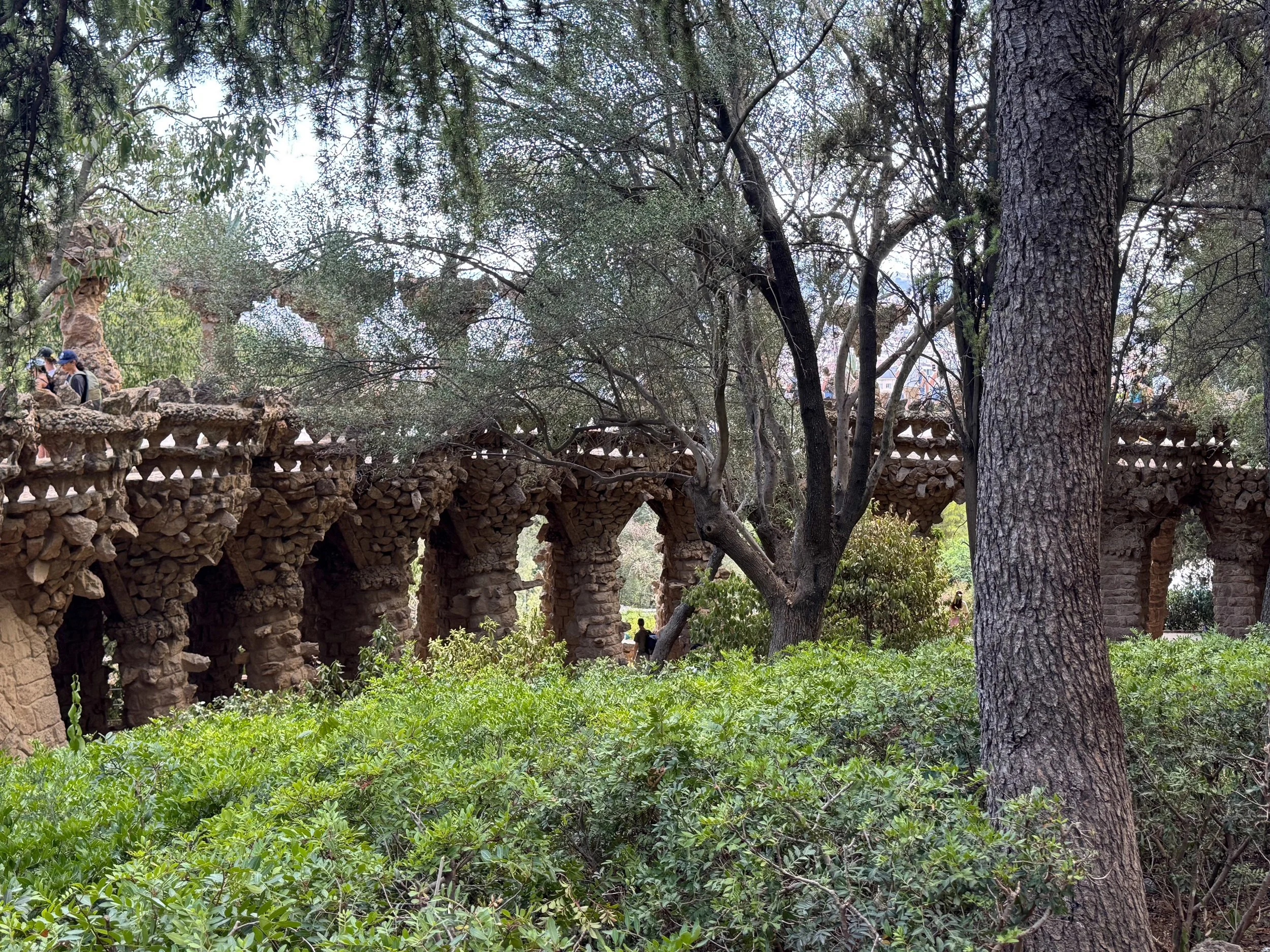
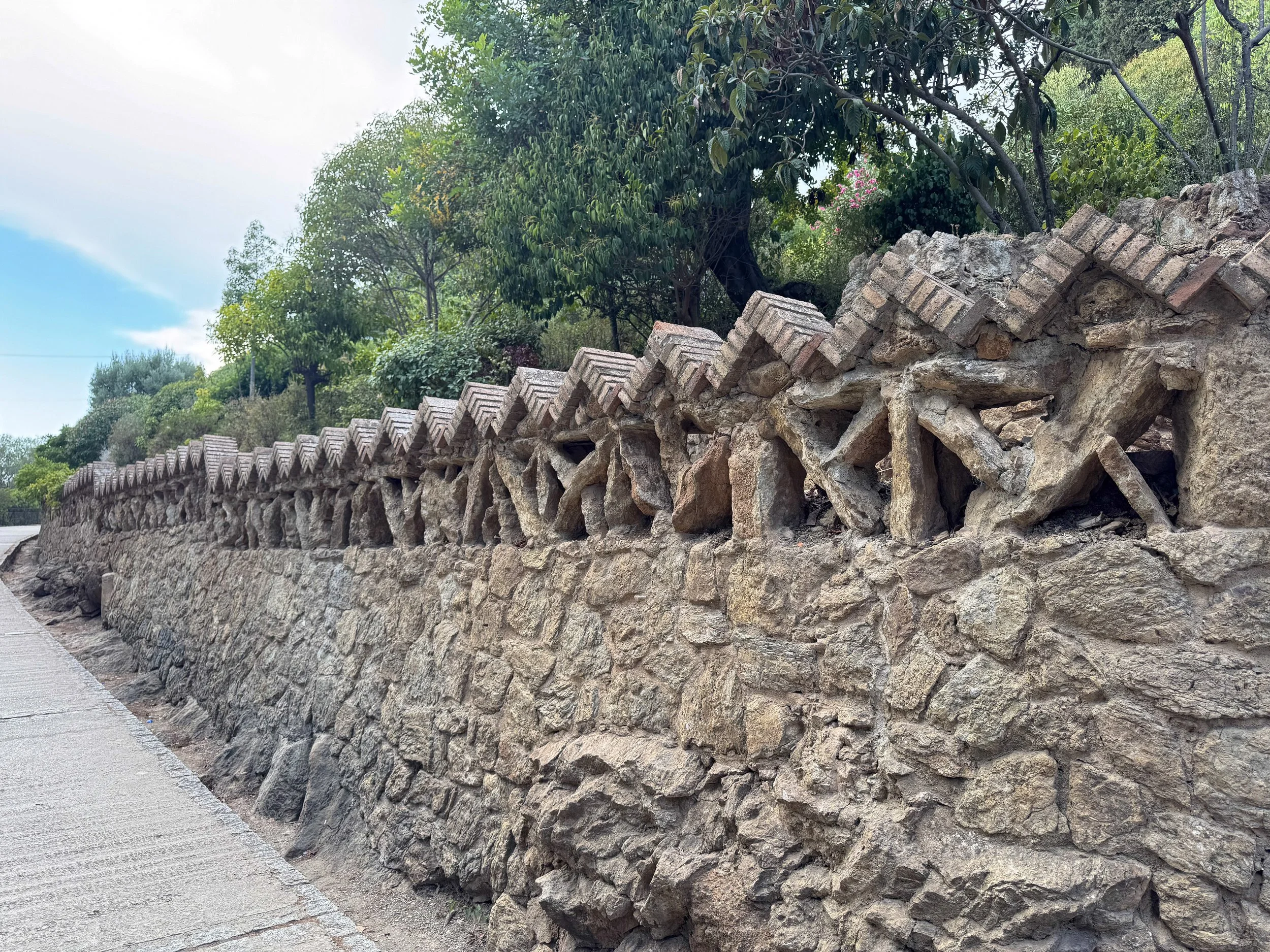
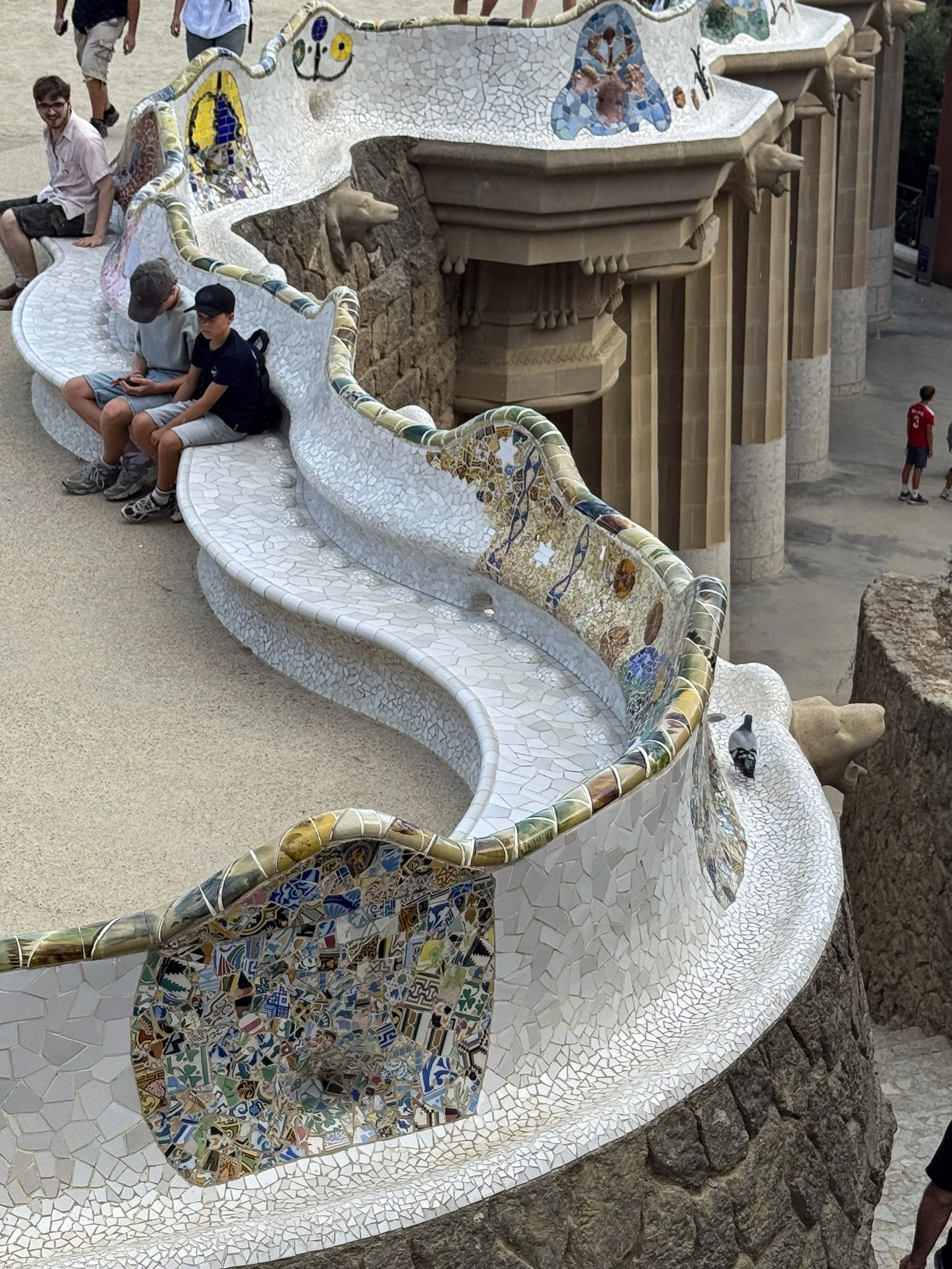
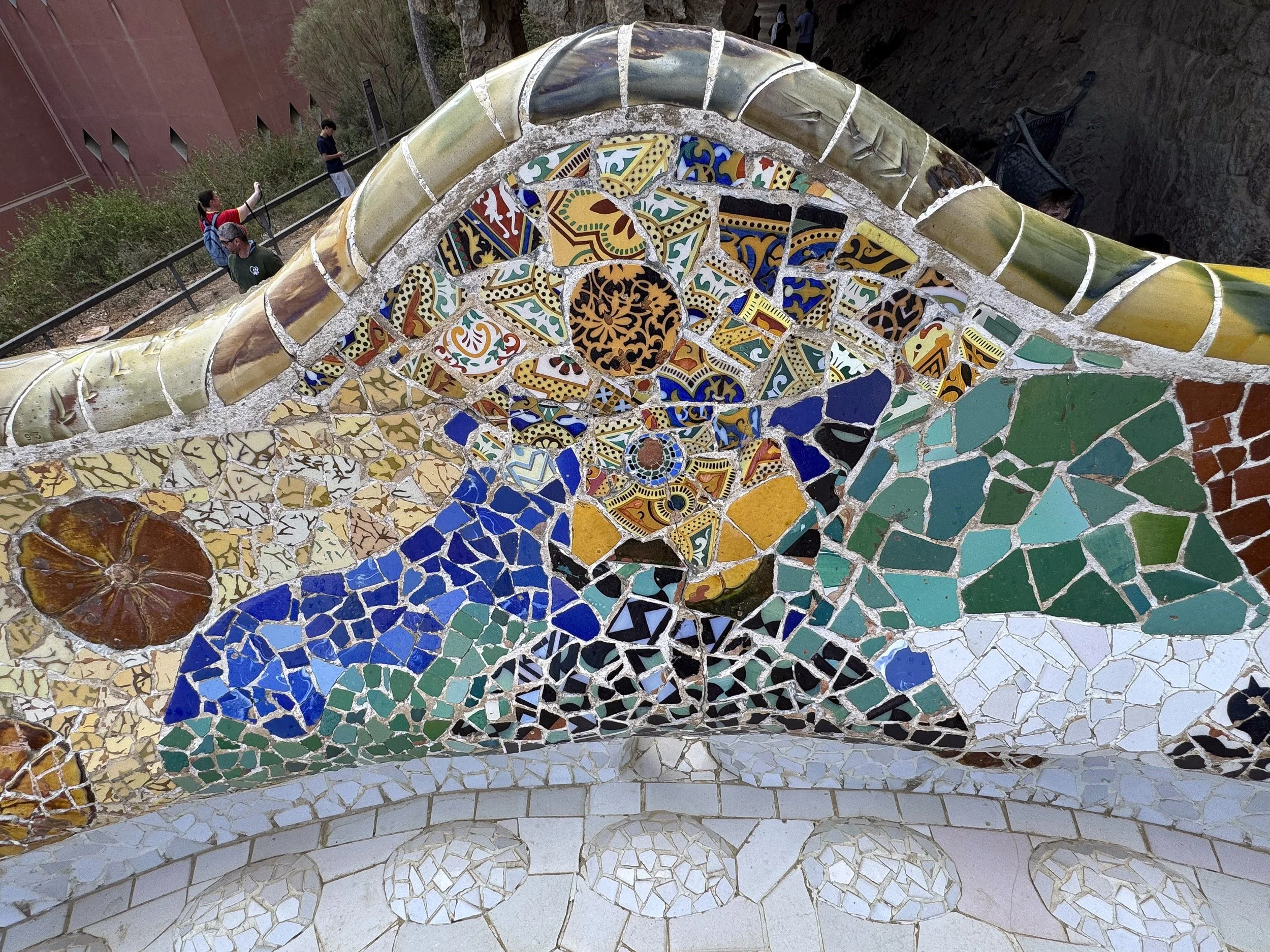
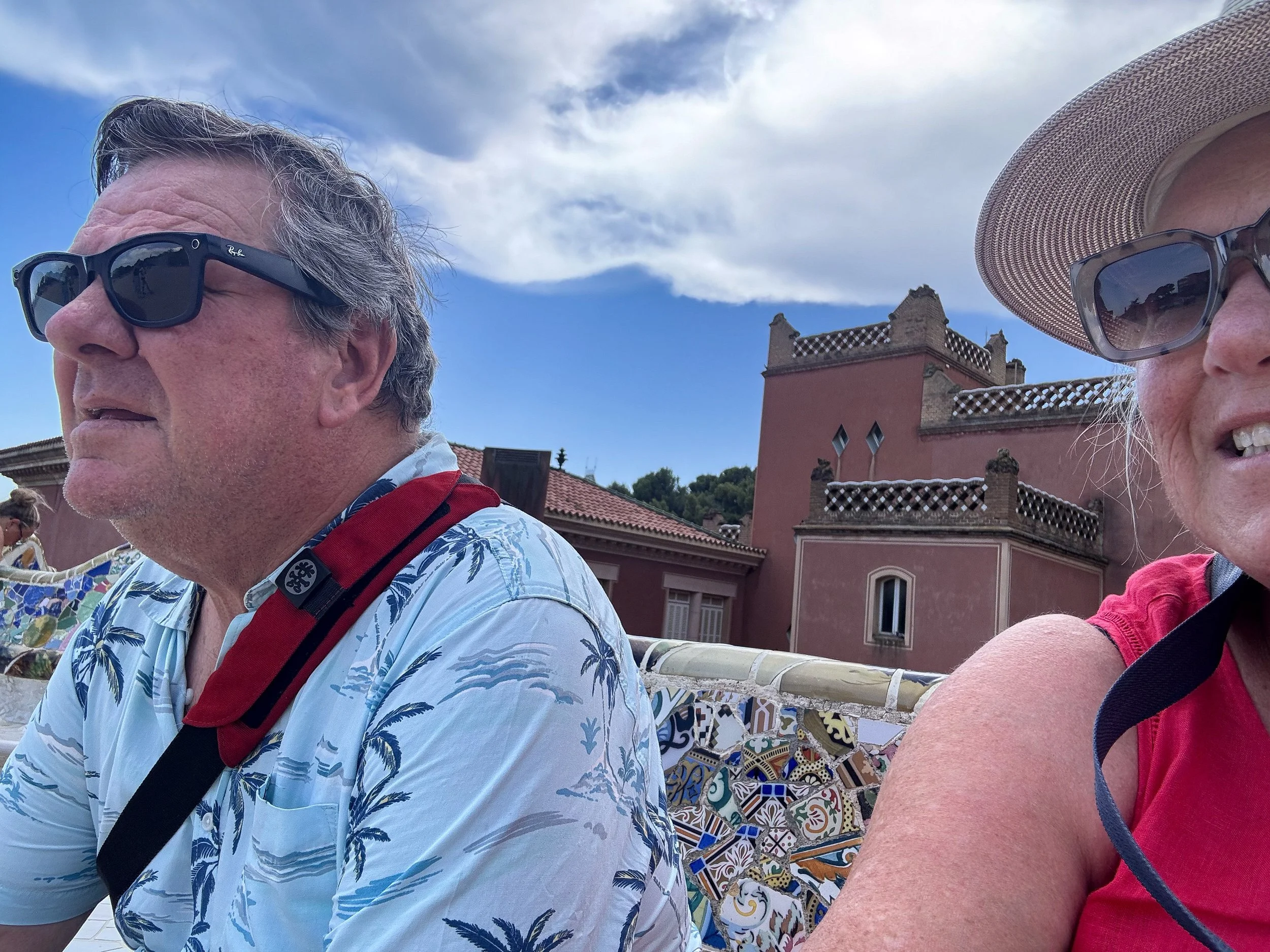
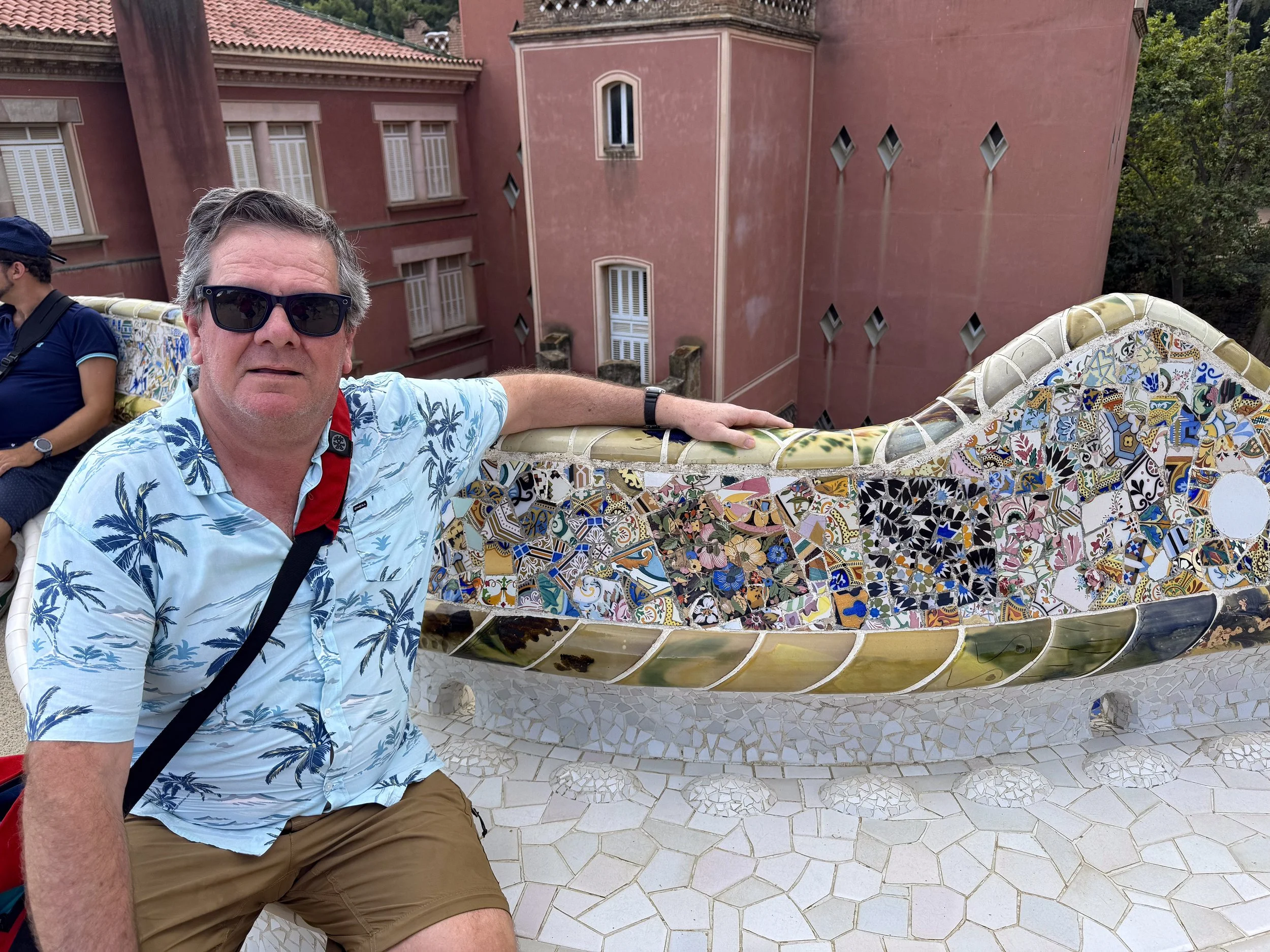
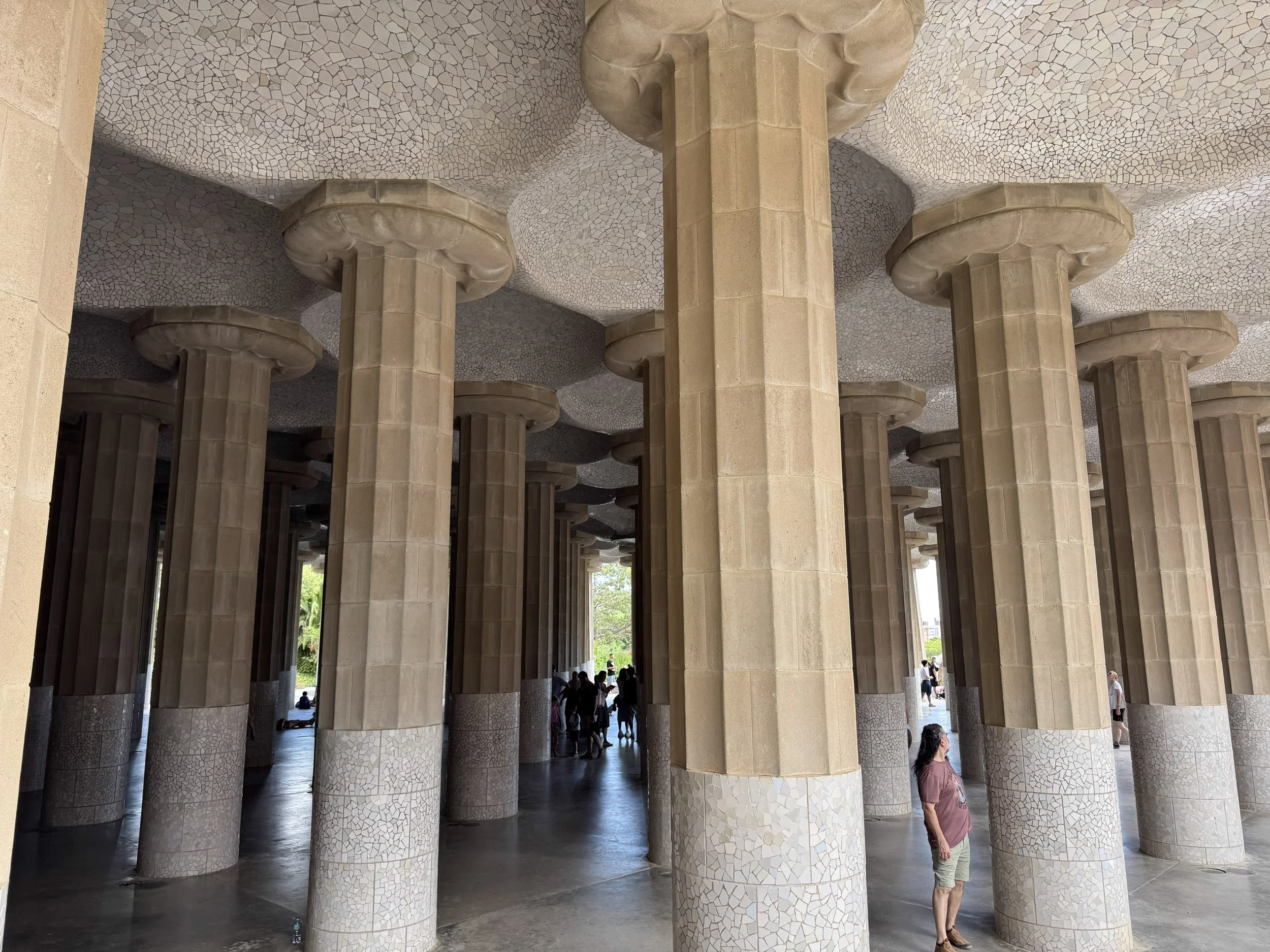
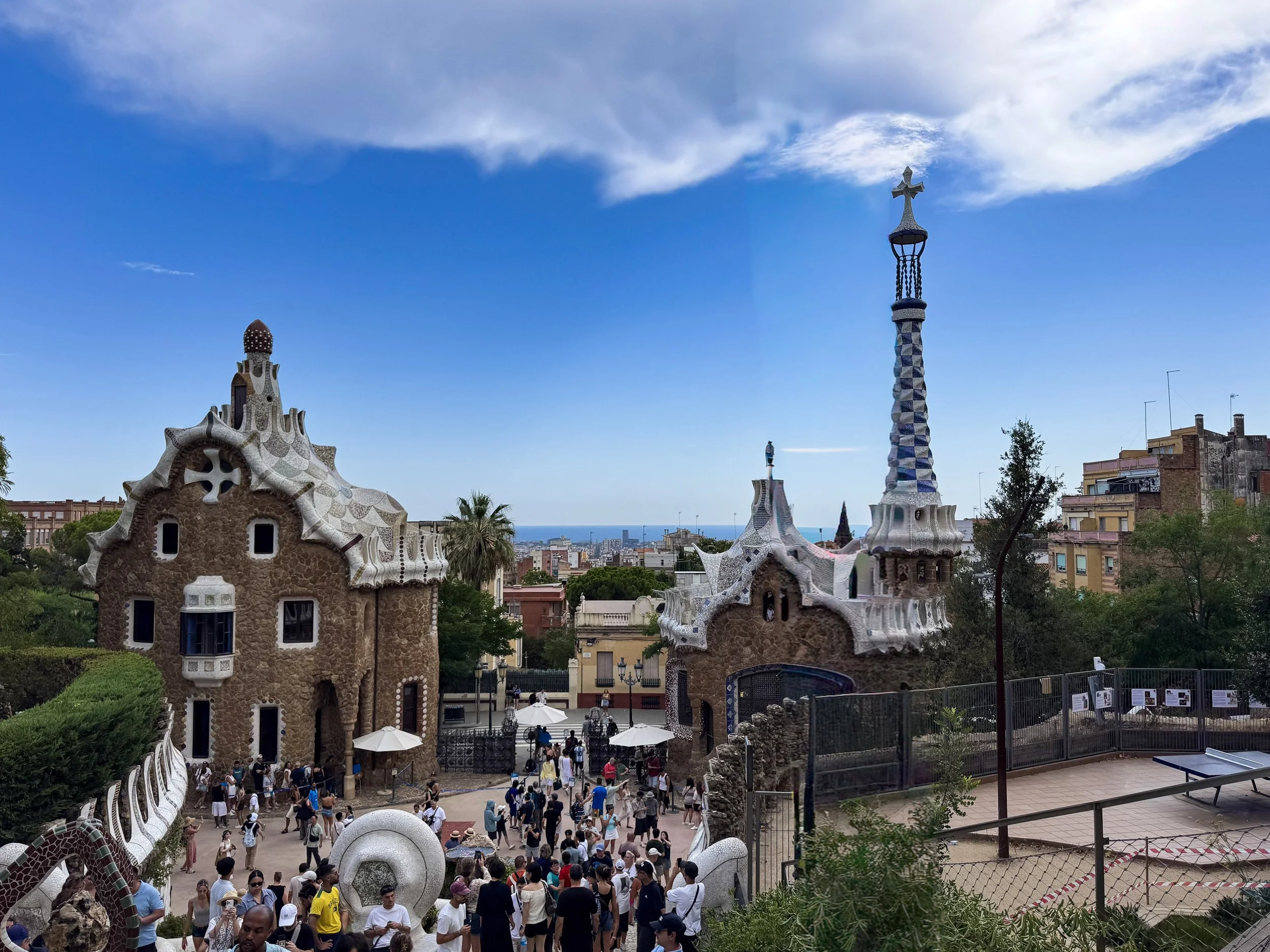
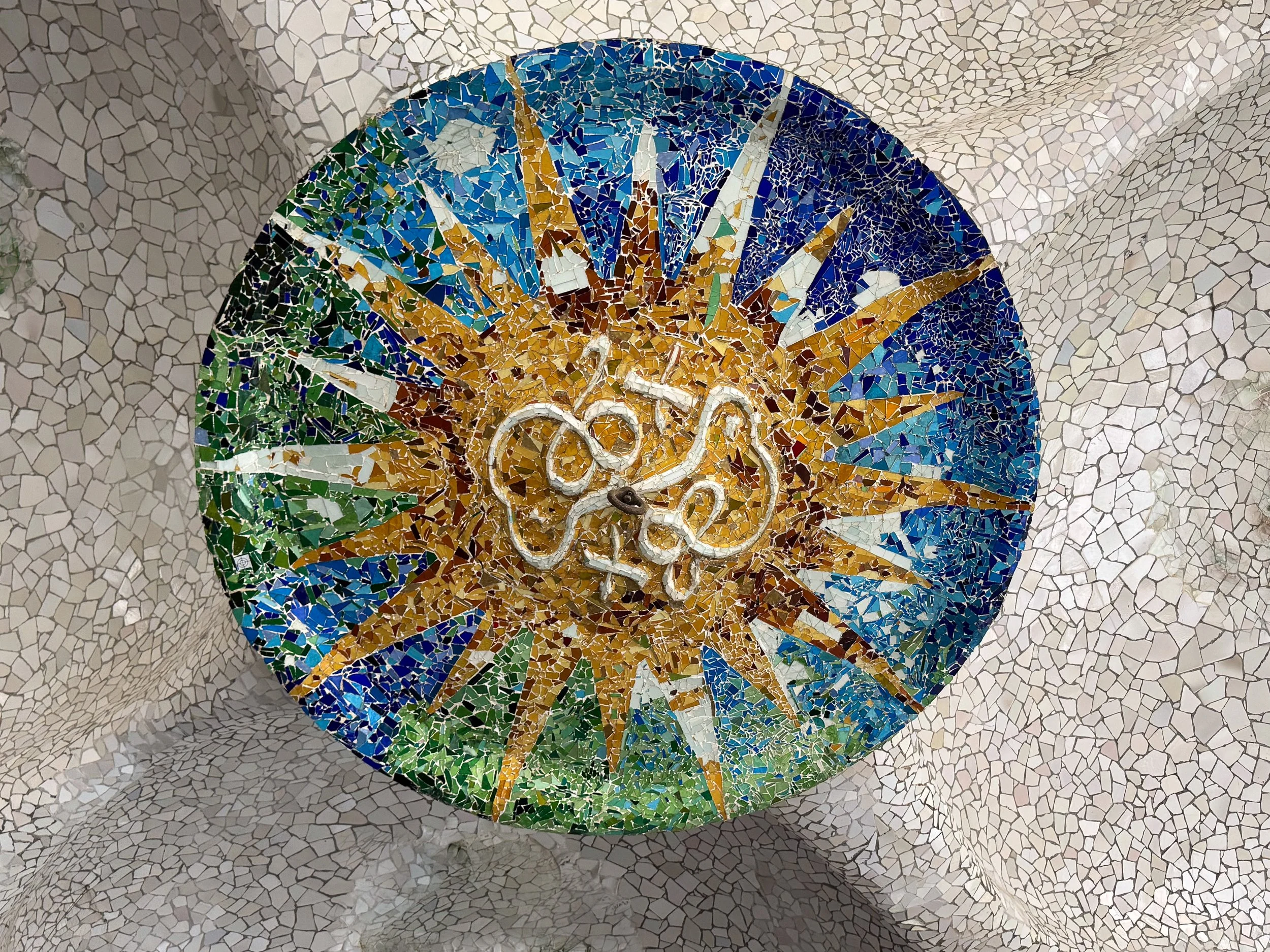
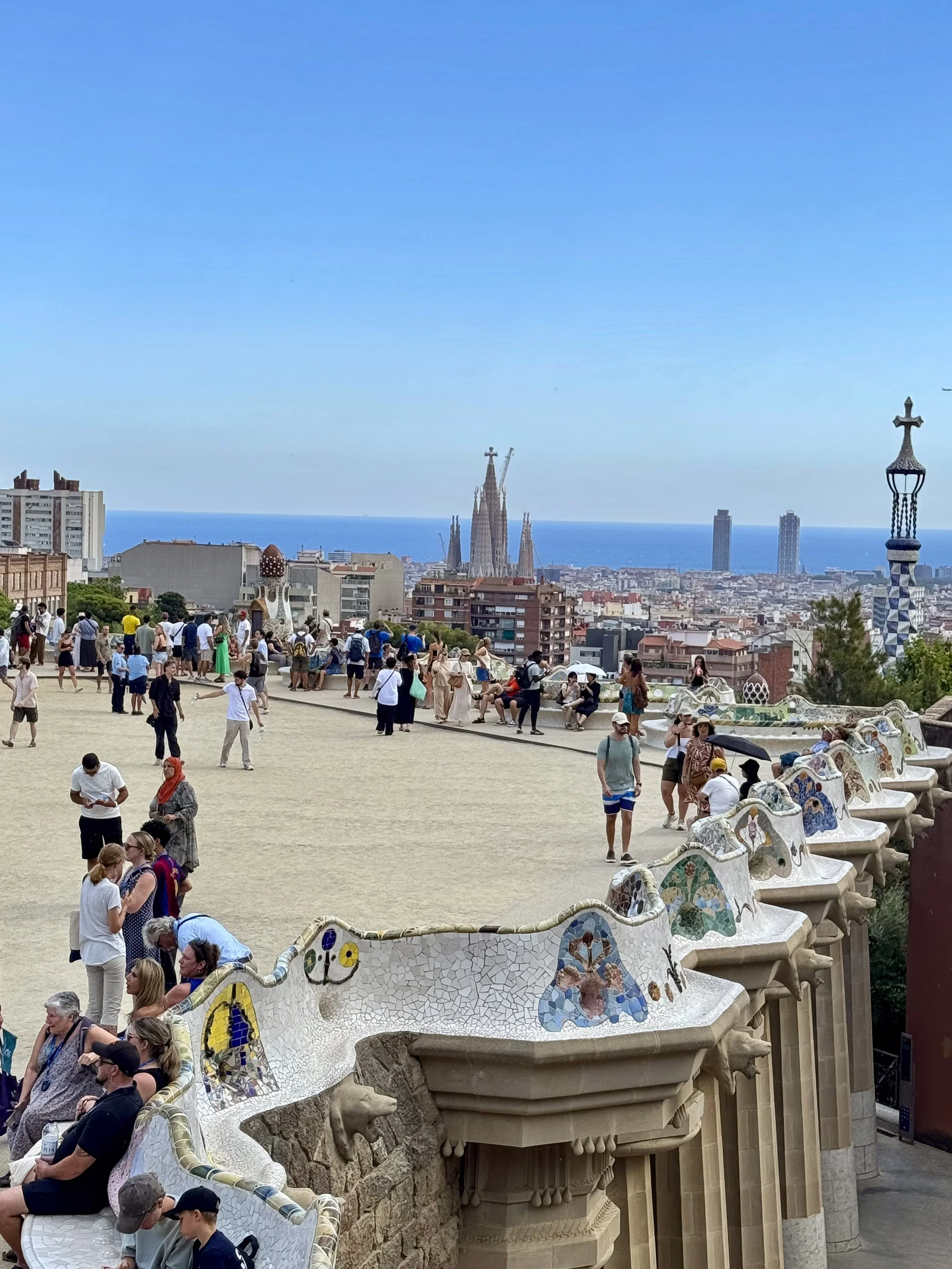
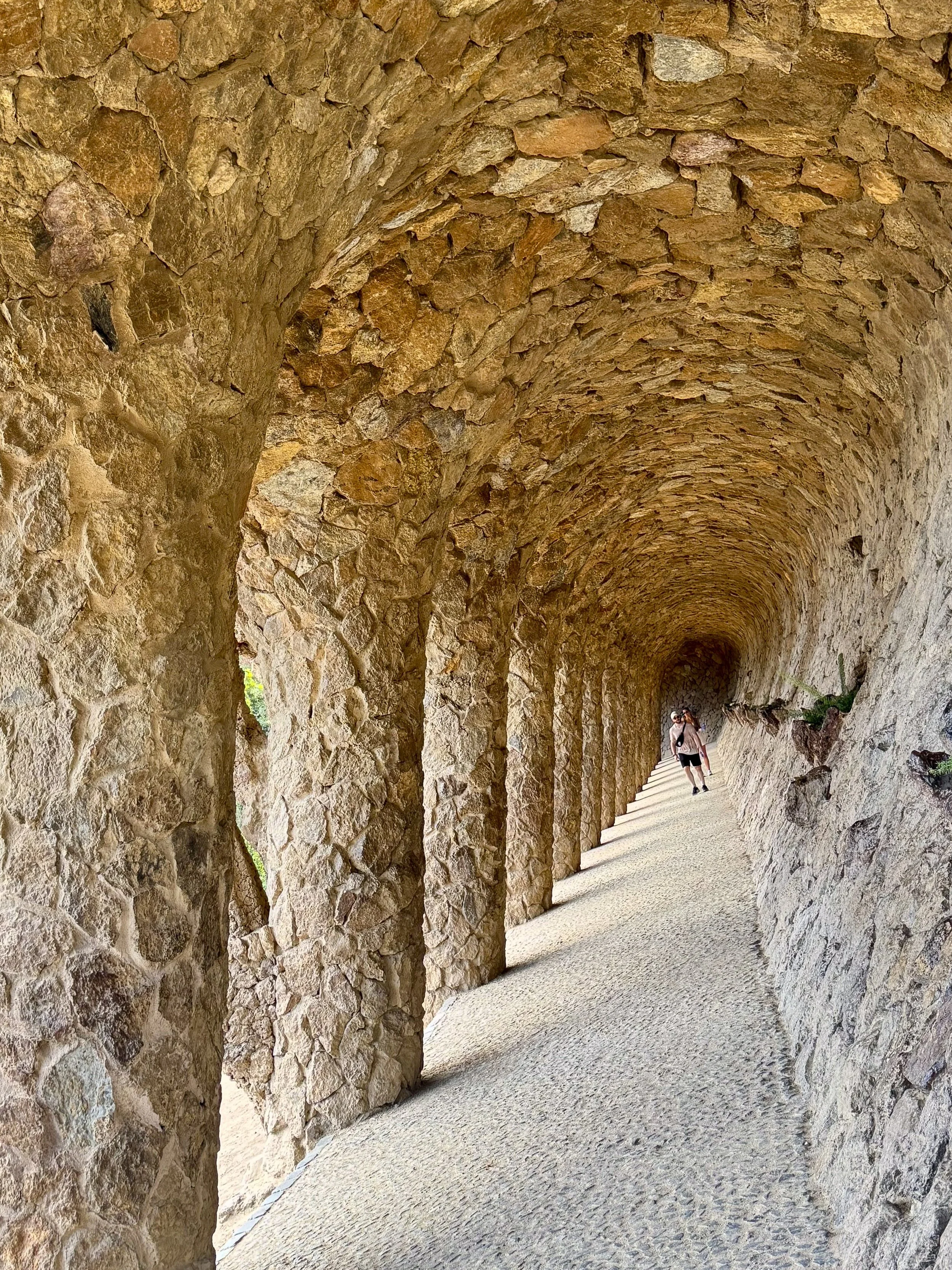
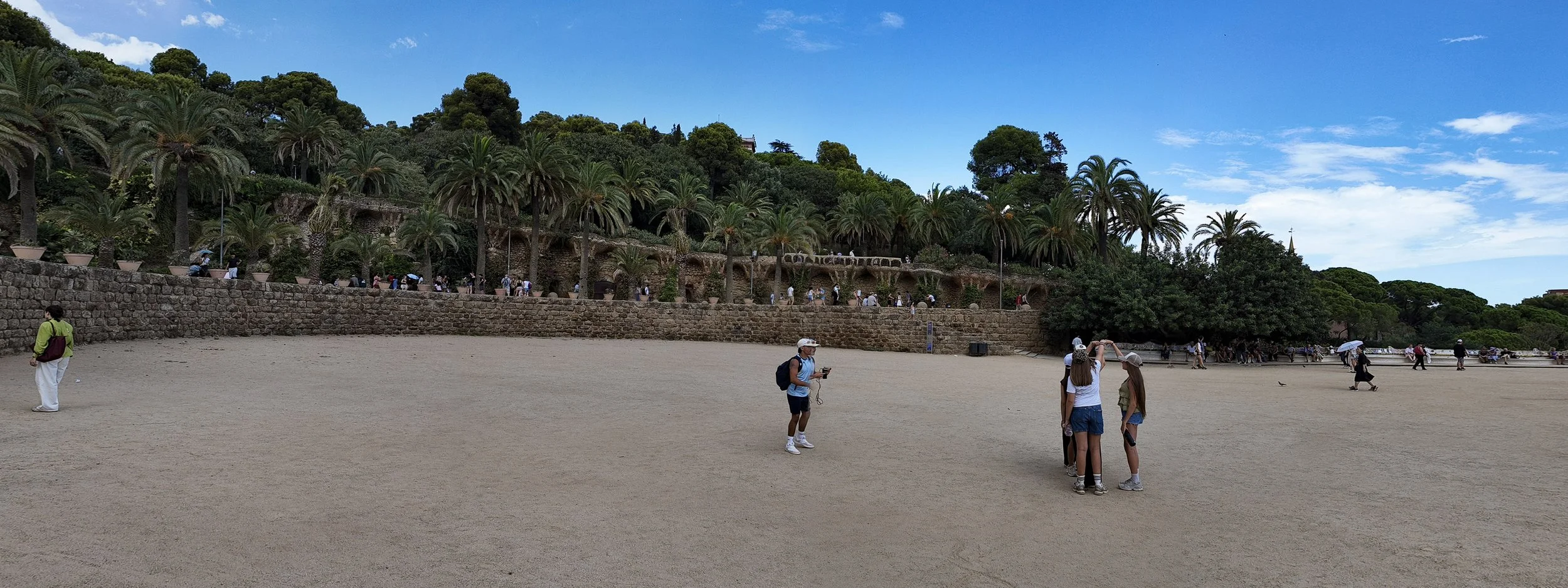
After Güell’s death, Barcelona acquired the property and opened it as a public park in 1926. Today it is one of the city’s most visited attractions and, quite rightly, a UNESCO World Heritage Site.
It is difficult to describe Gaudí’s work without using words like “whimsical”, “eccentric”, “colourful” and “completely bonkers”, but somehow all of them seem appropriate. The mosaics, twisting forms, strange creatures and extraordinary architectural details make the park feel like you have wandered into Gaudí’s imagination.
We loved it.
By this stage, however, we were starting to realise that Barcelona deserved considerably more of our time. In fact, we had decided quite early in the day that we would have to come back to Spain for a much longer visit. There was simply no way we were going to see everything we wanted to see in one day.
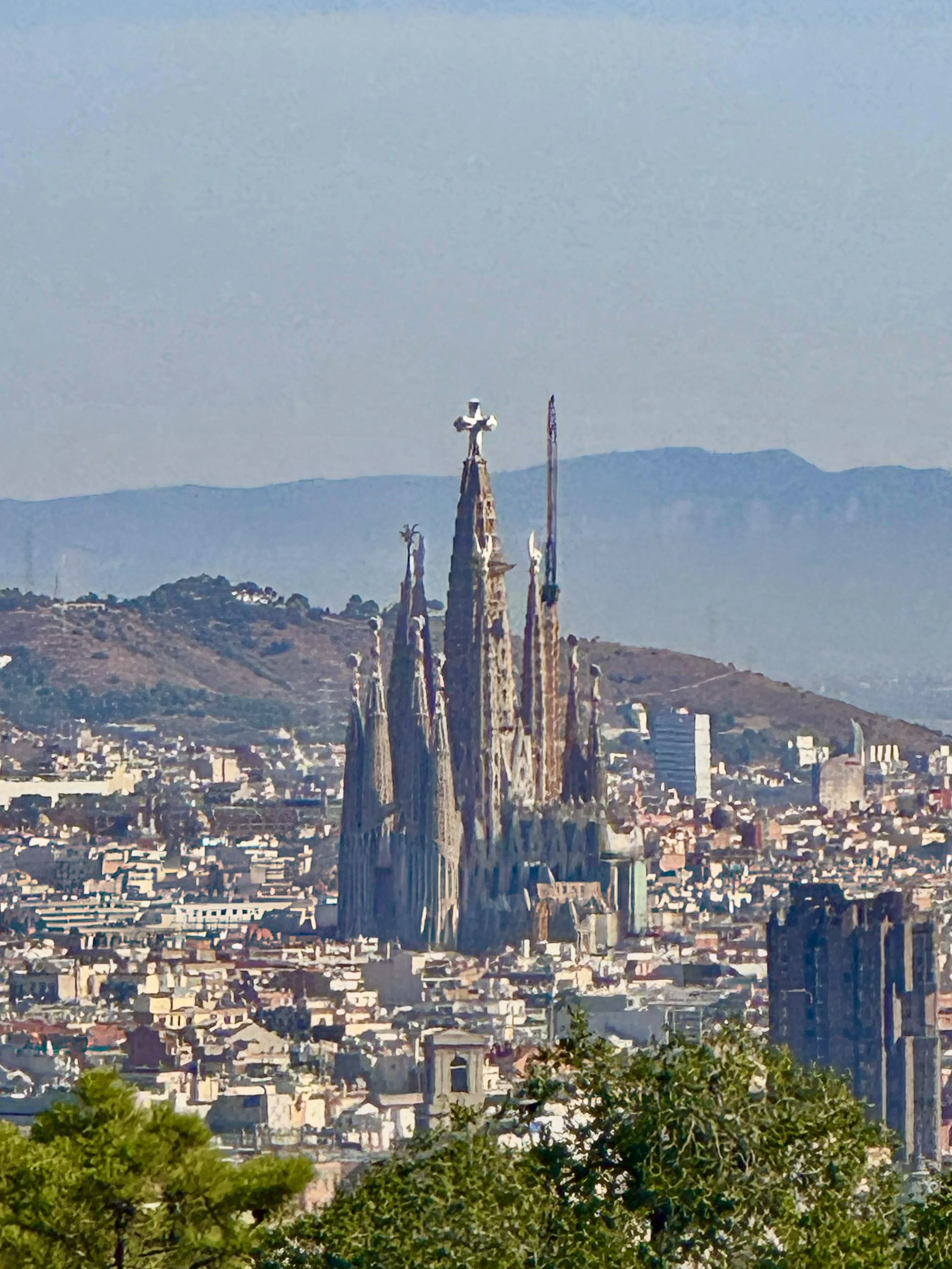
Our next stop was Gaudí’s extraordinary Sagrada Família — officially the Basílica i Temple Expiatori de la Sagrada Família. It is
one of the most recognisable buildings in the world and perhaps the ultimate expression of Gaudí’s imagination.
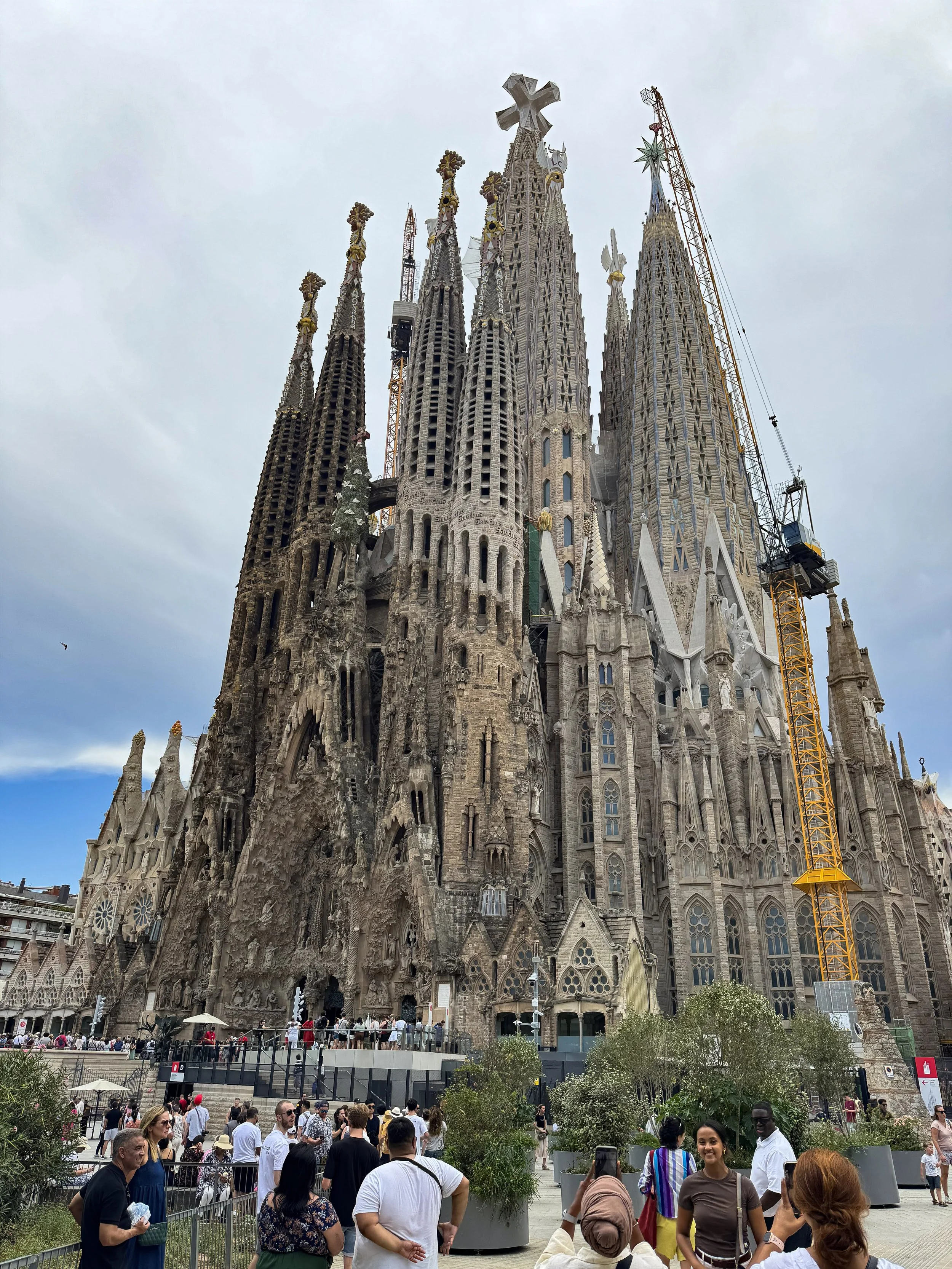
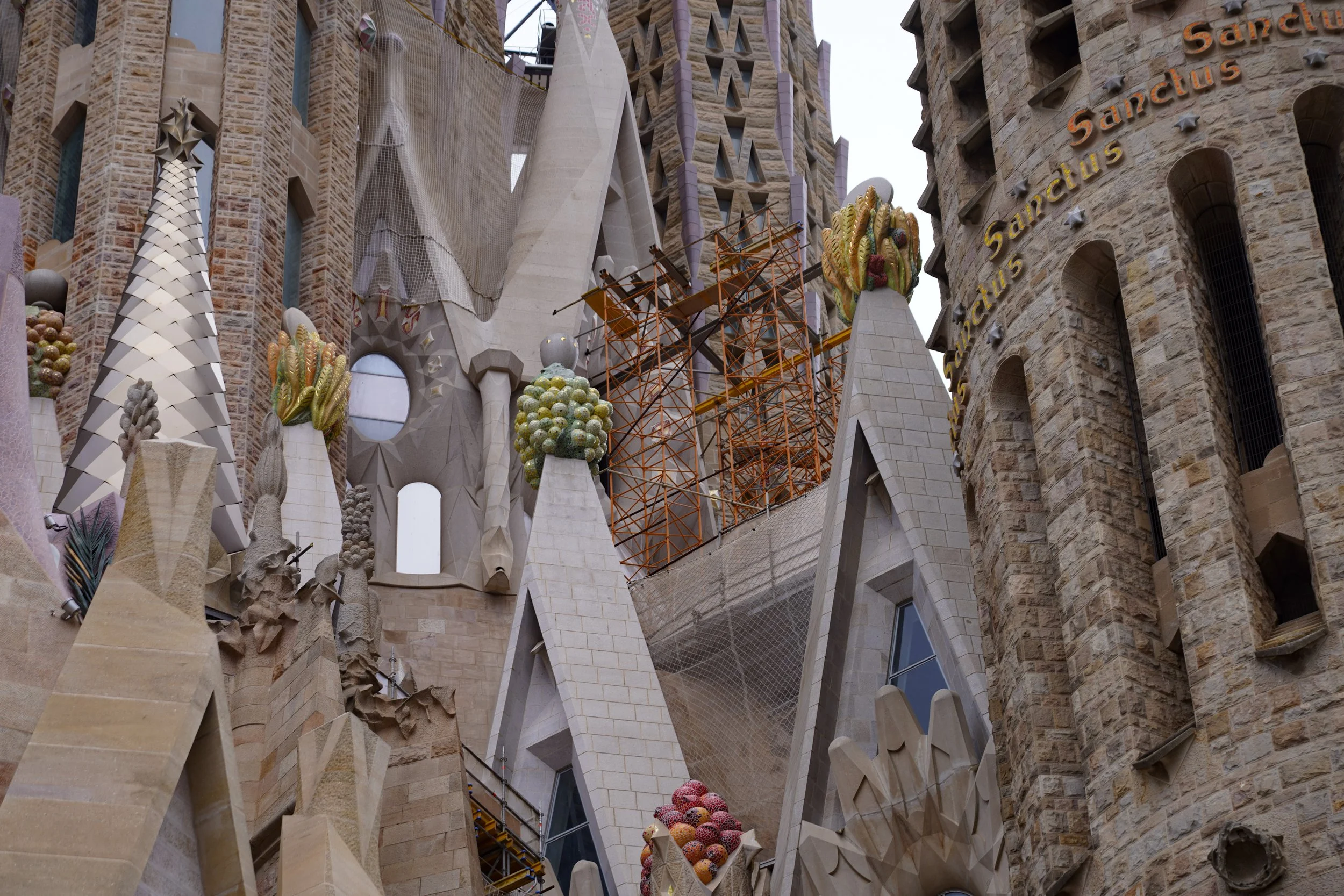
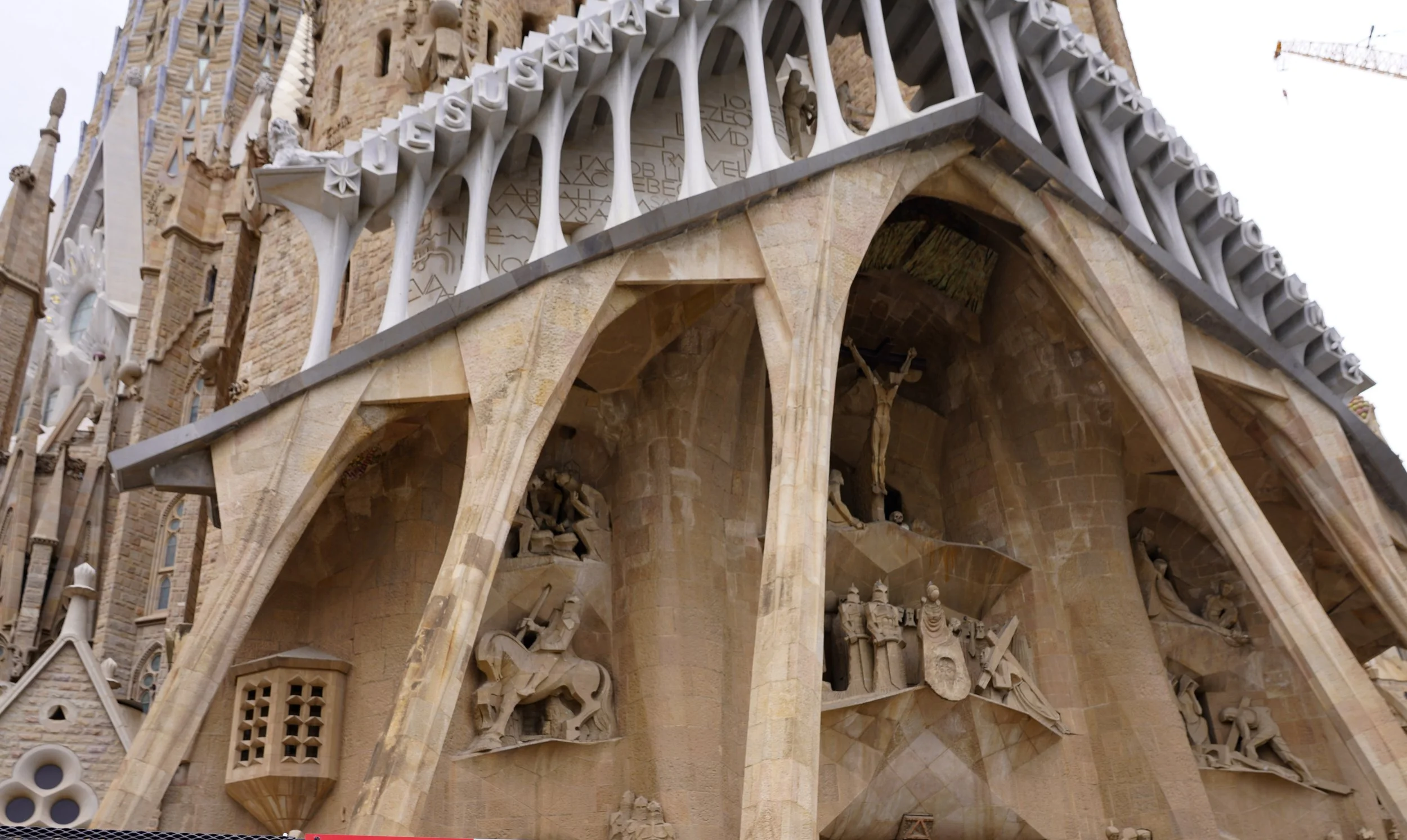
Our entry tickets were for 4.30pm, but unfortunately we had a clash with another event. With heavy hearts — and the knowledge that we had already decided we were coming back — we reluctantly declined the tour and headed back to the hotel. It was disappointing to miss the inside of the Sagrada Família, but somehow it also felt like Barcelona was giving us an excuse to return.
And we were perfectly happy with that excuse.
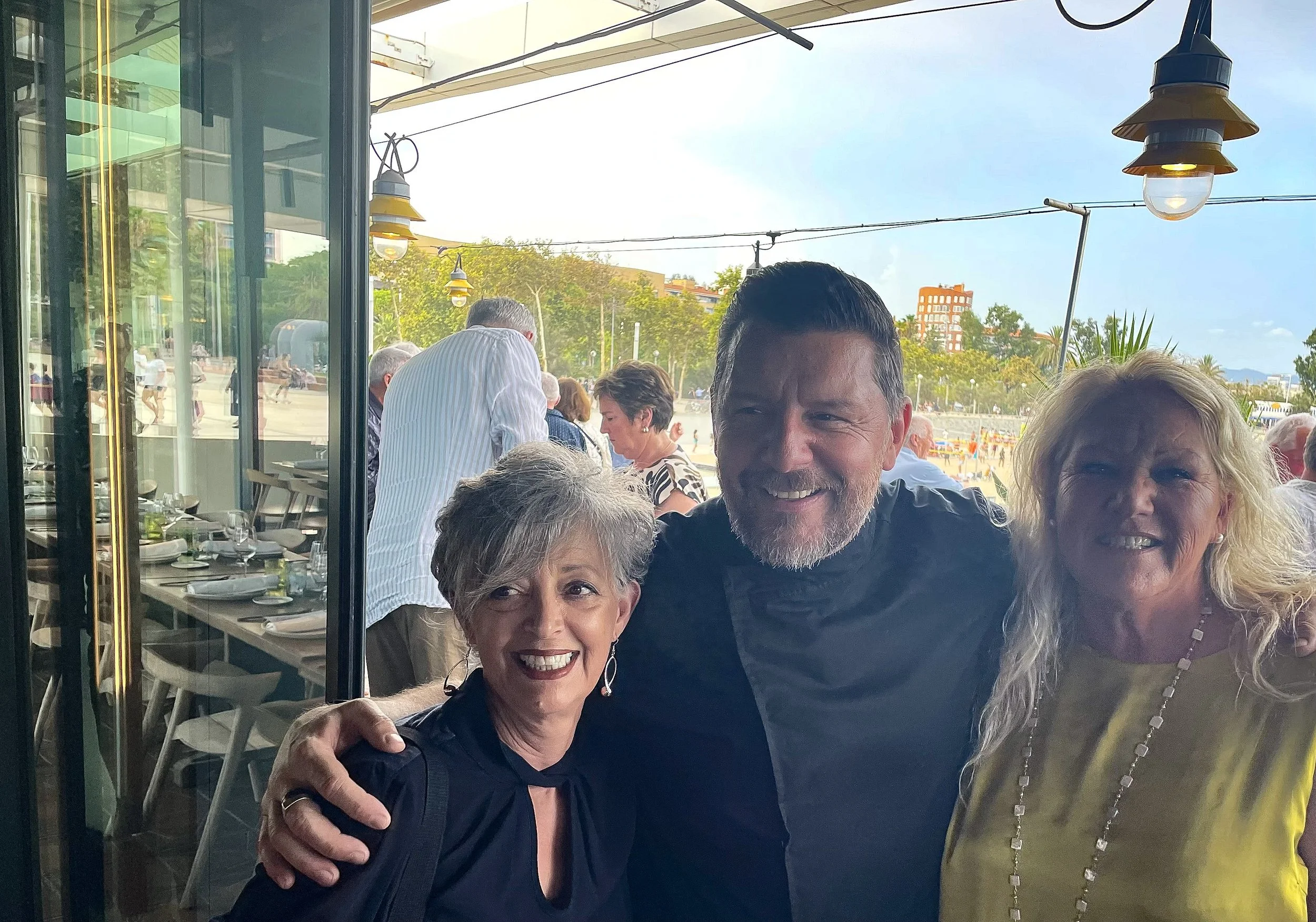
There was another disappointment from the original itinerary that had been hanging over us. On the original river cruise we were supposed to have Manu Feildel cooking for us. Because of the changes to our itinerary, including the change of location and boat, that had obviously fallen through. However, tonight Manu was cooking for all of us at Barcelona’s prestigious Kresala Restaurant.
So perhaps things had worked out after all.
The evening consisted of a six-course dinner curated by Manu, with the house chef preparing all but one of the dishes. Manu himself was responsible for the squid stuffed with prawns. He spoke very enthusiastically about his creation and waxed lyrical about just how good it was going to be. Unfortunately, it was probably the weakest dish of the night. We didn’t see Manu for the rest of the evening, so I suspect he may have been just as disappointed with the squid as we were. Perhaps he had quietly retired to a corner somewhere to rethink his life choices.
Despite the squid incident, it was a brilliant evening. The food, wine, company and atmosphere made for a memorable final night in Barcelona. And so, after a very long day of sightseeing, eating, drinking and trying to absorb several thousand years of Spanish history, we headed back to Casa Fuster.