Corfu
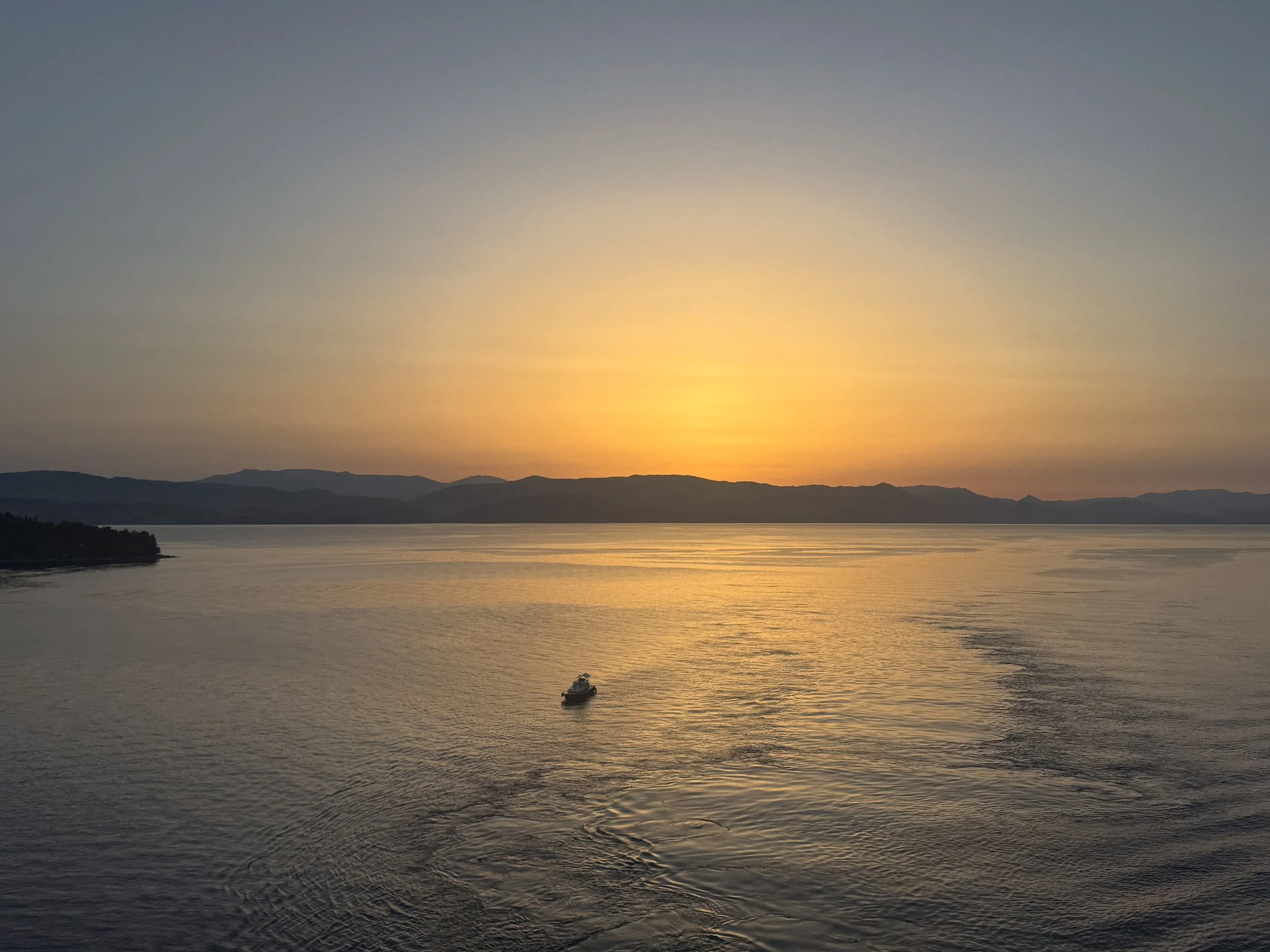
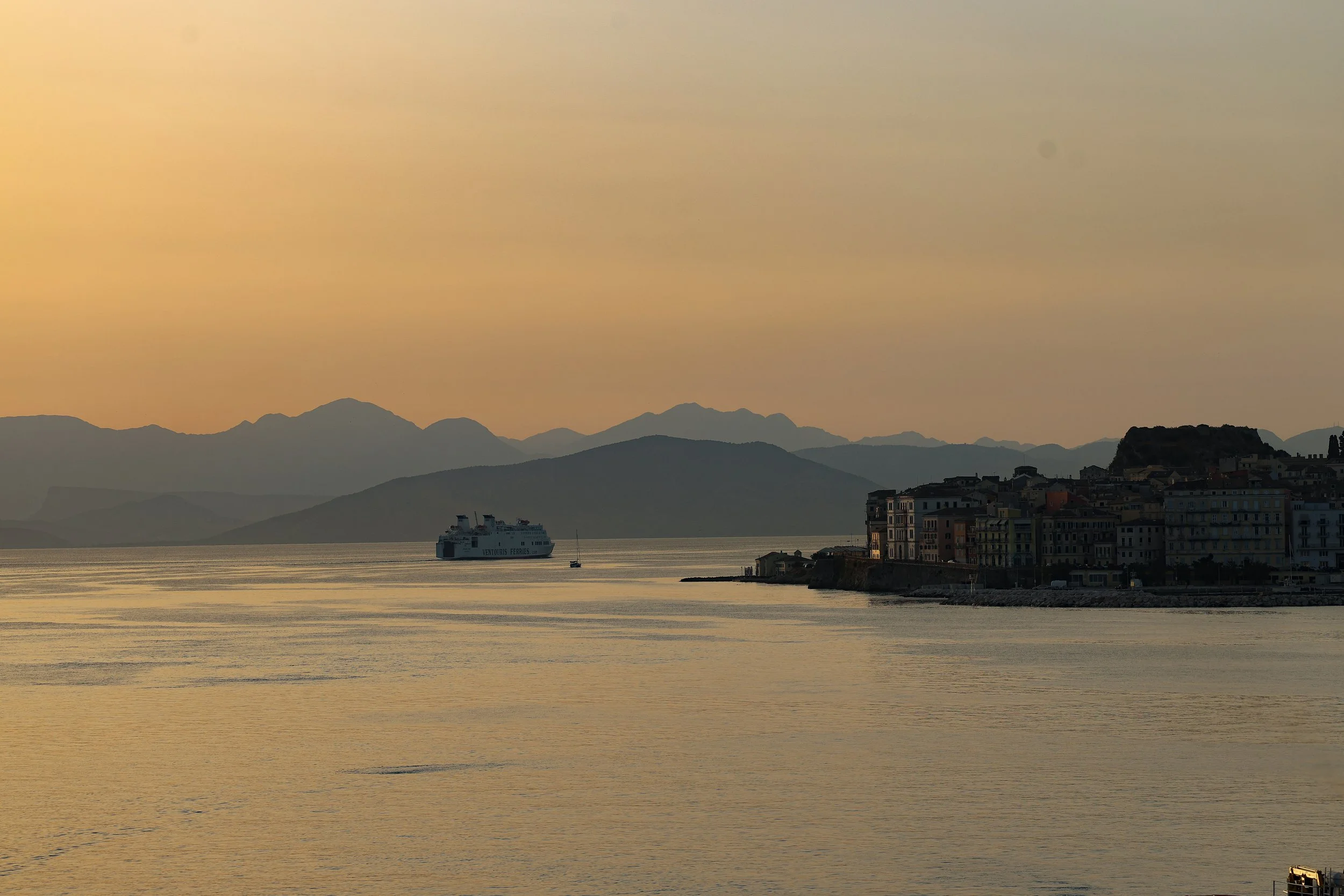
We woke the next morning in the port of Corfu to yet another day of blazing blue skies and that dazzling aqua water that, amazingly, we still hadn’t become bored with. If anything, we were starting to think we could happily look at it forever. The weather was glorious, although by this stage we had learnt that “glorious” in Greece also meant “you will be sweating before breakfast.”
We had no formal plans for Corfu, which was rather nice after all the organised sightseeing and frantic attempts to see everything in a few precious hours. Today’s itinerary was simple: food, shopping and wandering. A very civilised way to spend a day.
Along with Concetta and Alan, we headed towards the Old Fortress, which sits dramatically on a rocky peninsula at the eastern edge of Corfu Town, jutting out into the Ionian Sea. It is an impressive sight, and its history is even more impressive. The fortress dates back to the Byzantine period, although much of what you see today was built or strengthened by the Venetians from the 15th century onwards. Its position was no accident — surrounded by water on three sides, it provided a formidable defence against anyone foolish enough to try to take Corfu.
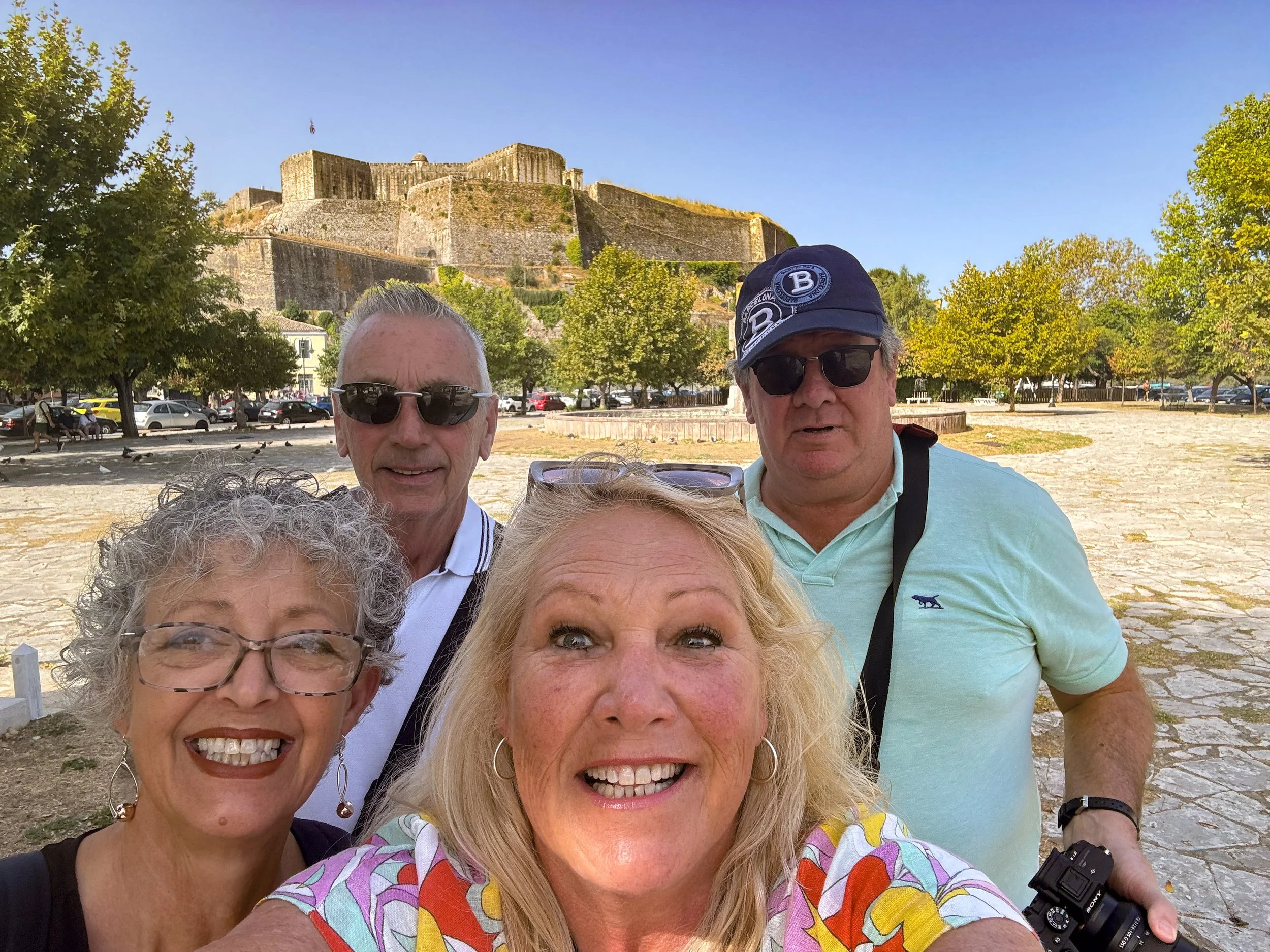
The Venetians turned it into one of the most important defensive strongholds in the region, adding massive walls, towers, bastions and a moat. Corfu’s strategic position made it a particularly valuable possession, and the fortress played a major role in protecting the island from repeated attacks, including several attempts by the Ottoman Empire. It is hard to imagine all of that military activity now as you stand looking out over the peaceful blue water with tourists wandering around in sandals and carrying shopping bags.
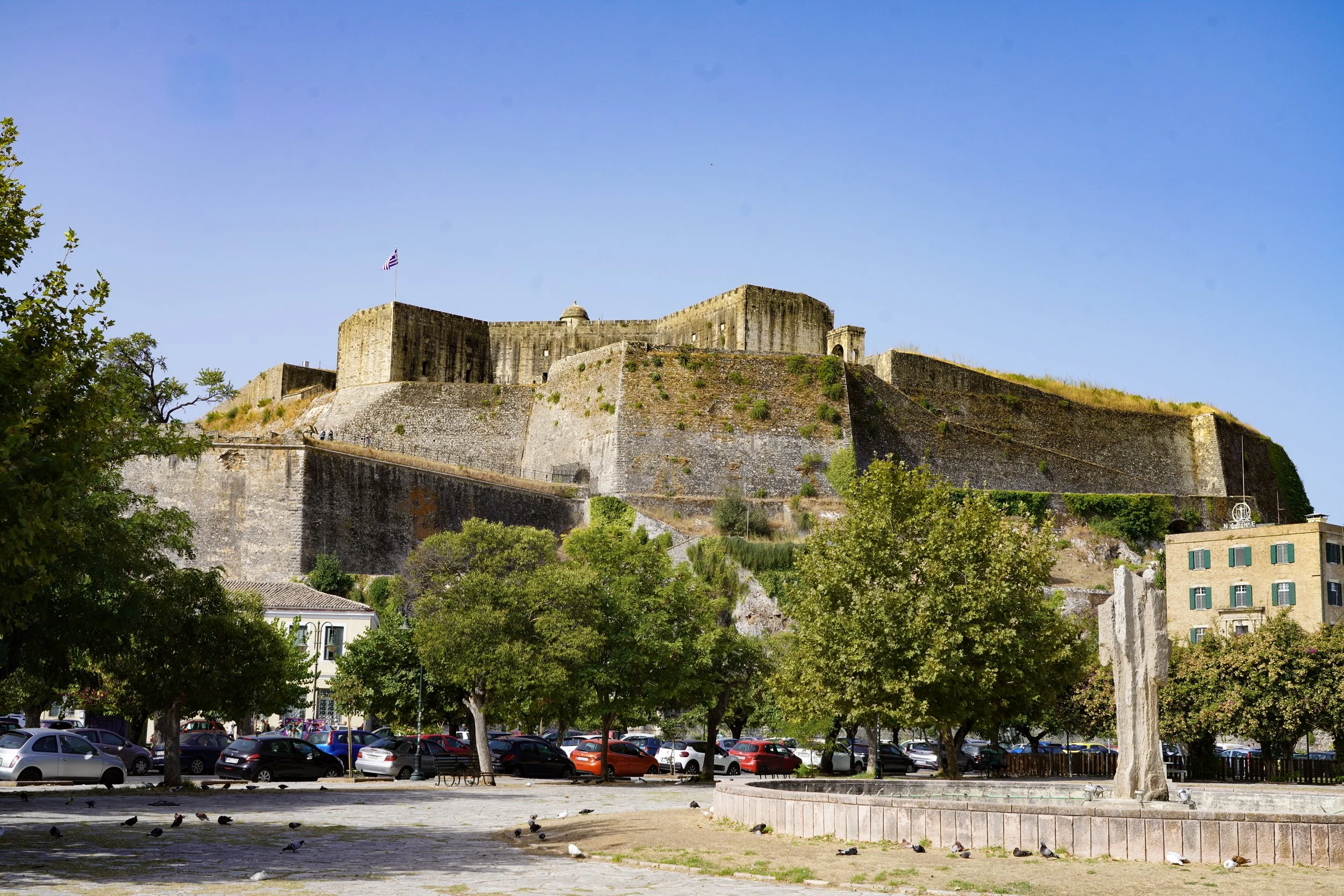
We didn't actually go exploring inside the fortress on this occasion — we had shopping to do, after all, and priorities are priorities — but even walking past the enormous fortifications gave us an appreciation of just how important this little island once was.
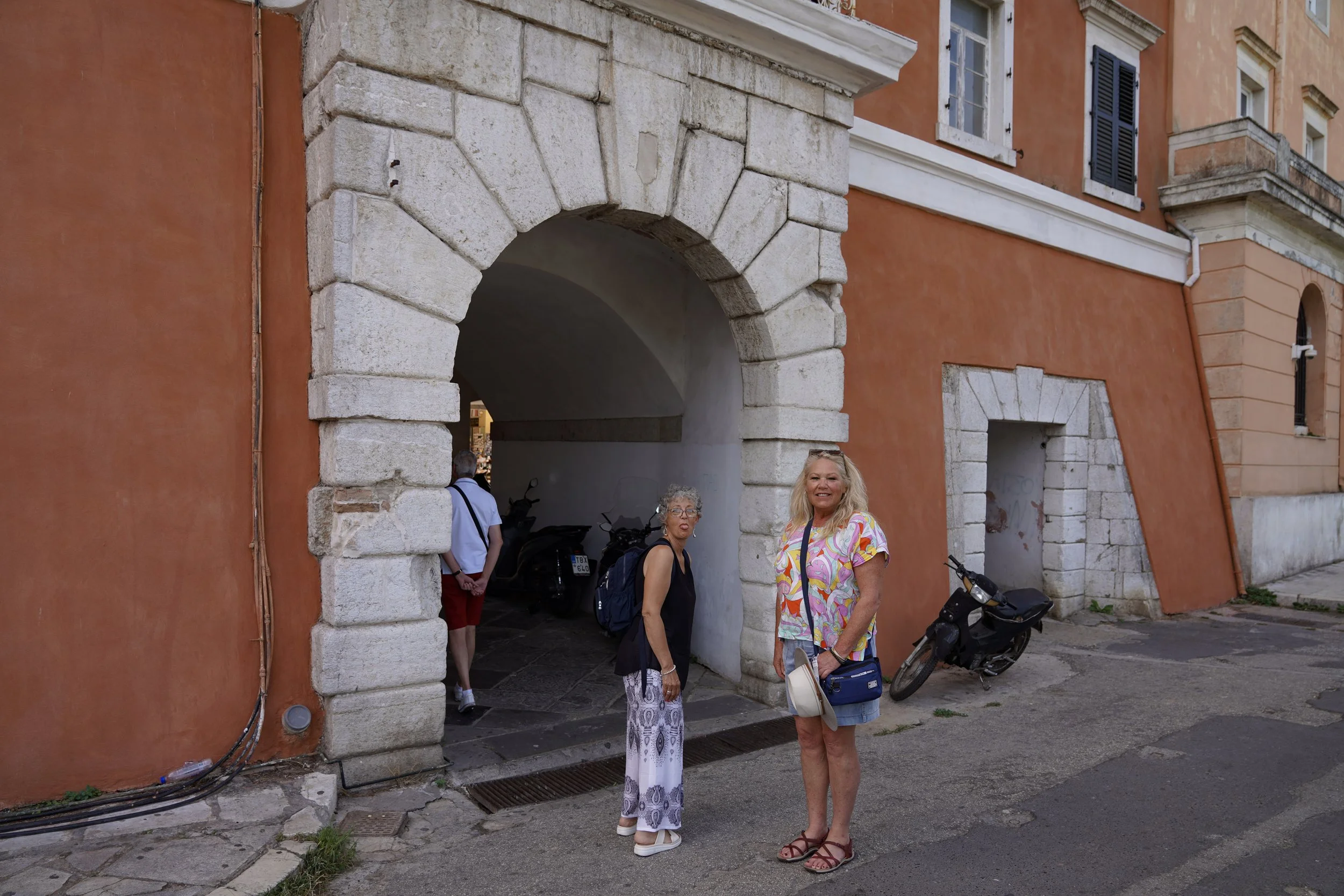
From the fortress we headed towards the entrance to the Old Town, passing through one of the old gateways in the historic fortifications. Corfu’s Old Town is a UNESCO World Heritage Site, largely because of its remarkably well-preserved Venetian architecture and its importance as a fortified Mediterranean port. The old town was originally enclosed by defensive walls, with gates controlling access to the city. One of the best-known entrances is the Spilia Gate, which once provided access between the harbour and the fortified town. Another historic entrance, the Porta Reale, stood further inland and was part of the town’s defensive system, although much of it has since disappeared.
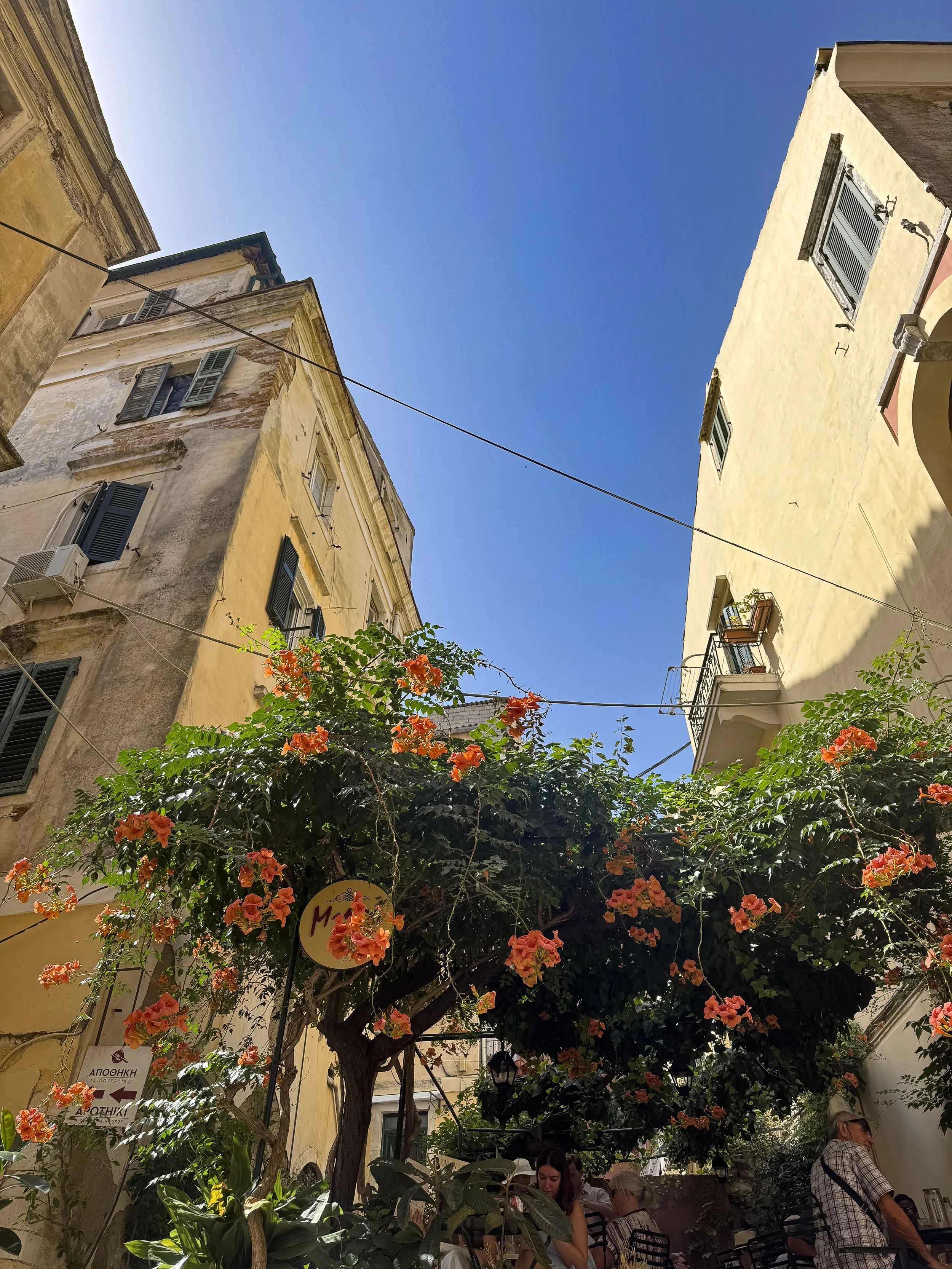
Once through the gates, we found ourselves in the wonderful maze of the Old Town — narrow, winding streets, colourful buildings, tiny balconies, washing hanging overhead and little shops seemingly determined to tempt us inside. The Venetian influence is everywhere, with elegant buildings and arcaded streets giving Corfu a very different character from some of the other Greek islands we'd visited.
And then we shopped!
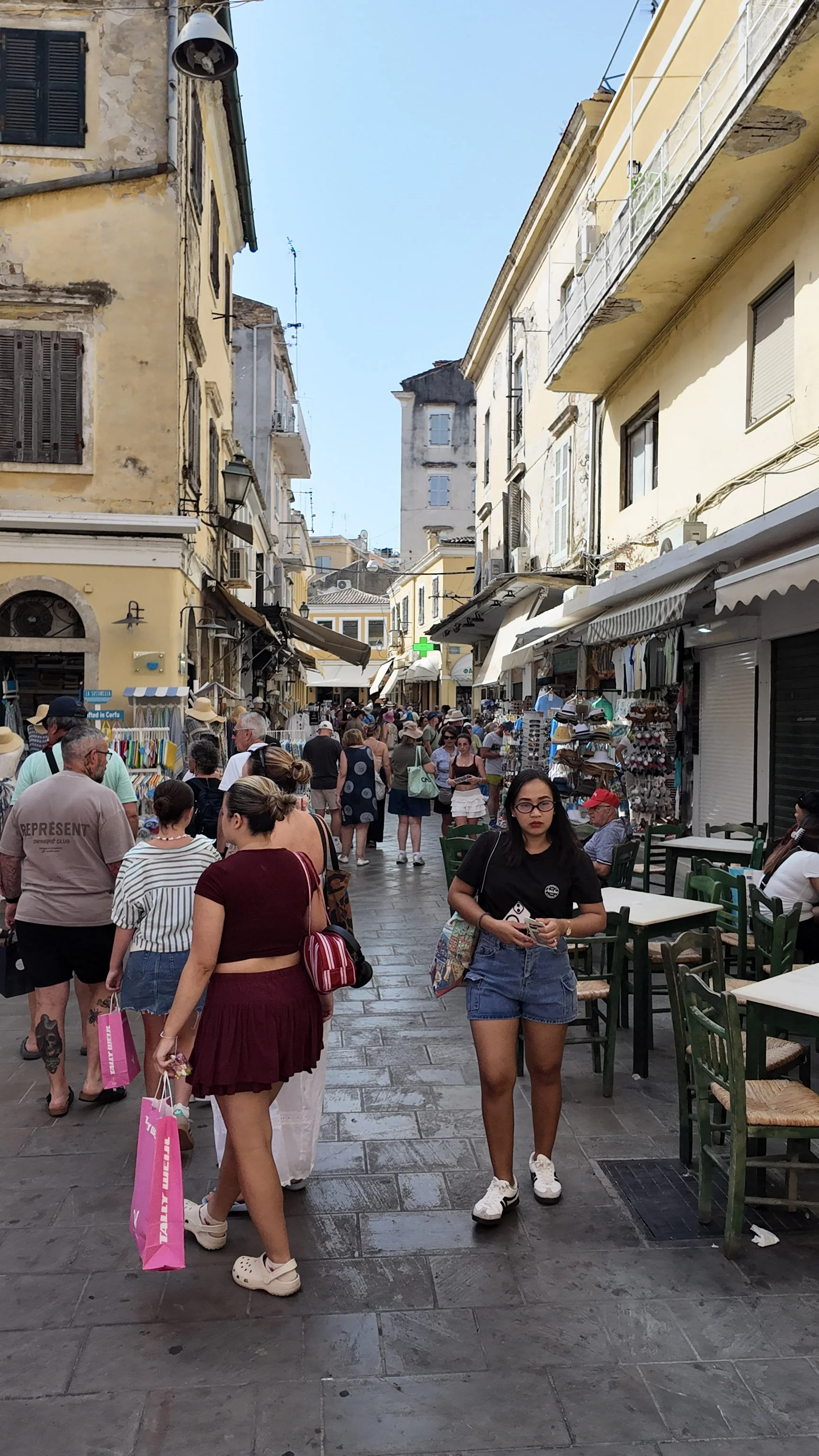
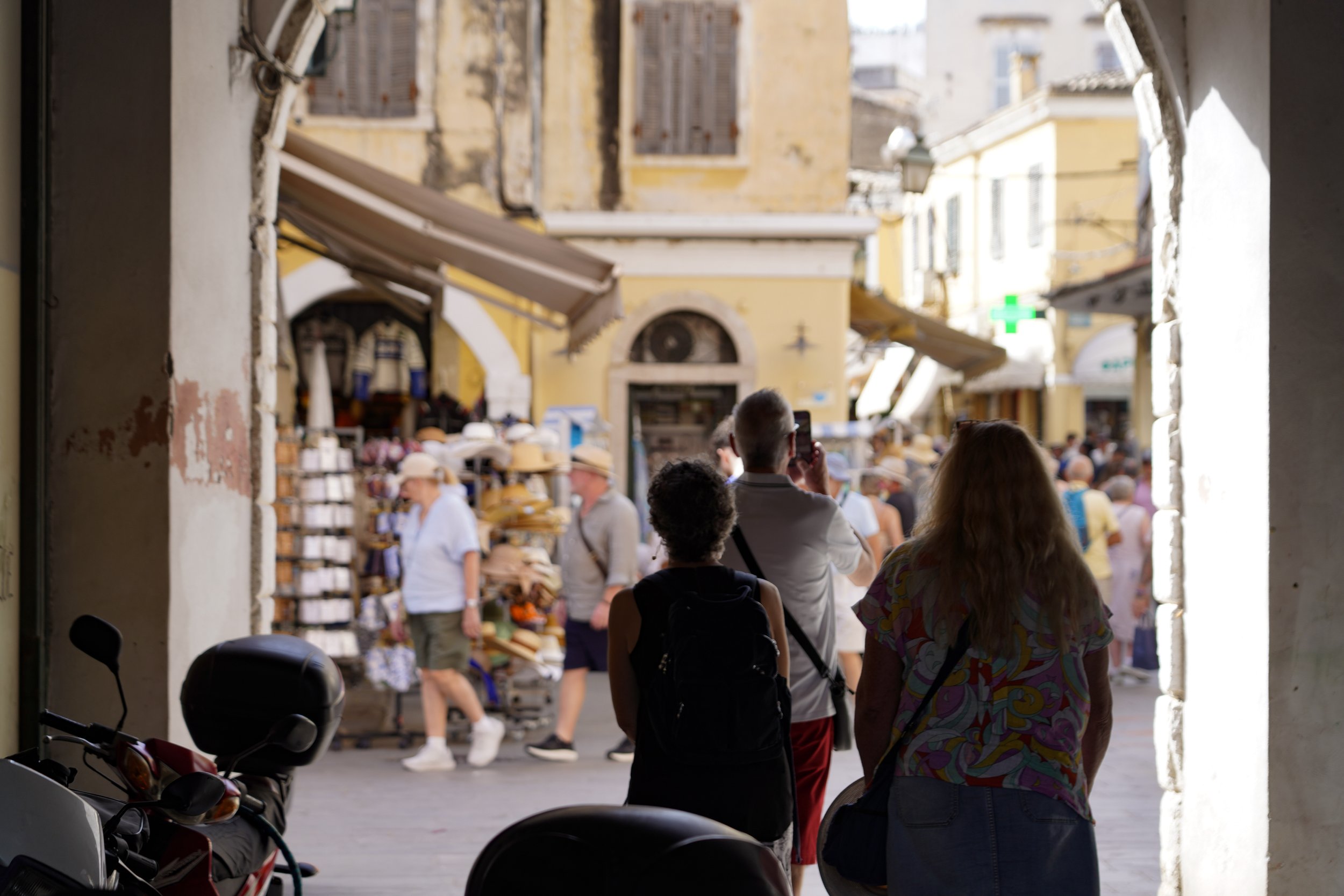
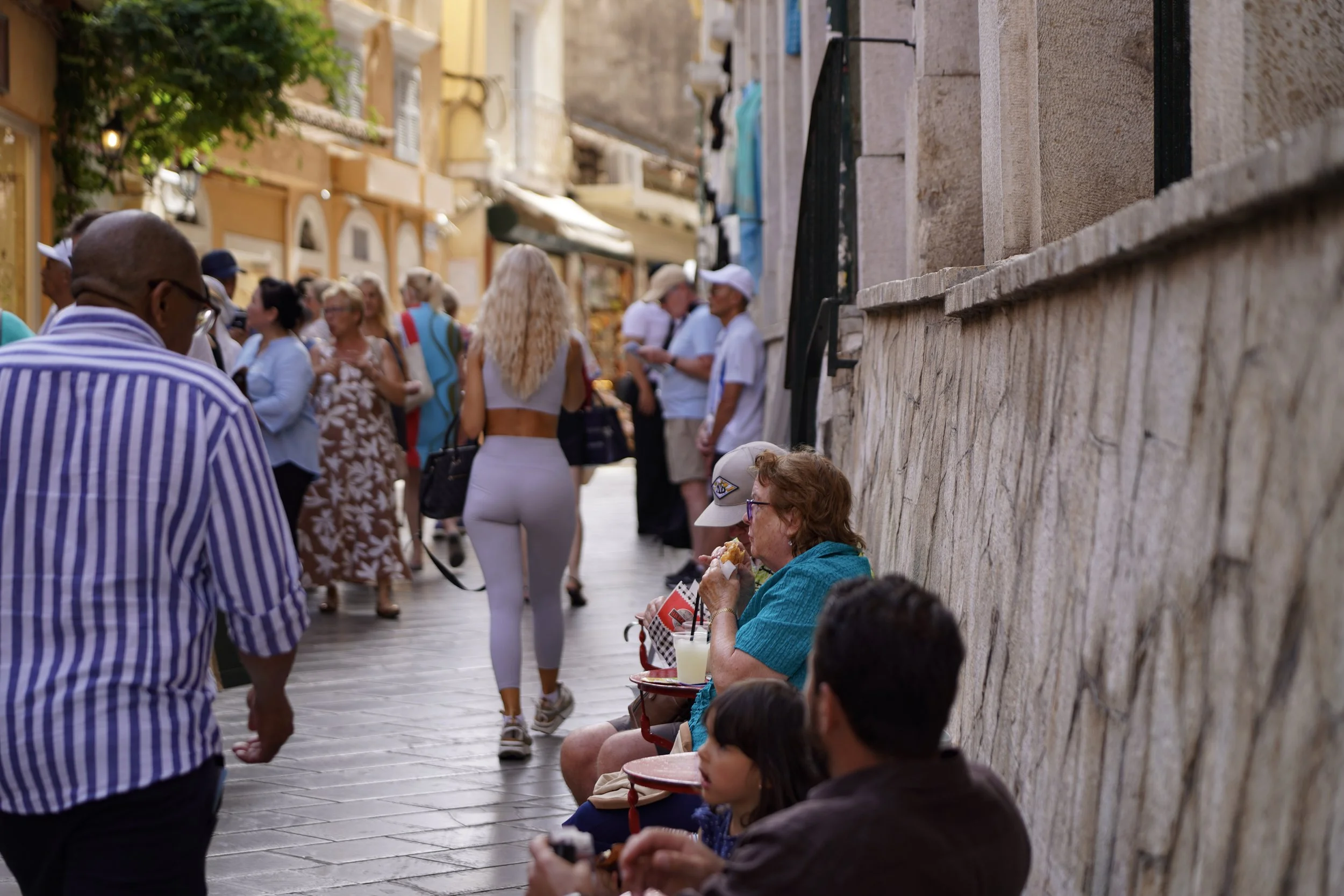
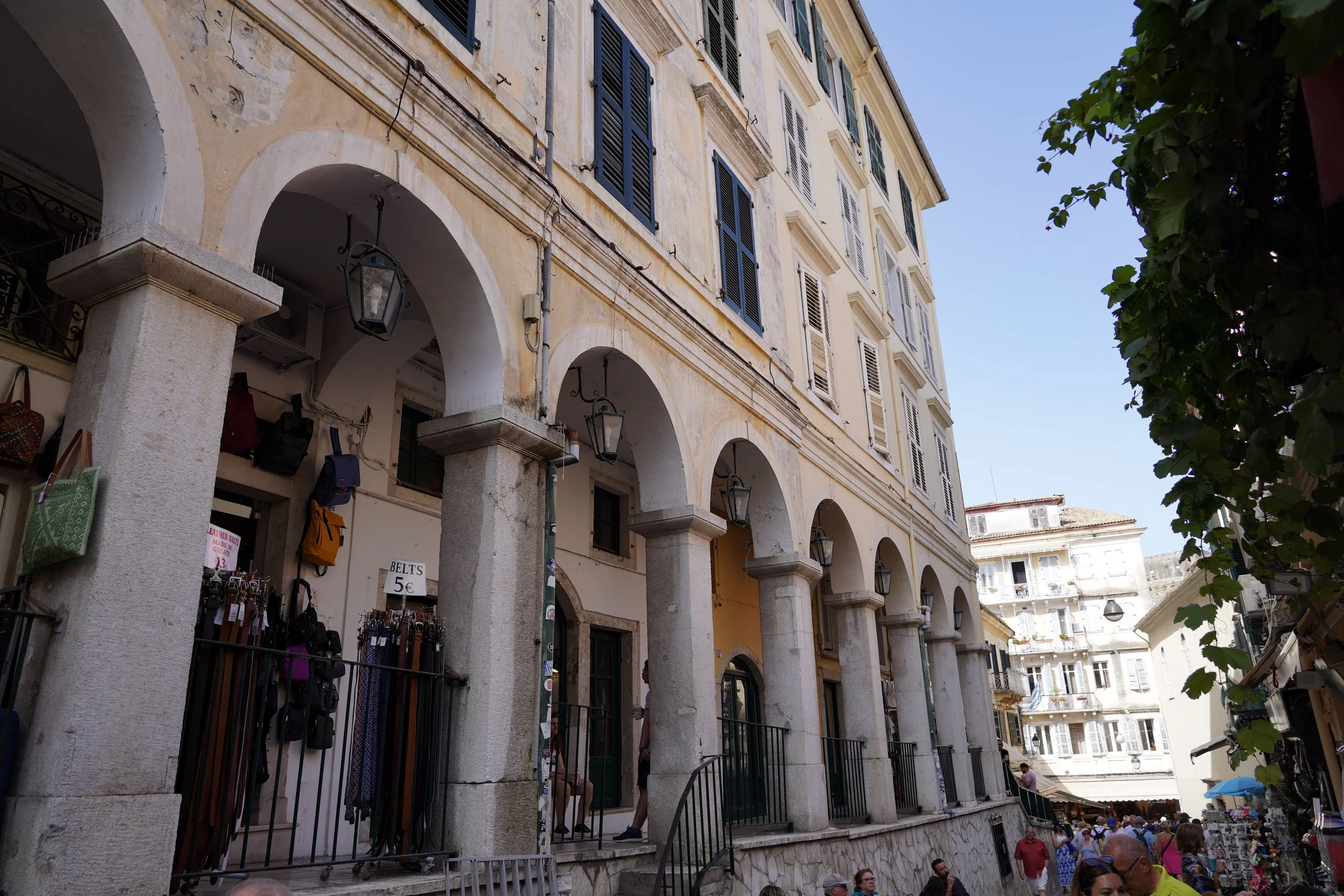
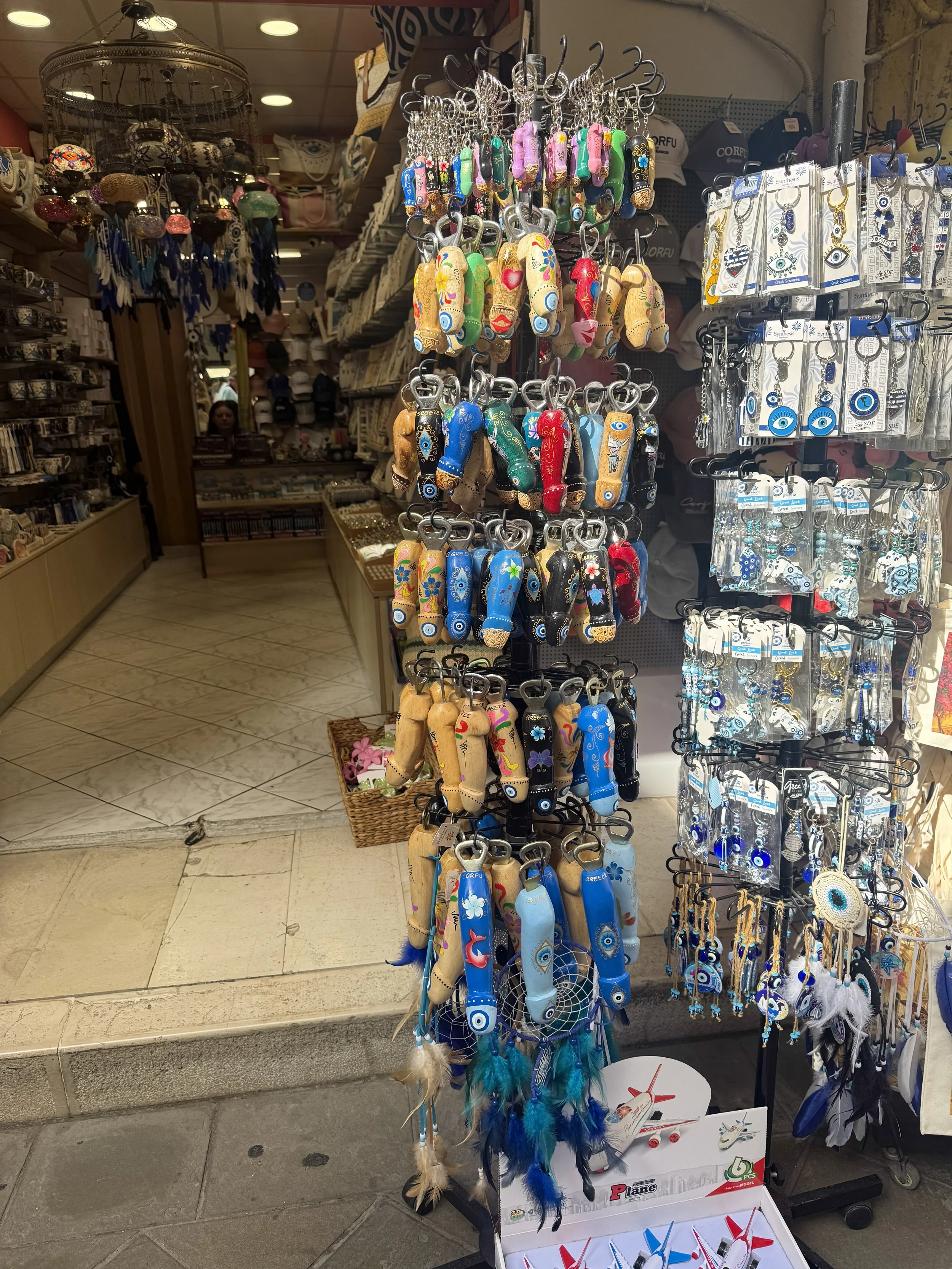
Handmade earrings, shirts, shorts and, most importantly, sandals.
The sandals were at the very top of my shopping list because many years ago an old Greek school friend, Marika, had given me some very clear instructions: a trip to Greece is not complete unless you come home with at least two pairs of handmade Greek sandals. Well, Marika, I followed your instructions to the letter. I bought two pairs. There was no point risking Greek travel karma by coming home with only one.
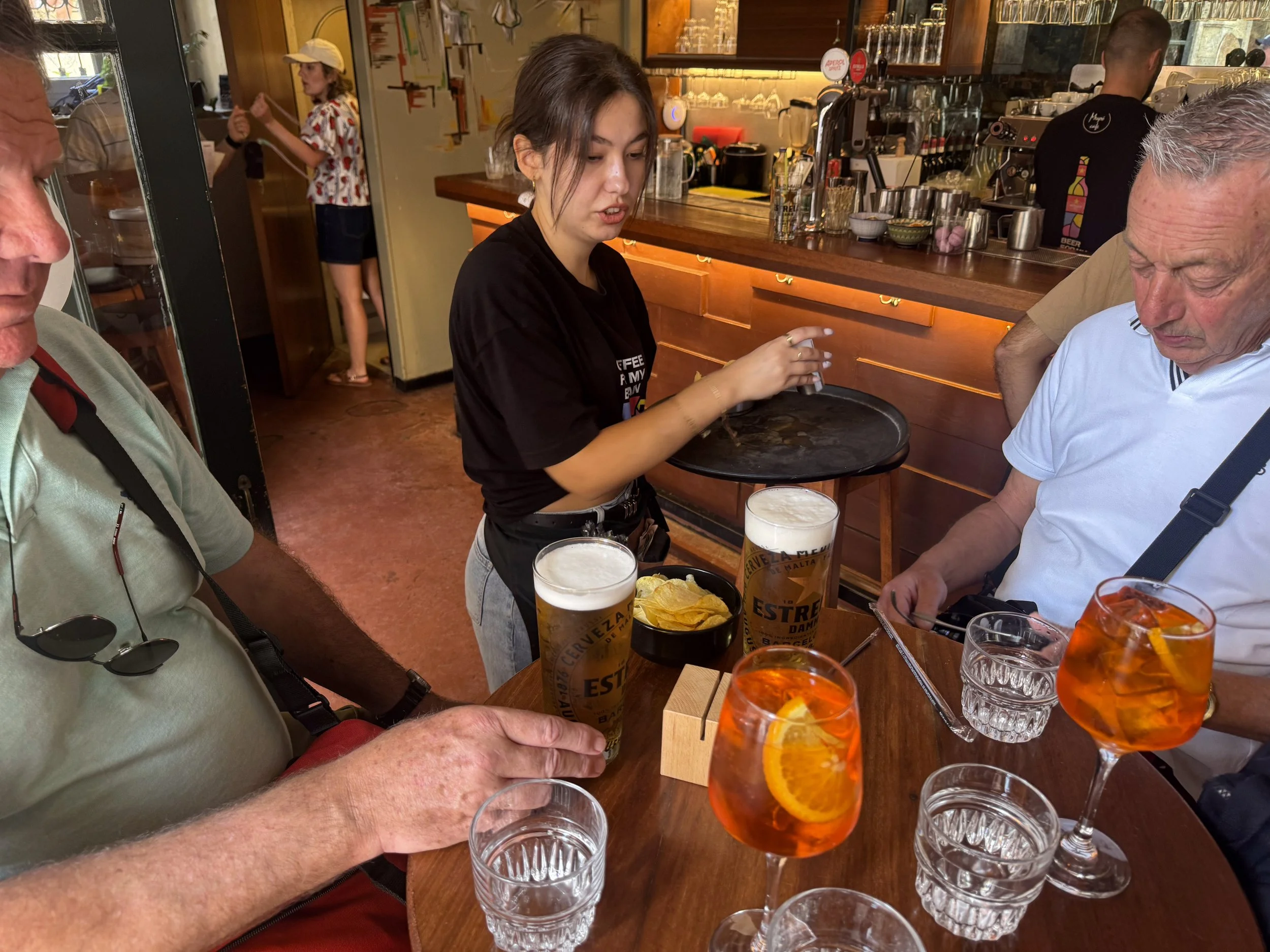
After all that strenuous shopping, we decided we needed a little refreshment. We found a beautiful, leafy café tucked away from the busy streets, with plenty of shade and just the right atmosphere for a mandatory Aperol Spritz. It would have been rude not to, really. We sat, cooled down, watched the world go by and congratulated ourselves on how well the day was going.
Eventually, we dragged ourselves away and continued wandering through the Old Town, gradually making our way back towards the Old Fortress.
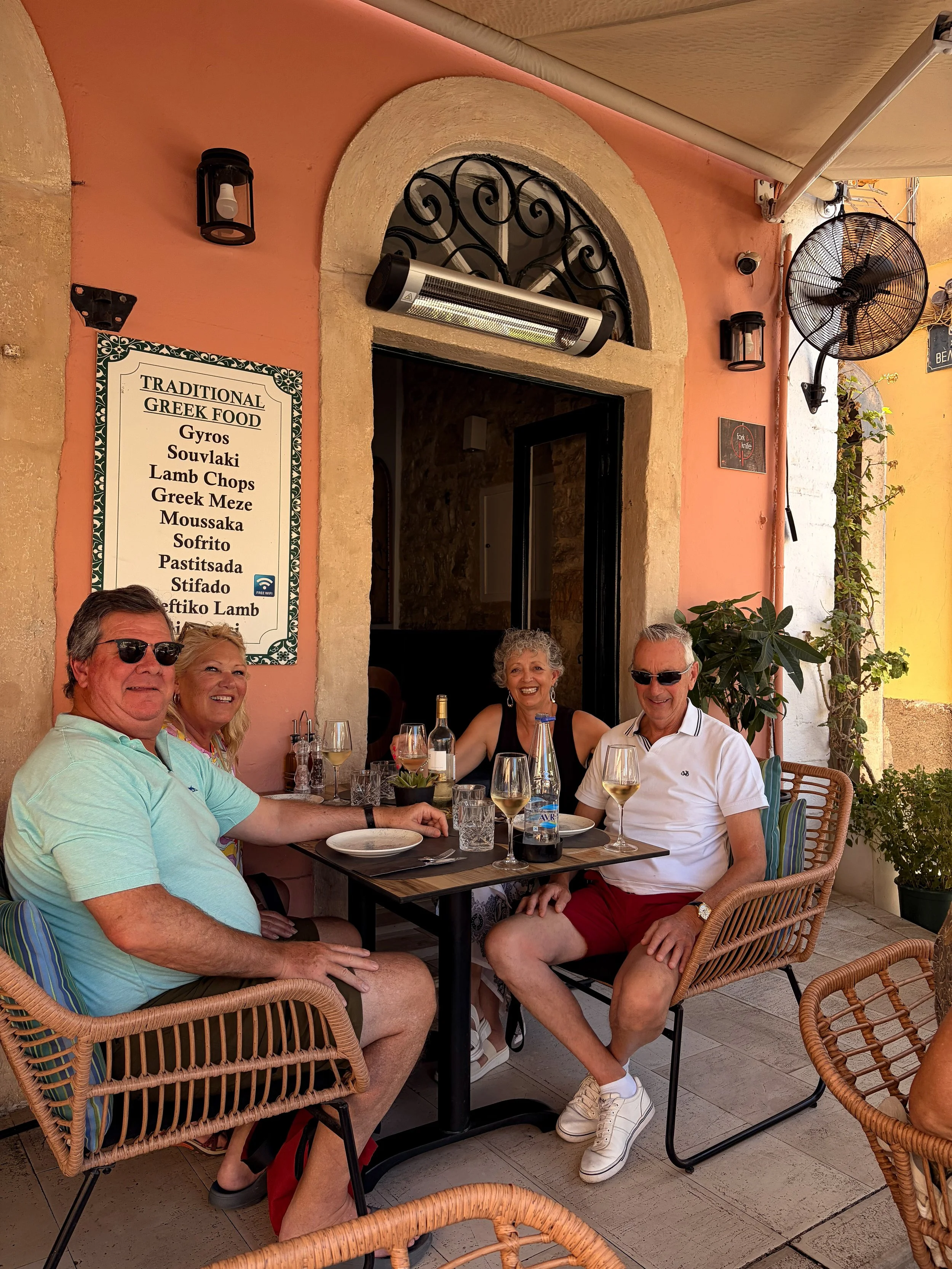
That’s when we spotted a delightful-looking restaurant with comfortable chairs and a lovely shady outdoor dining area. It looked far too inviting to walk past, so naturally we didn’t. Once seated, the maître d’ came over and, in the very Greek tradition of making decisions on behalf of their guests, announced that we needed an assortment of local dishes and some wine.
The Greeks are very good at insisting. There was really no point arguing.
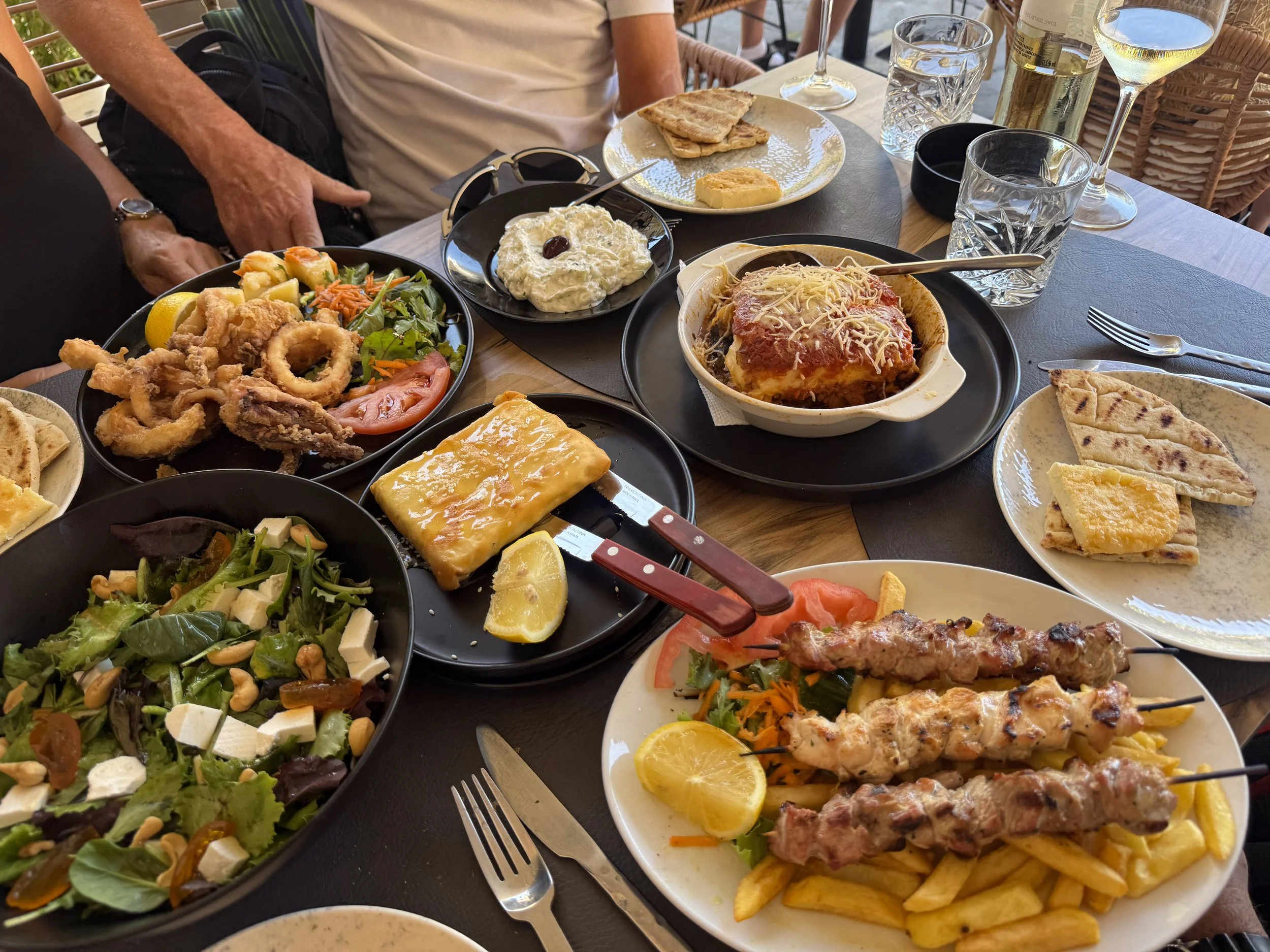
Before long, our table was covered with food: moussaka, calamari, two different kinds of baked feta, a huge Greek salad and three
varieties of souvlaki. Everything was fresh, beautifully cooked and absolutely delicious. The baked feta in particular was sensational — although by this point we were beginning to wonder whether our original plan of “just having something light” had been lost somewhere between the first glass of wine and the third souvlaki.
We eventually admitted defeat.
Completely and gloriously sated, we waddled back towards the Mothership in the afternoon heat, bags swinging from our arms and our new sandals safely tucked away among our purchases. There was only one thing left to do.
We promised ourselves that we would have a very light dinner. Looking back, I’m not sure any of us believed that for a
second.