
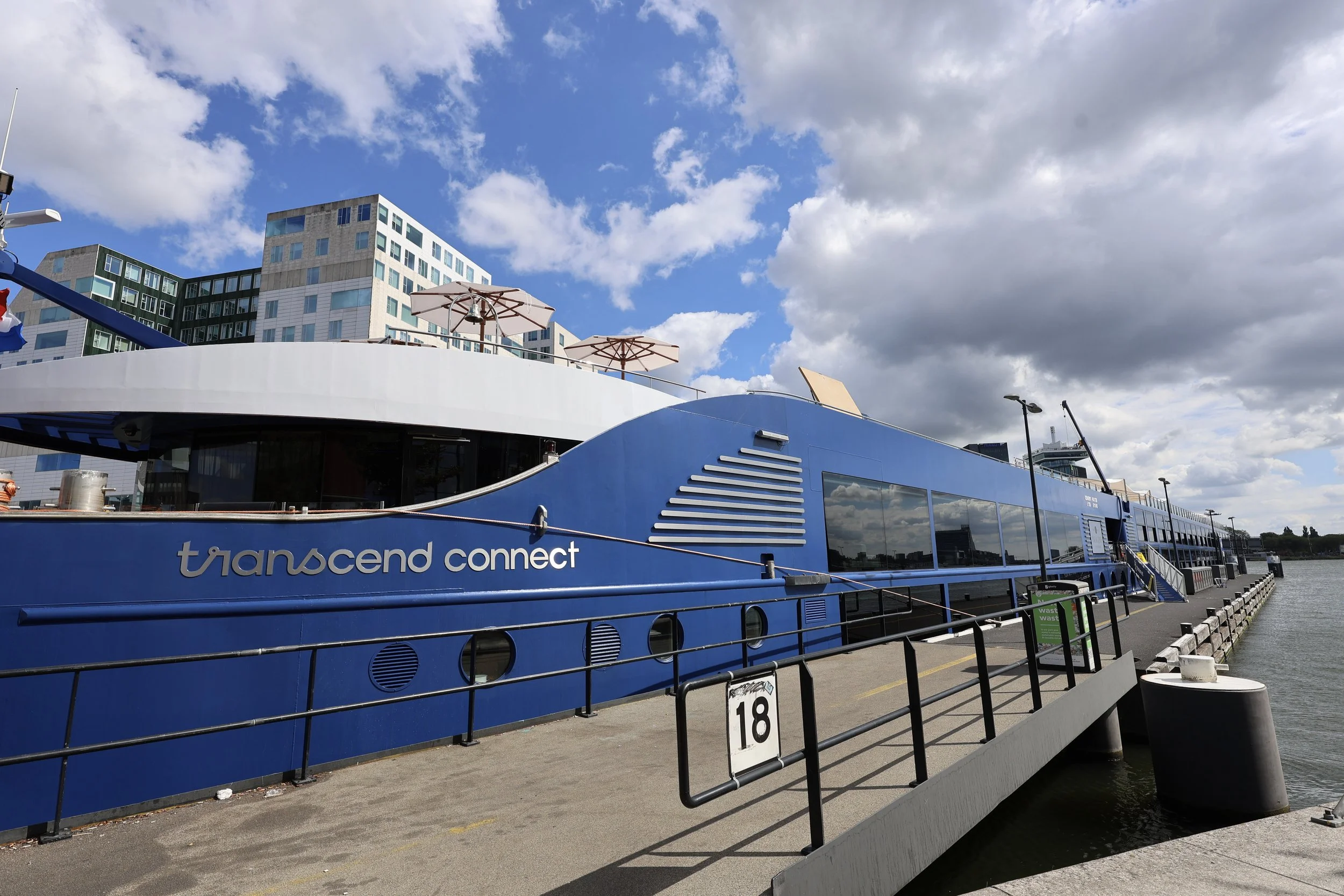
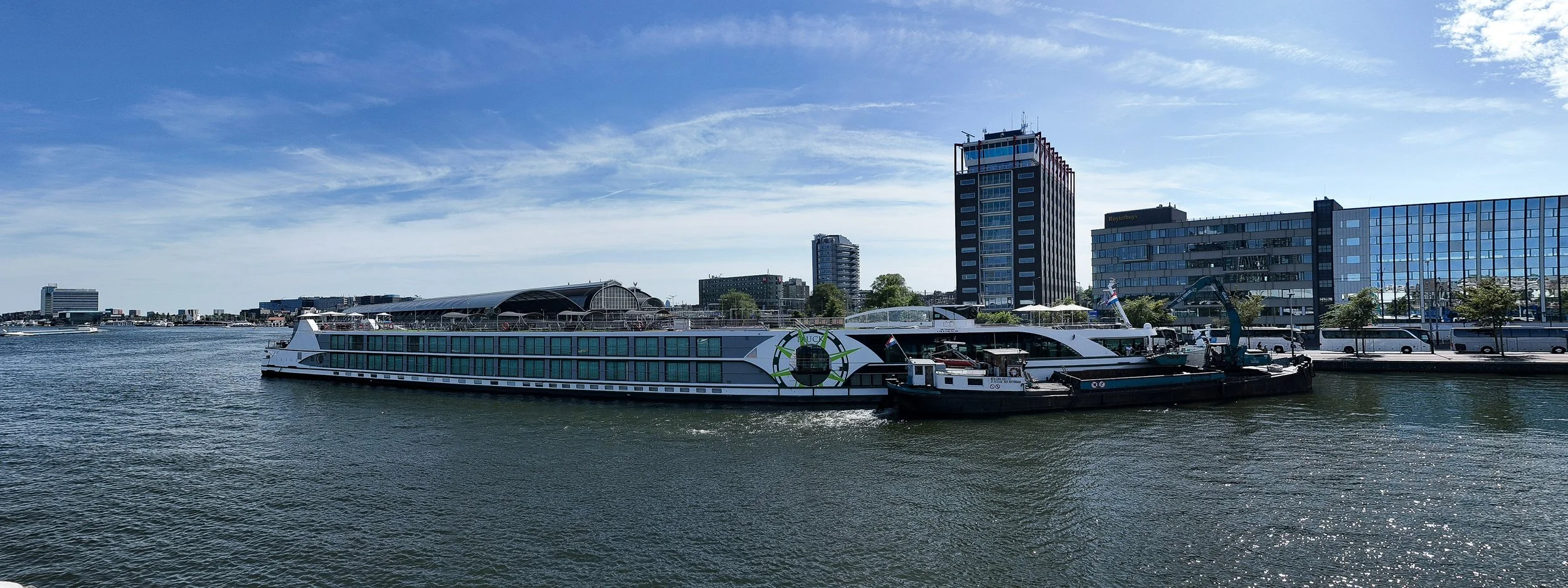
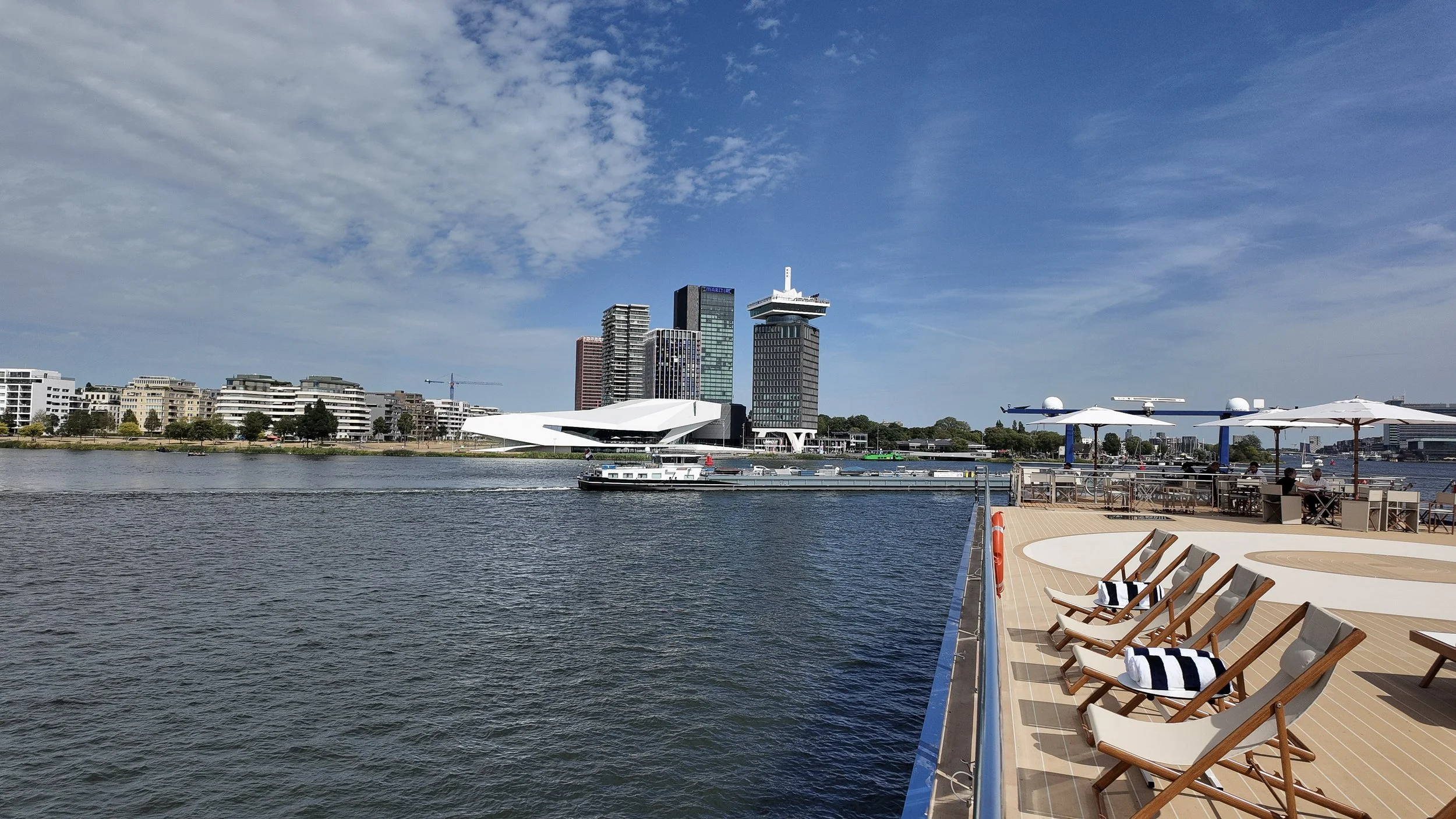
KL1364 deposited us in Amsterdam just after lunch, and from the airport we were whisked off to our home for the next six nights — the Transcend Connect, a brand-spanking-new river boat that was, quite literally, only a week old.
There is something rather appealing about being among the first passengers on a brand-new boat. Everything is shiny, the carpets aren't worn, the furniture hasn't yet developed that slightly mysterious “hotel” smell, and nobody has managed to break anything.
We spent the afternoon settling into our digs, unpacking and figuring out which cupboards and drawers were ours. The cabin was flash, spacious and comfortable, and after the previous few days of living out of suitcases, the prospect of not having to pack everything up again for a while felt like winning the travel lottery.
Then, in a Sliding Door Moment, we opened our cabin door at exactly the same time as the couple directly opposite. Meet Connie and Alan. Within minutes, we were chatting away like old friends. Little did we know just how much laughter, fun and general shenanigans these two would bring to our trip, or that a chance meeting over a couple of cabin doorways would turn into one of the real highlights of the journey.
Actually, Lyndall had spotted Connie a couple of days earlier during the great Budapest Airport transfer hunt. While the rest of us were wandering around in ever-decreasing circles, trying to work out where on earth we were supposed to be, Connie appeared to know exactly where she was going.
She remembers thinking she must have a spreadsheet. Not just any spreadsheet, either. A proper, colour-coded, cross-referenced masterpiece, complete with itinerary, contingency plans and the precise location of everyone at 10:17 on a Tuesday morning.
As it turned out, Connie was much more than an organised traveller, and Alan was good value too. We couldn't have known it then, but we'd just met two people who would make an already wonderful trip even better. Sometimes the best things about travelling aren't on the itinerary at all.
That first evening was all about settling in and getting to know our fellow passengers. There were cocktails, plenty of delicious food and the usual round of introductions as we started putting names to faces. The people sitting around those tables would become our travelling family for the next three and a half weeks. At this stage, of course, everyone was on their best behaviour.
That wouldn't last.
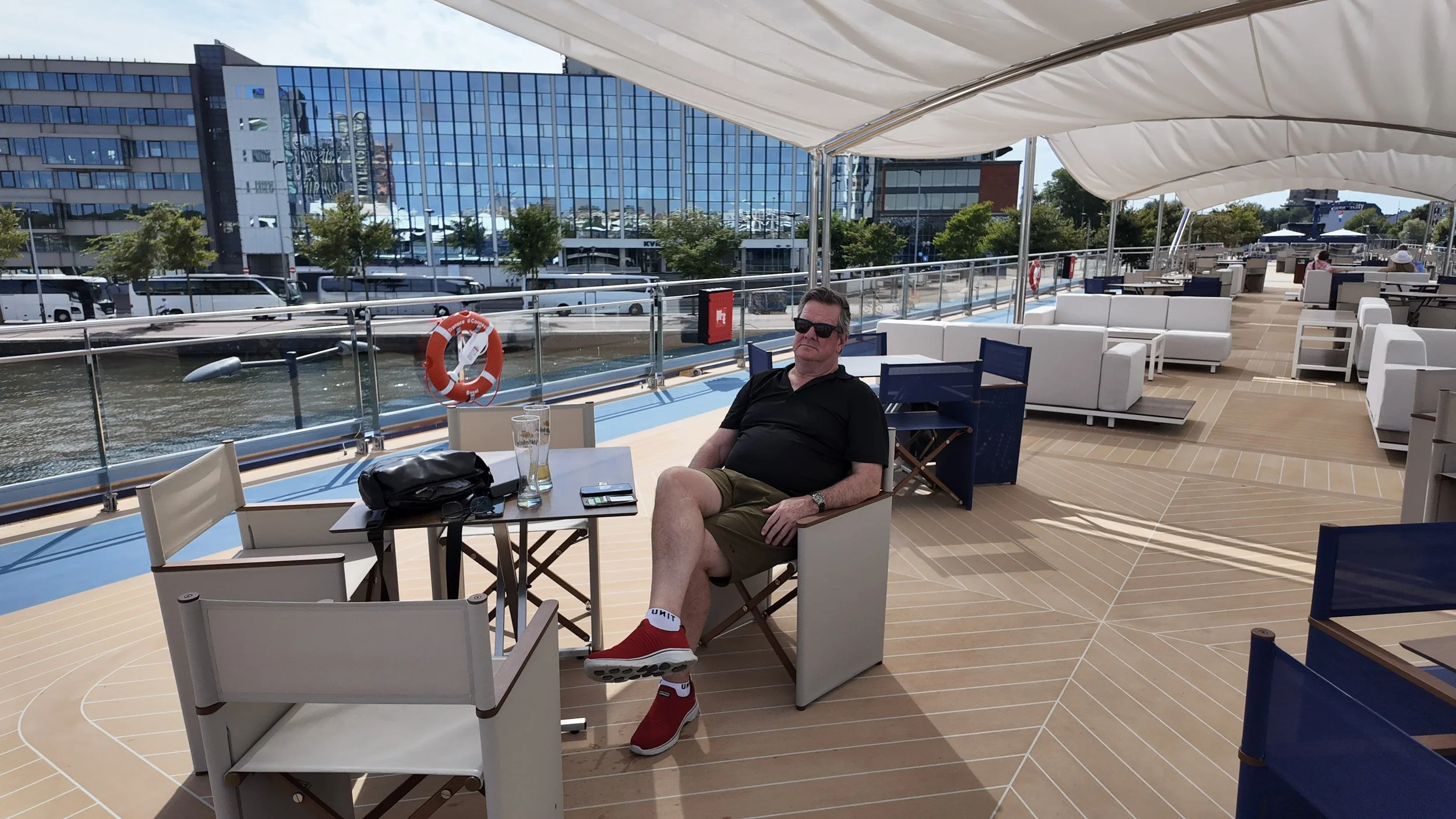
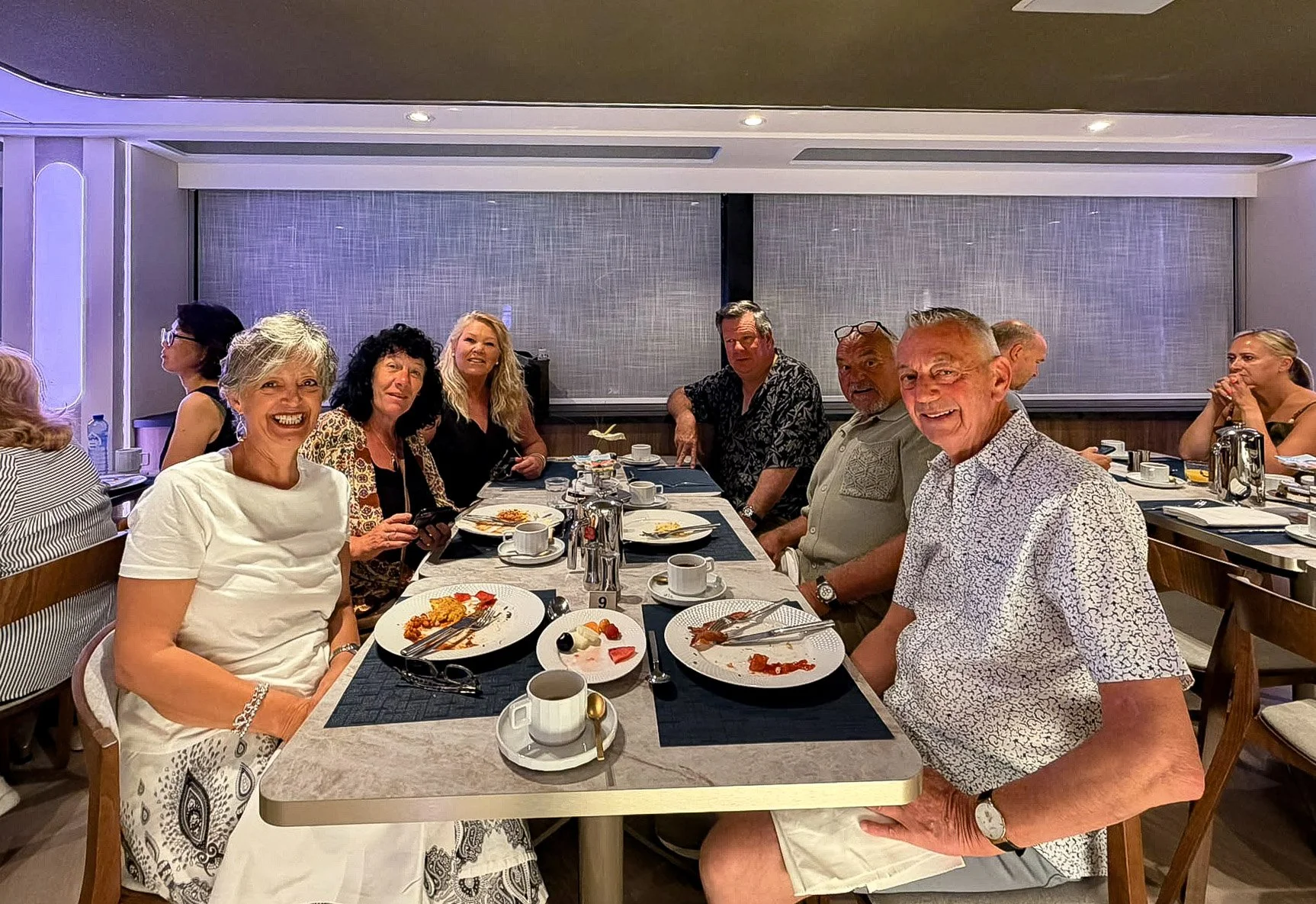
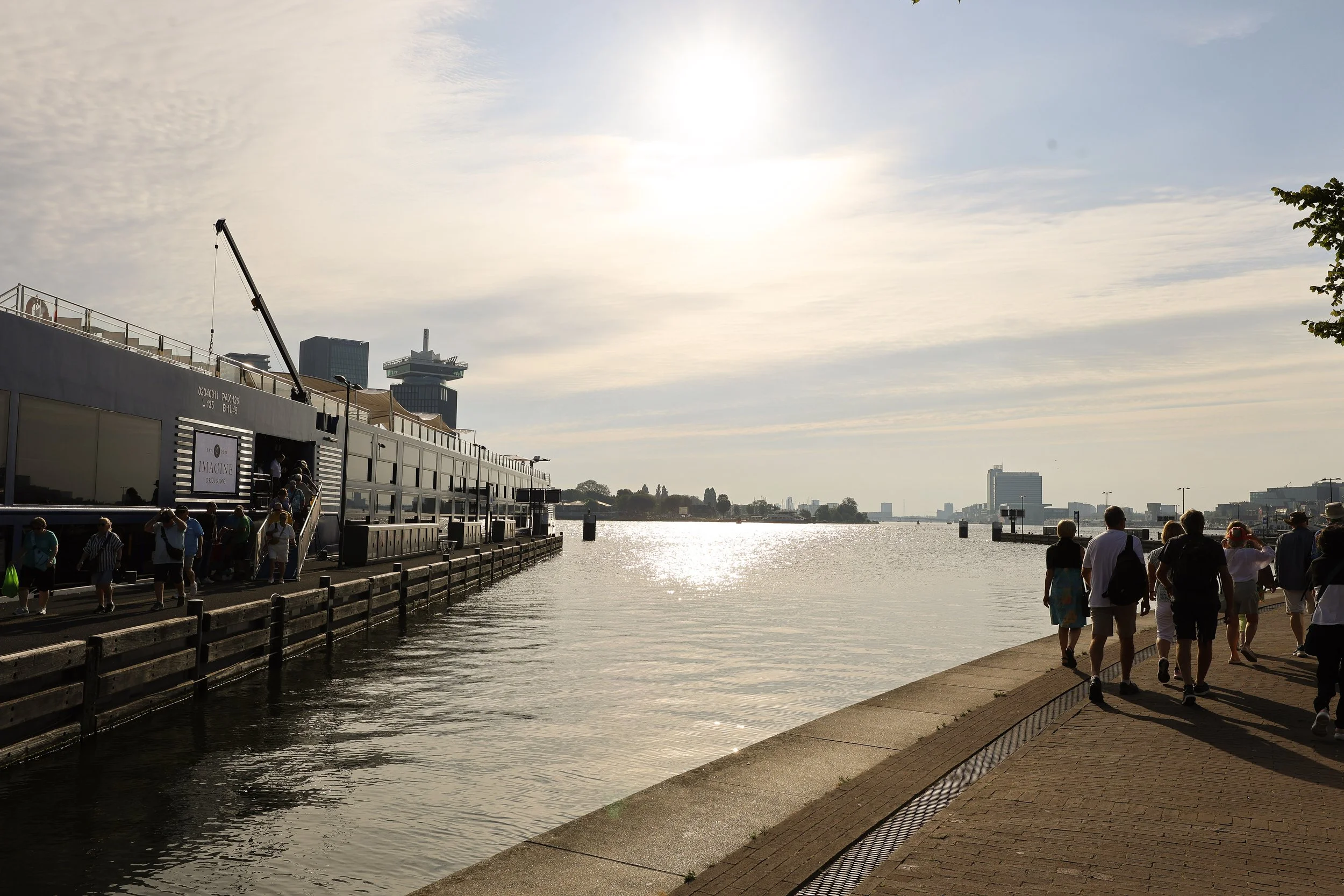
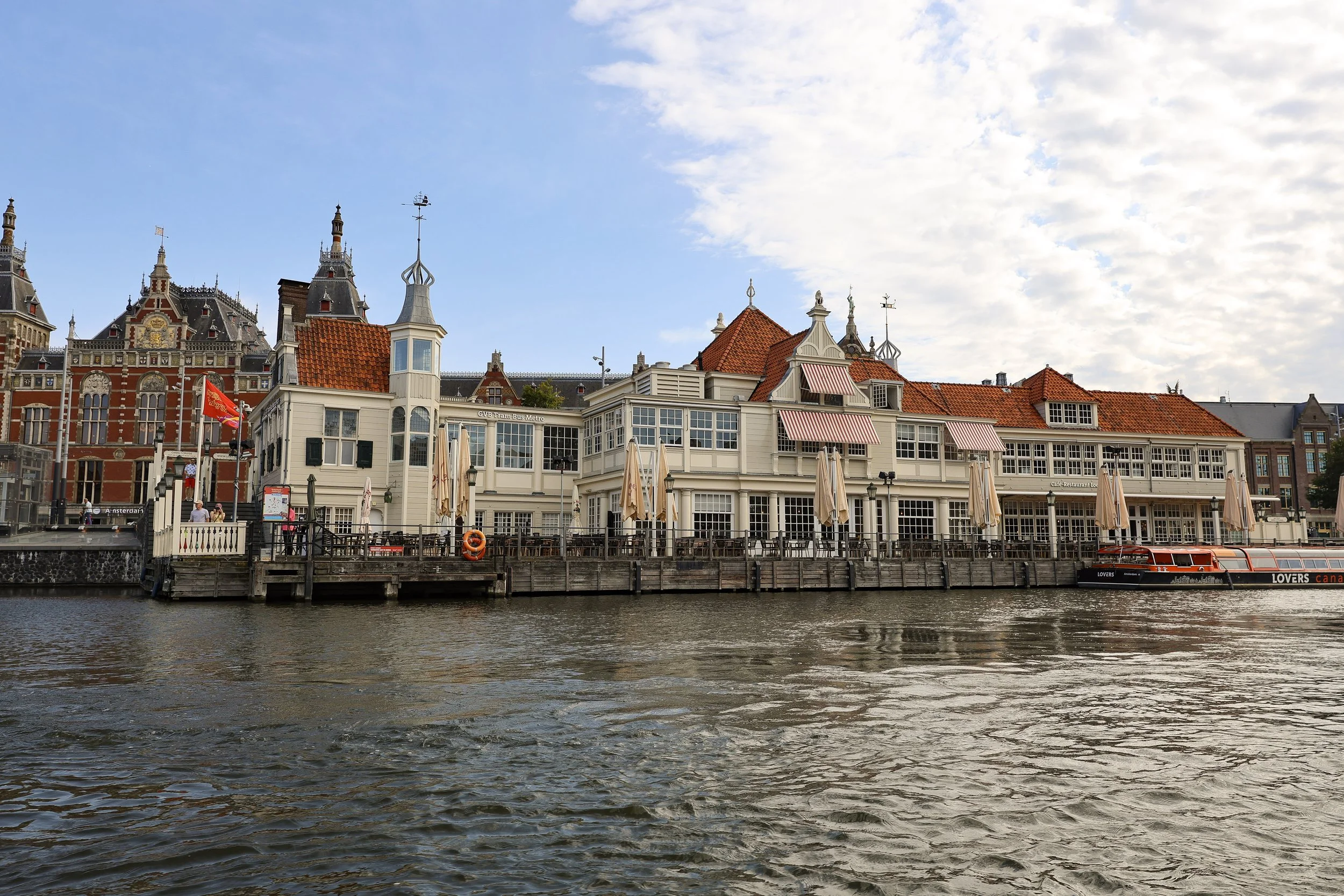
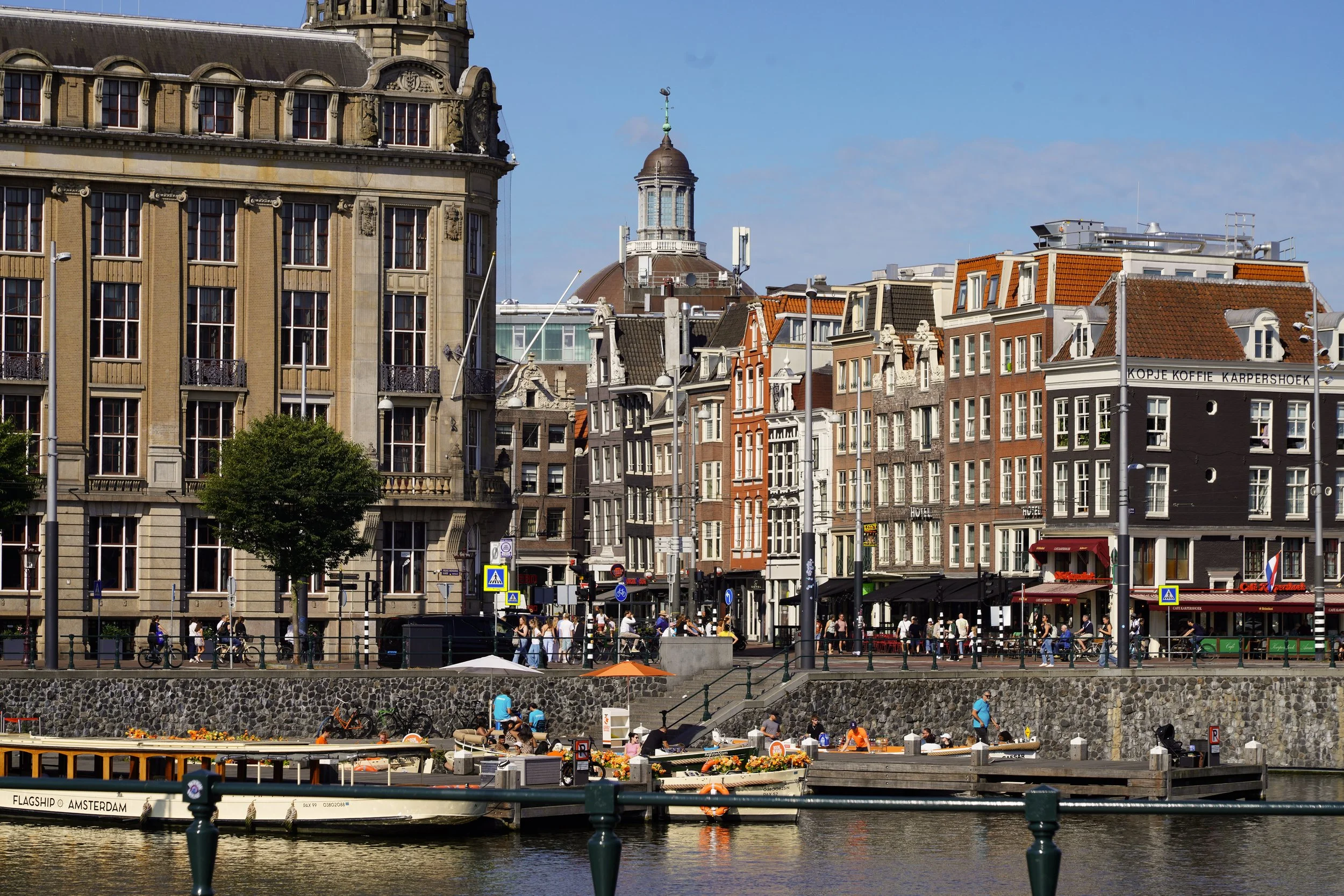
The following morning we were up early and headed off on a canal boat to see Amsterdam from what is arguably its most appropriate viewpoint: the water.
Amsterdam is a city that makes much more sense when you're floating through it. Its famous canal system was developed during the Dutch Golden Age in the 17th century, when the city was becoming one of the world's major trading and commercial centres.
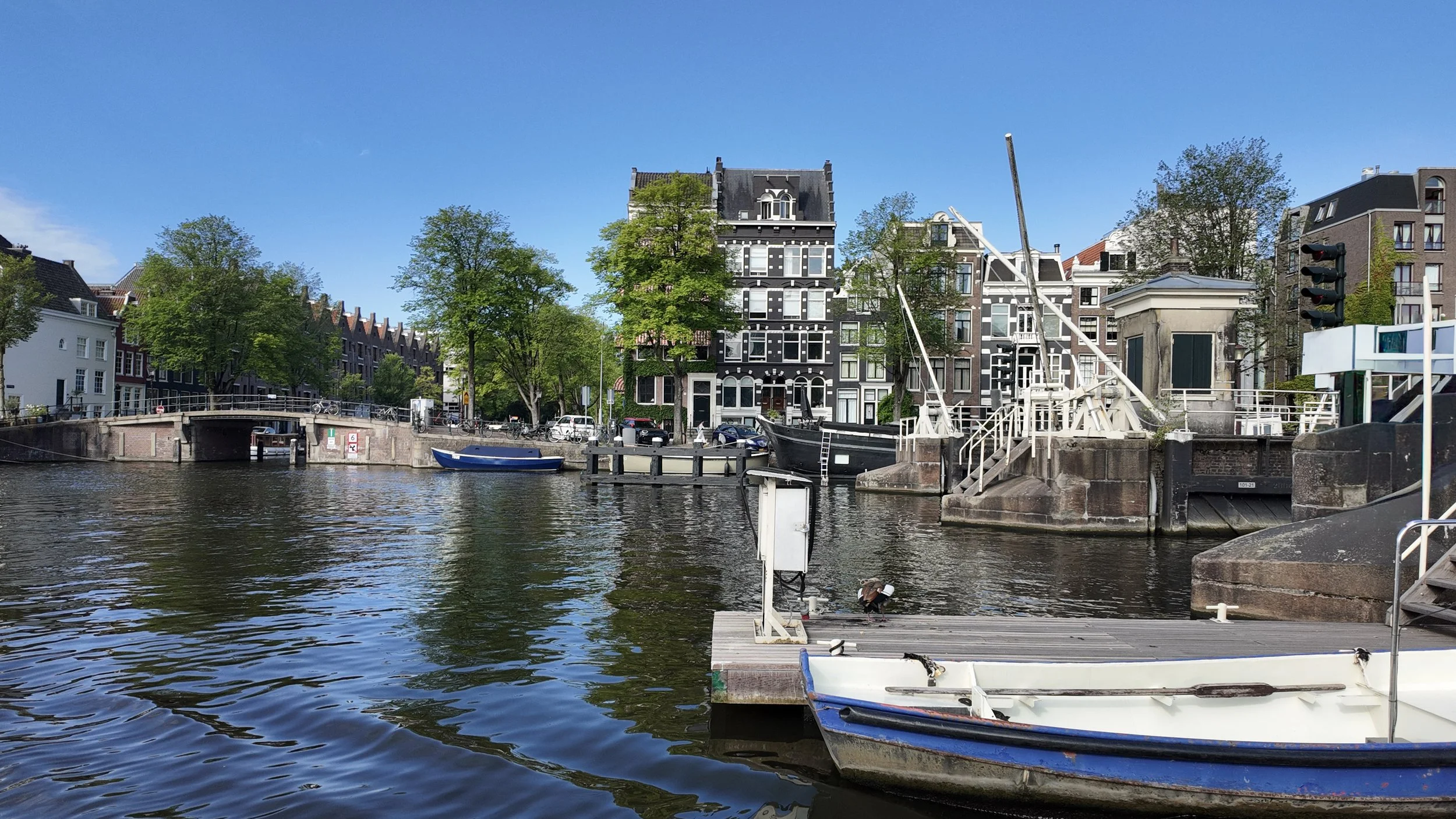
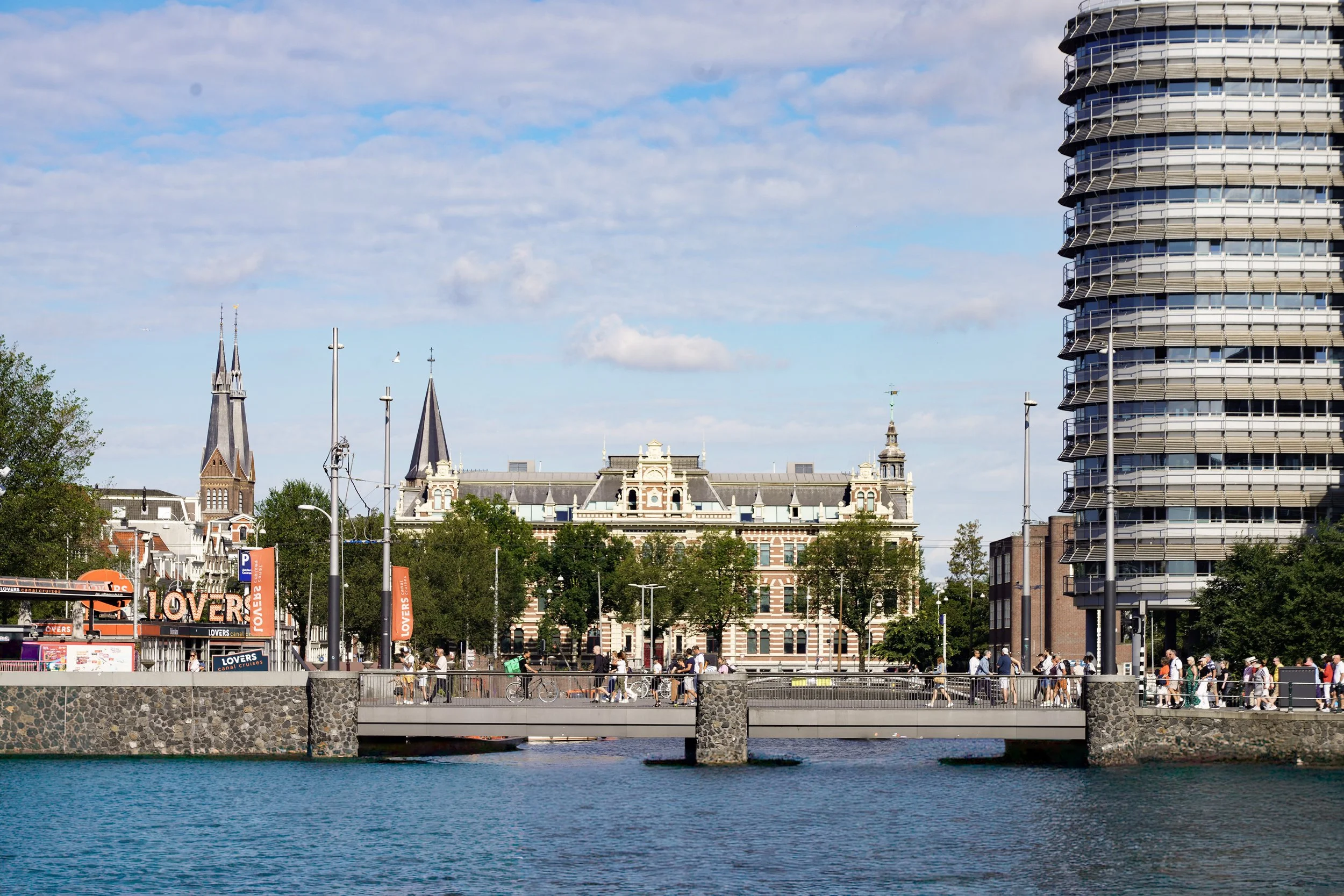
We followed the famous Canal Ring (Grachtengordel), gliding along the UNESCO-listed waterways of the Herengracht, Keizersgracht and Prinsengracht. From the canal, the city looked magnificent.
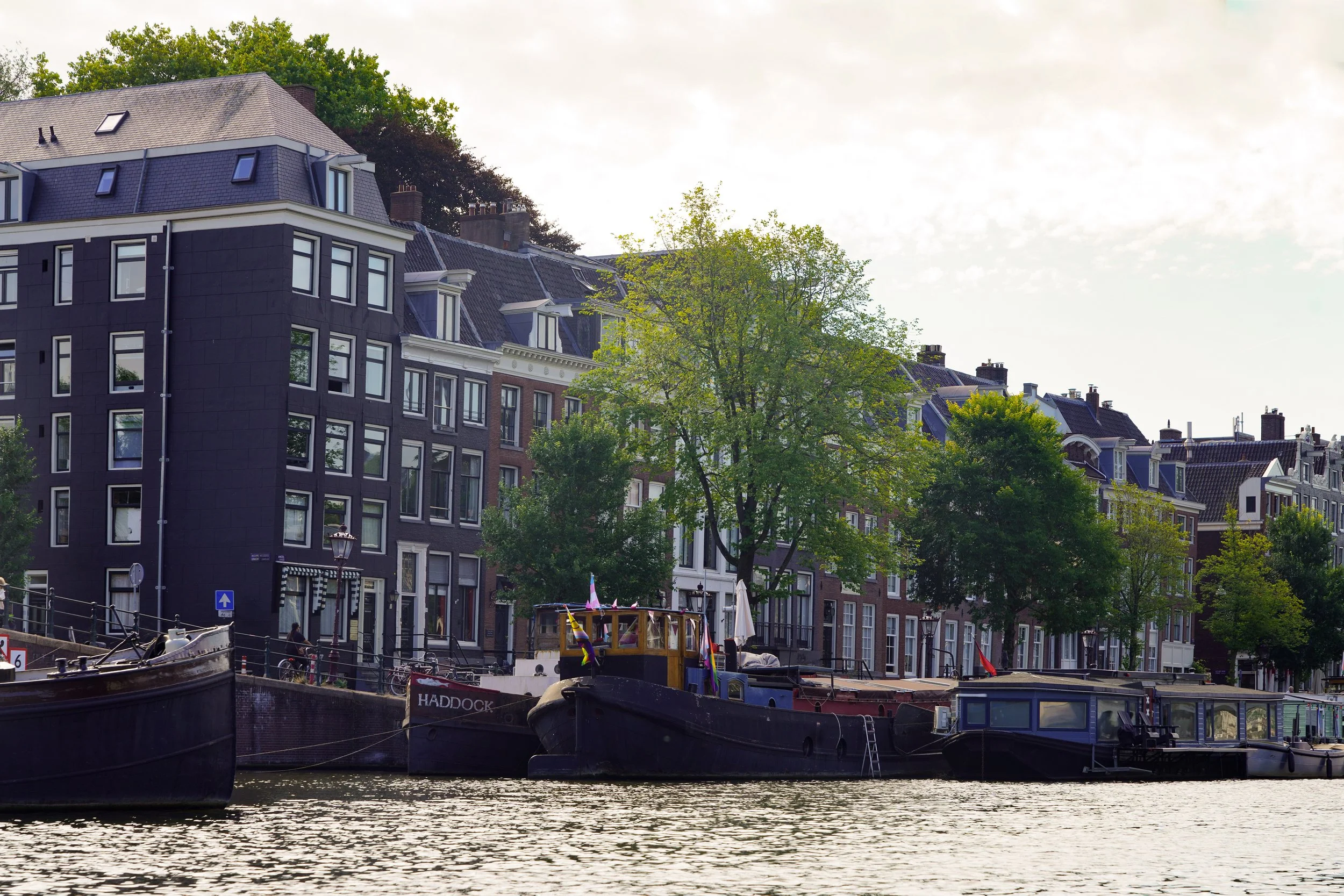
We passed row after row of the narrow merchant houses built during Amsterdam's prosperous Golden Age. Many have elaborate gables, enormous windows and those distinctive hooks high above the street. The hooks weren't decorative — they were essential. Because the houses were so narrow, furniture and other large possessions were often hauled through the windows rather than attempting to squeeze them up the famously narrow staircases.
And then there are the houses themselves. Some lean forwards, some lean sideways and some appear to be engaged in a prolonged argument with gravity. This isn't entirely accidental. Many of Amsterdam's historic buildings were constructed on enormous wooden piles driven into the soft, wet ground. Over centuries, some foundations have shifted, causing the buildings to settle at decidedly interesting angles.
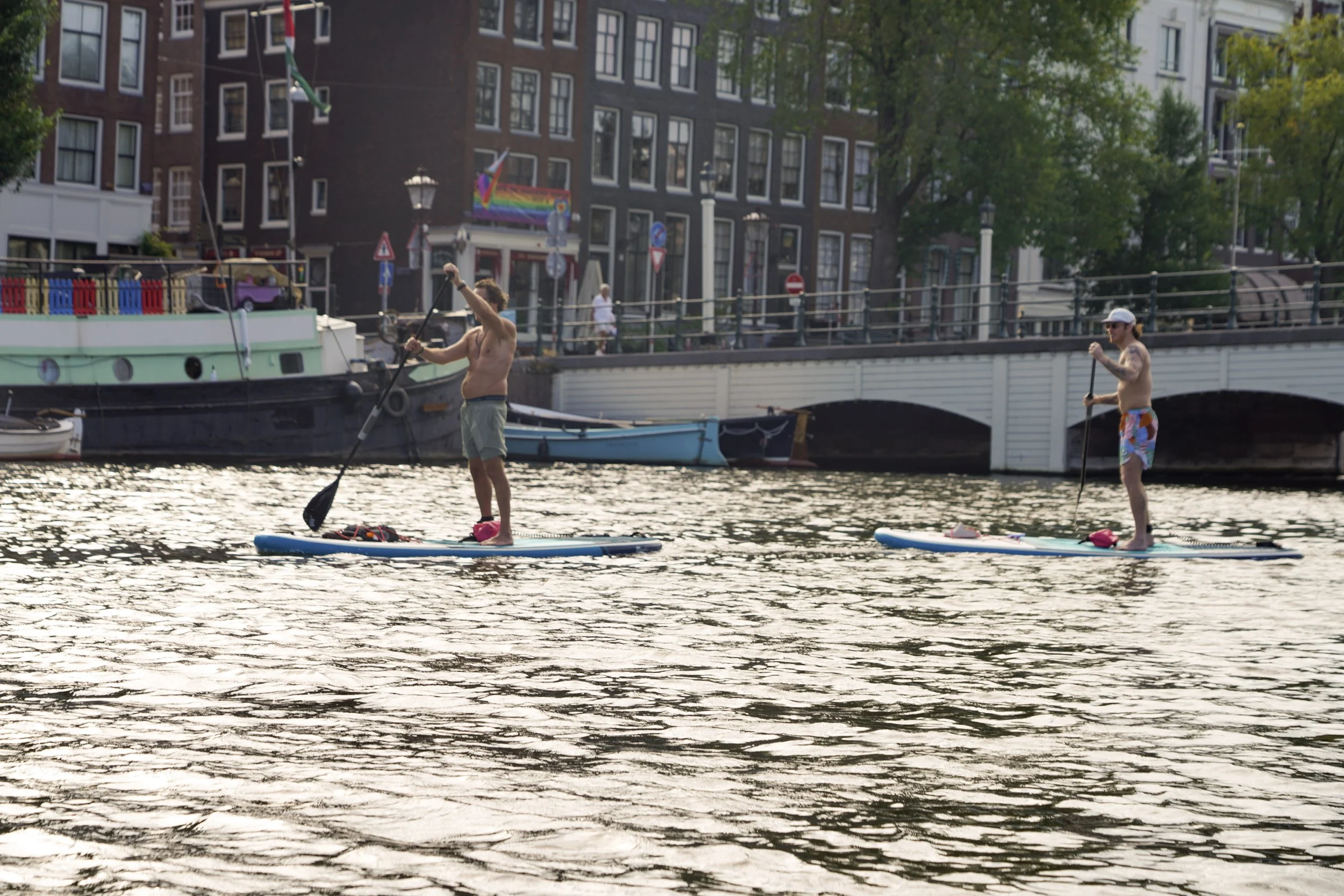
The canal cruise gave us a fascinating glimpse into everyday Amsterdam as well. Bikes, boats, bridges and people going about their business all seemed to coexist in a way that occasionally looked chaotic but somehow worked.
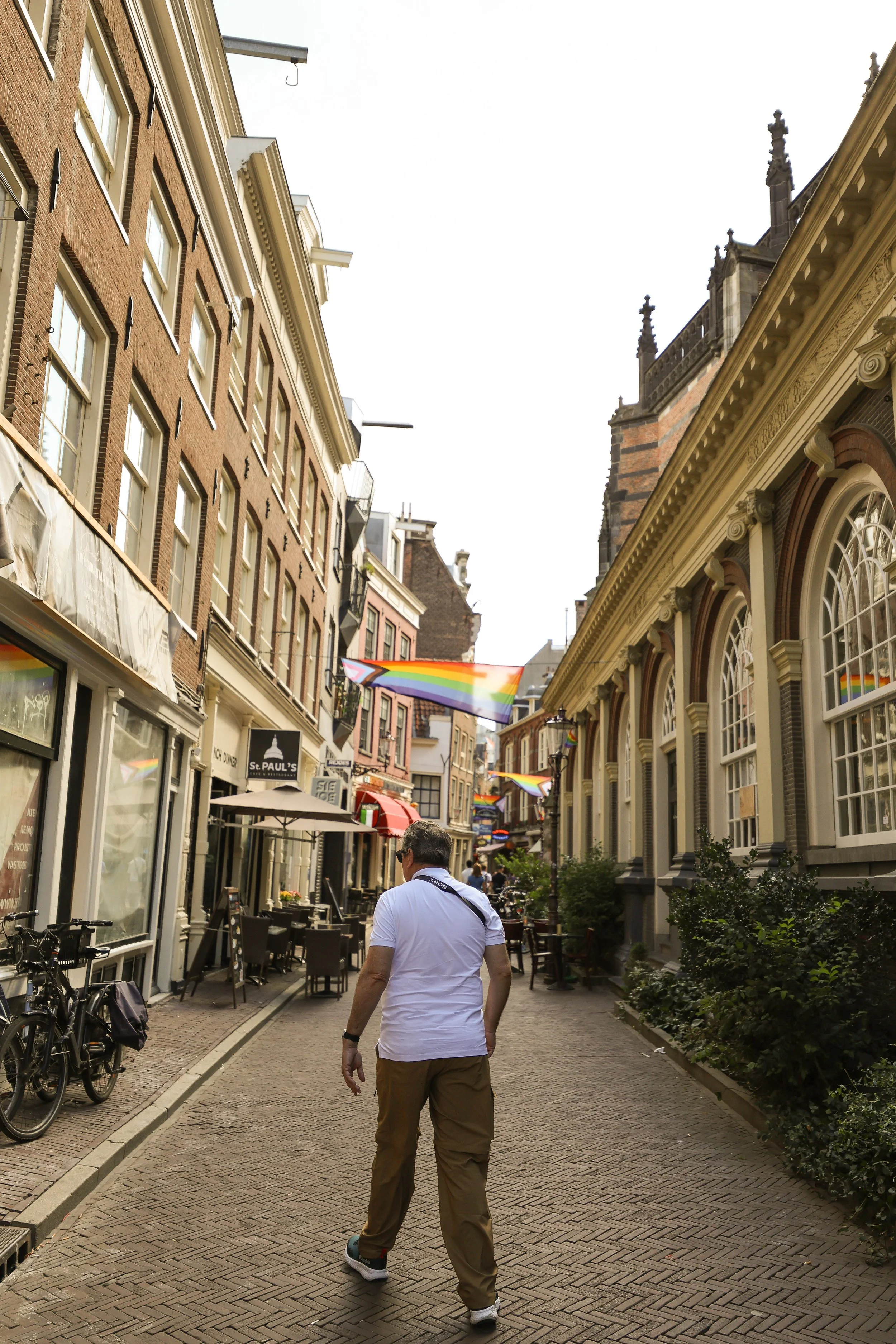
Eventually we left the water and set off on foot, wandering through streets and alleyways towards Dam Square, the historic heart of Amsterdam.
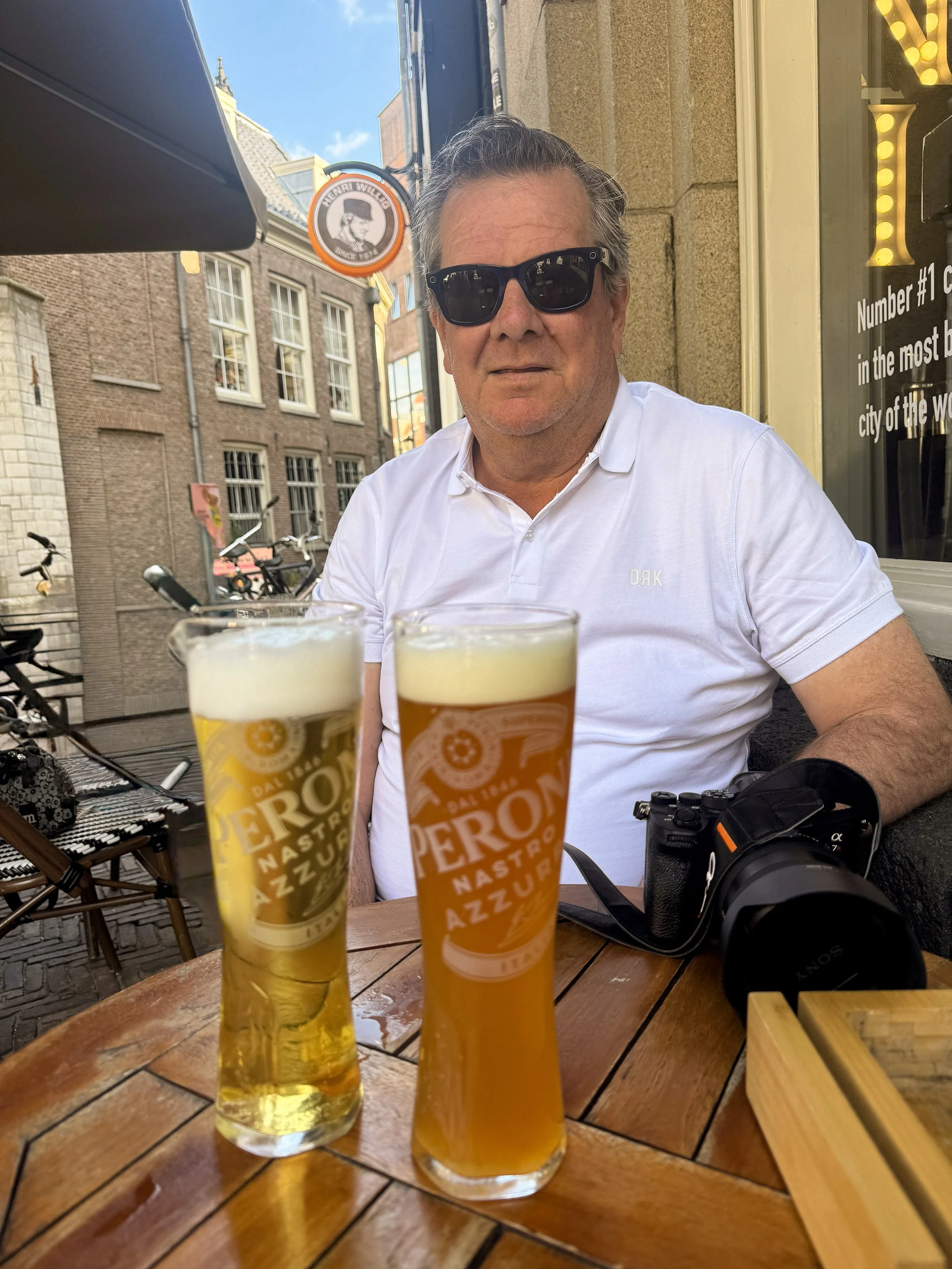
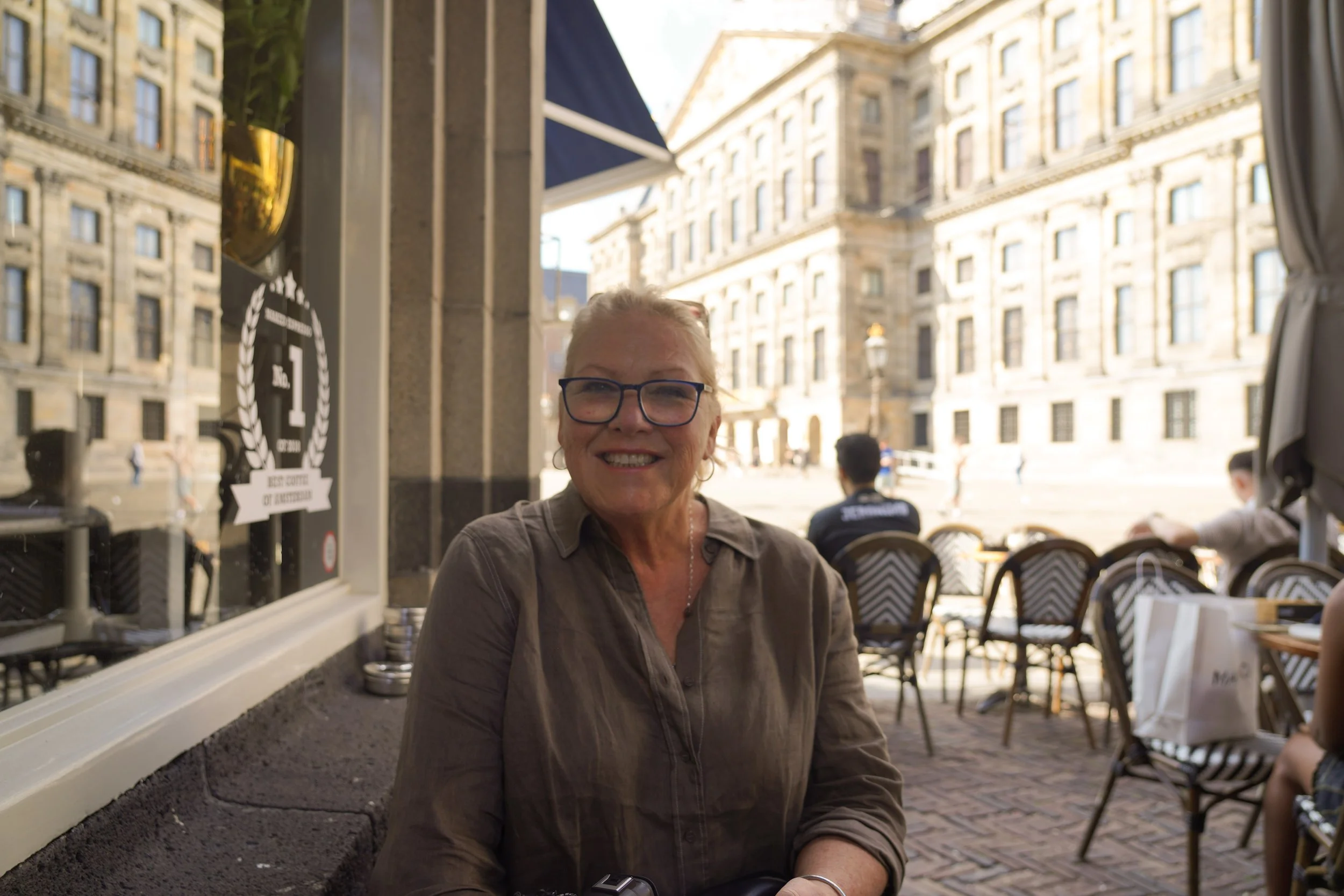
By this stage, the combination of heat, walking and jet lag was beginning to catch up with us, so we made the culturally responsible decision to stop for a beer.
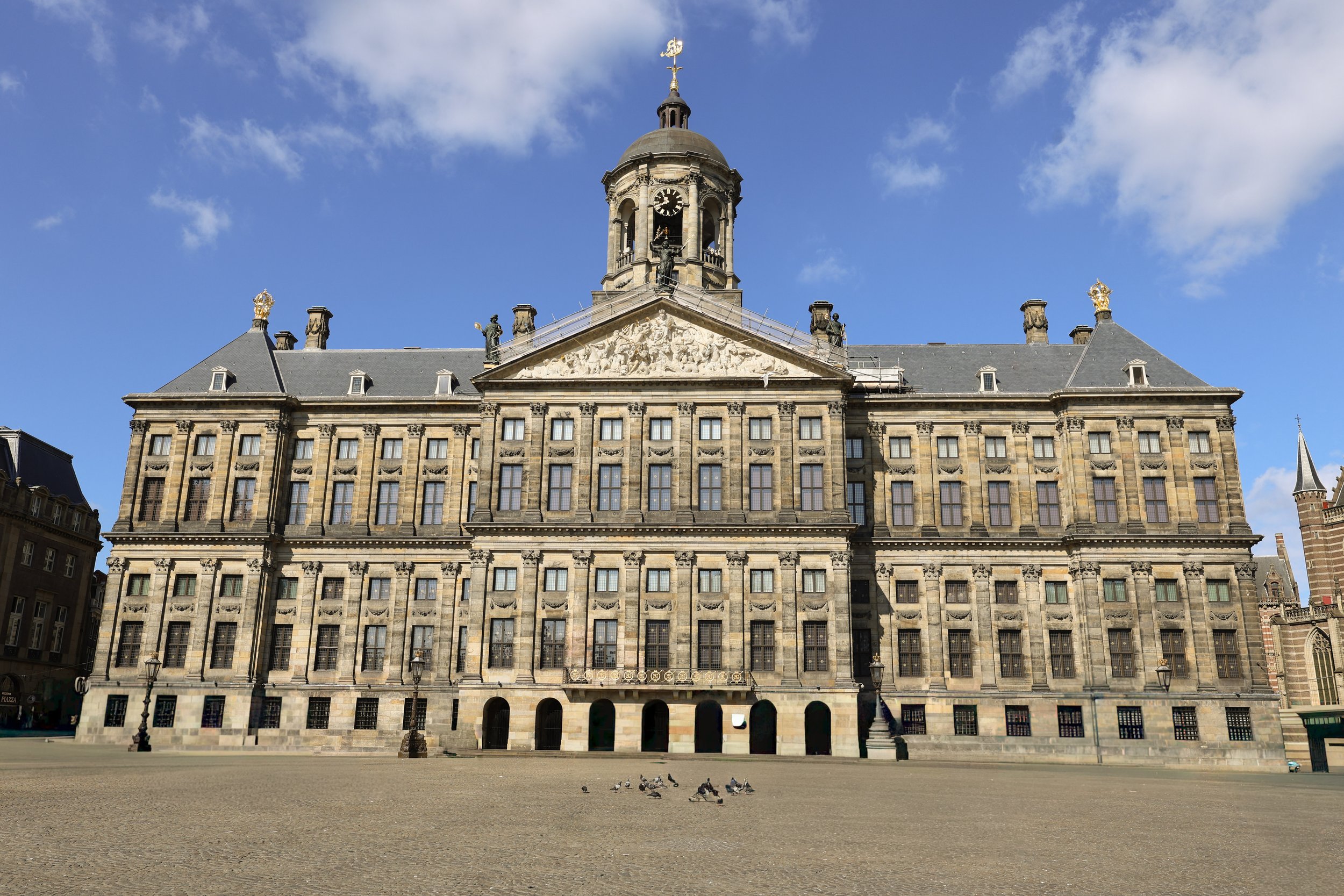
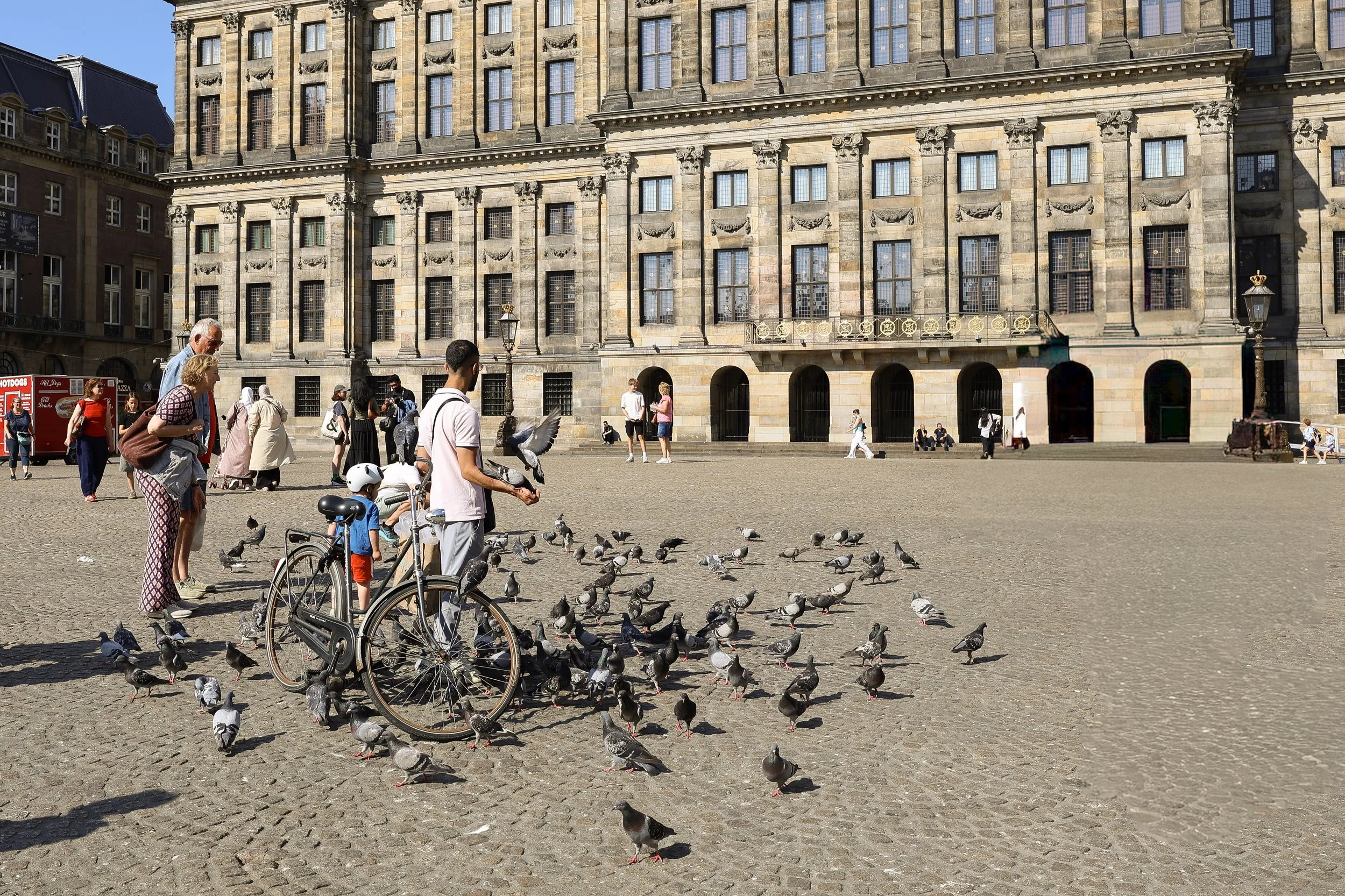
Conveniently, there was one available directly opposite the Royal Palace of Amsterdam.
Dam Square dates back to the 13th century, when a dam was constructed across the Amstel River. That dam gave the city its name — Amsterdam being, in essence, the dam on the Amstel. Over the centuries, the square has become the geographic and symbolic centre of the city, hosting everything from royal ceremonies and national commemorations to demonstrations,
celebrations and, on our particular visit, two increasingly tired tourists drinking beer.
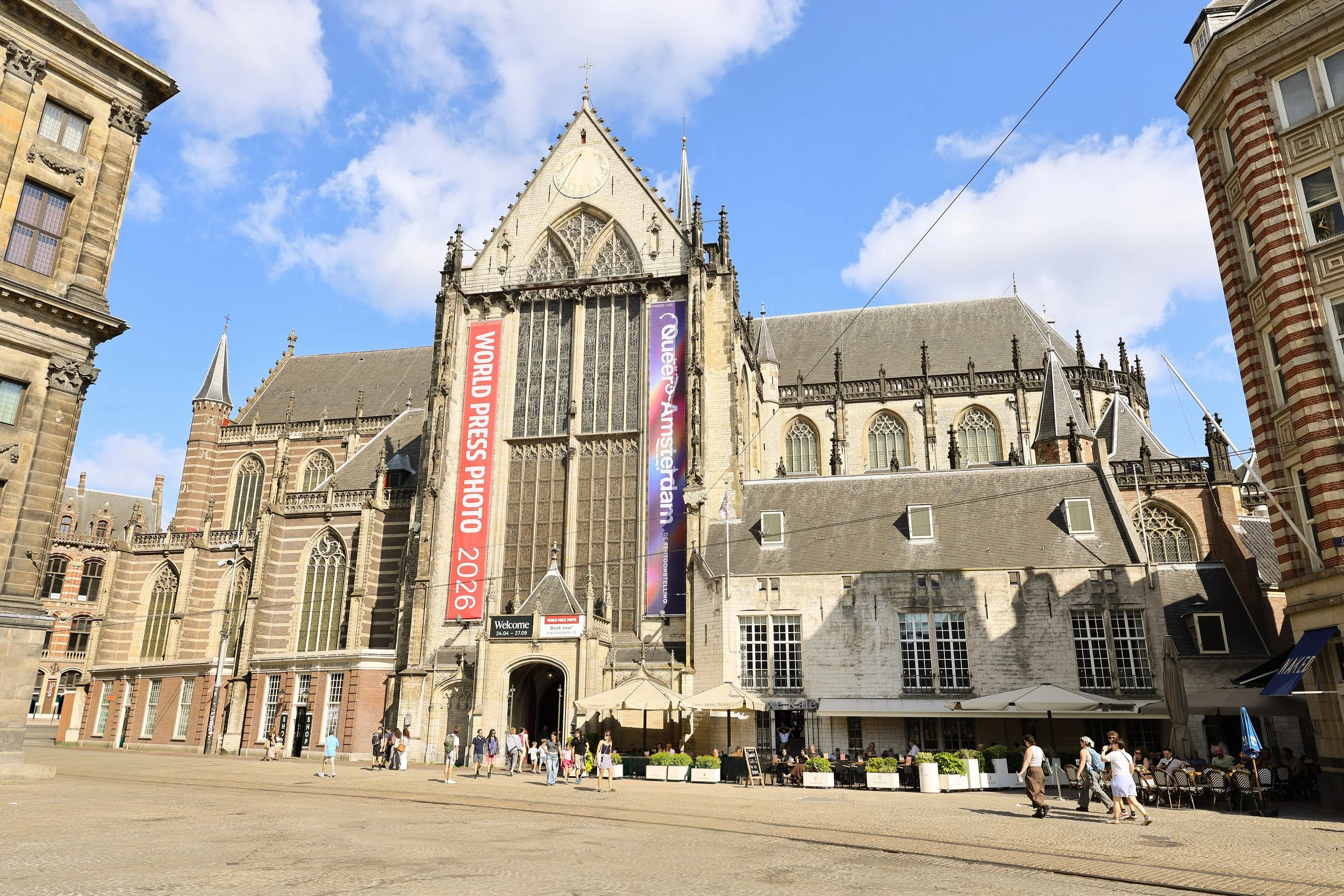
The square is surrounded by some of Amsterdam's most significant buildings, including the Royal Palace, the Nieuwe Kerk (New Church) and the striking white National Monument. The Royal Palace itself is a fascinating piece of Dutch history. Designed by architect Jacob van Campen and built between 1648 and 1655, it wasn't originally intended to be a palace at all. It was constructed as Amsterdam's magnificent new city hall, a grand statement of the wealth and confidence of the Dutch Golden Age.
It became a royal residence in 1808 when Louis Bonaparte, Napoleon's brother, was installed as King of Holland. Today, although the Dutch royal family doesn't live there, the palace is still used for official receptions and state occasions.
We admired it from the comfort of our café table, which, if we're being honest, was probably as much historical appreciation as our increasingly sore feet could manage.
Amsterdam was hot. Really hot.
And after several hours of walking, our feet were making it very clear that they had reached their daily limit. So we made another important strategic decision: Amsterdam, with Van Gough’s stunning art works and Anne Frank’s House, deserved a return visit.
There was simply too much to see in such a short time, and preferably we'd do it next time when the temperature was a little more
forgiving and our feet had recovered from this particular expedition.
We headed back towards the river boat, grateful for the prospect of air conditioning. By now, air conditioning had moved well beyond being a luxury and had become a fundamental requirement for continuing the Grand Tour.
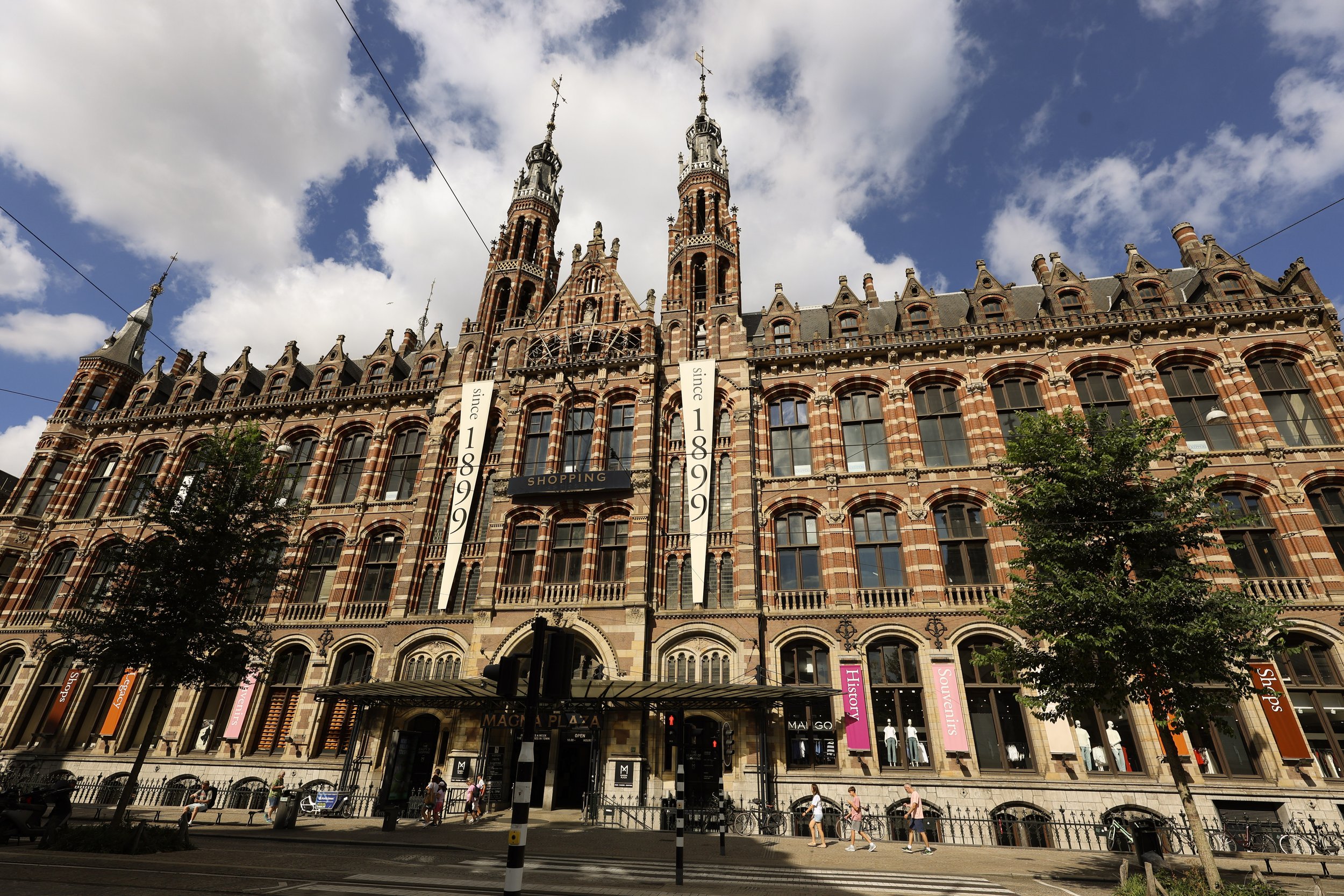
We settled back into the cool comfort of the Transcend Connect, ready for our evening departure.
Amsterdam had given us canals, Golden Age architecture, history, beer and sore feet.
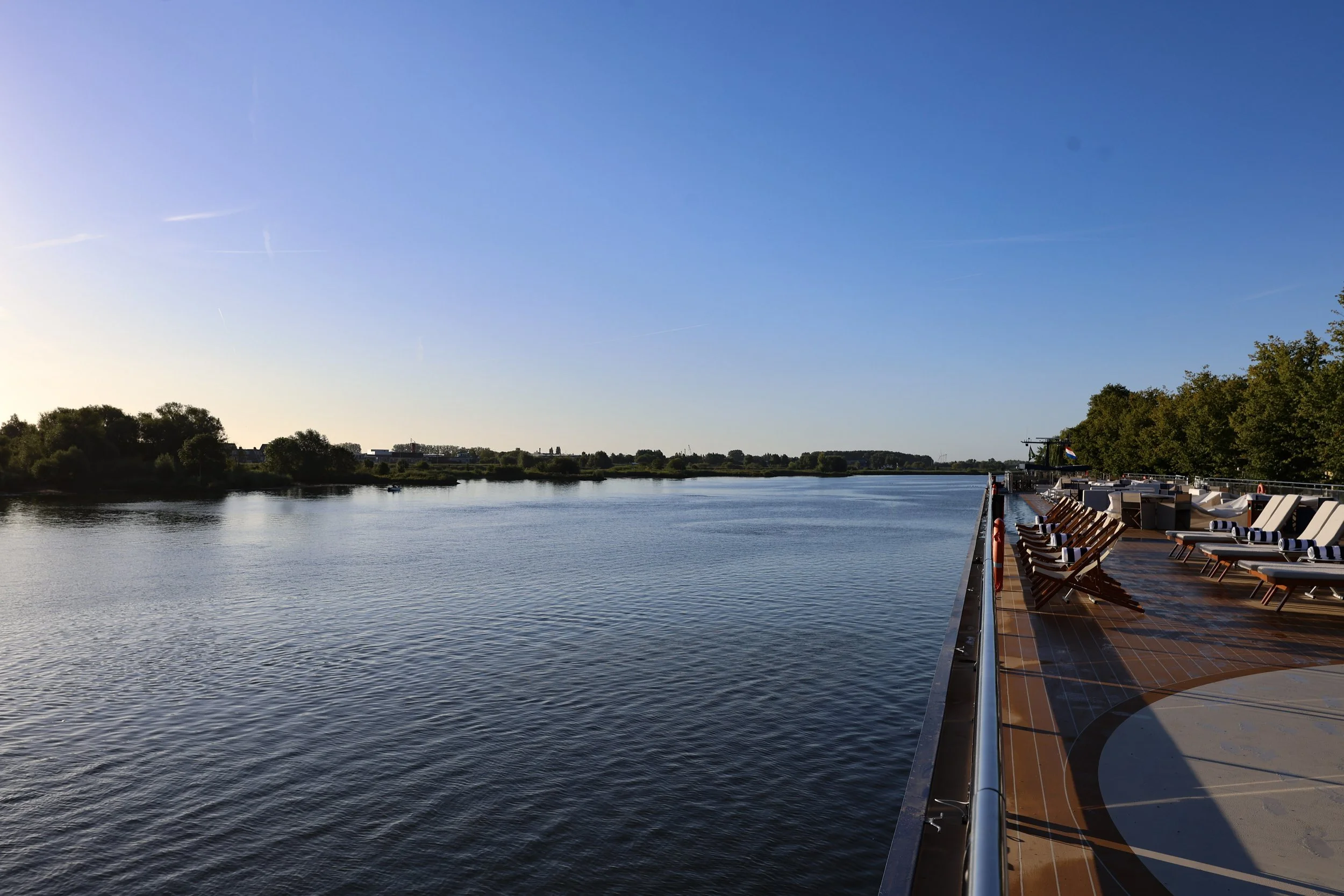
We finally set off just as the sun was beginning to sink, casting a spectacular golden glow across the IJssel River. After all the changes to our itinerary, it felt rather satisfying to finally be doing what we had originally signed up for — sailing down a river instead of travelling around Europe by coach.
The IJssel is one of the Netherlands’ major rivers and eventually joins the Rhine, winding its way through the Dutch landscape towards the IJsselmeer, the vast inland lake created when the former Zuiderzee was closed off from the North Sea. The scenery was wonderfully Dutch: flat horizons, green fields, distant church towers and the occasional wind turbine, all reflected in the calm evening water.
As we continued towards Kampen, we entered the first of what would become many locks on our journey. Watching a river boat squeeze into a lock for the first time was surprisingly fascinating. The gates closed behind us, the water level slowly changed and, before long, we were being raised or lowered to match the waterway ahead.
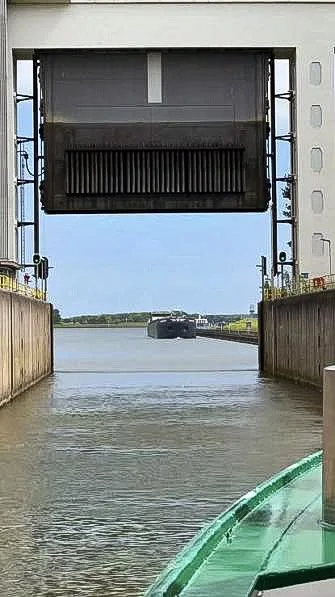
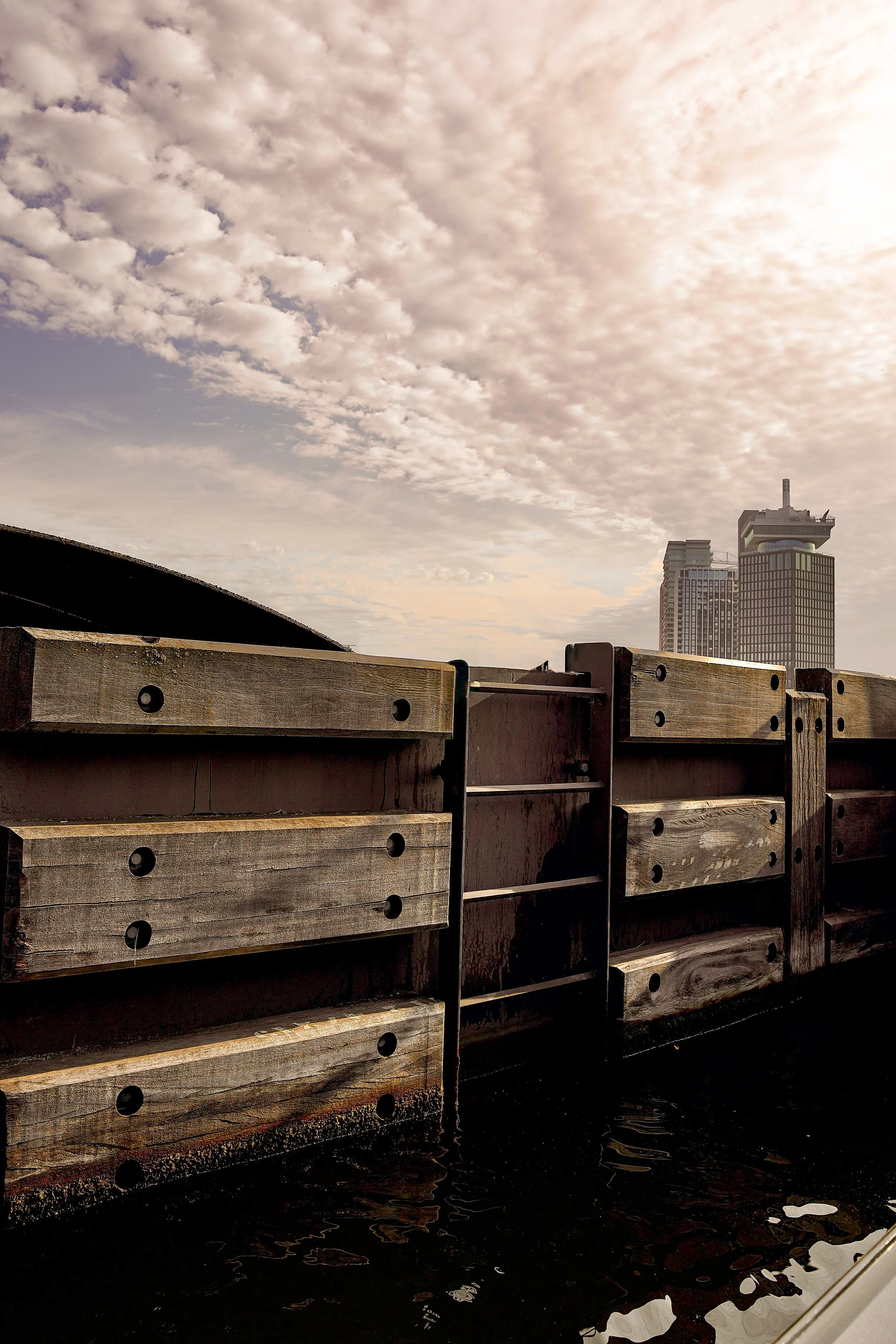
It was all very civilised — no packing, no airports, no luggage and, best of all, nowhere we needed to be in a hurry.
We stood on deck watching the sunset deepen from gold to orange and then pink, drinks in hand, as the Transcend Connect quietly made its way towards Kampen.